HoneyComb Fills
PVC Fills
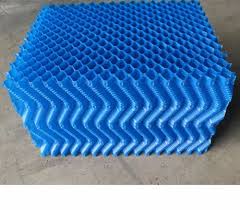
Honeycomb PVC Fills are a type of fill media used in cooling towers, made from polyvinyl chloride (PVC). They feature a honeycomb-like structure that maximizes the surface area for water and air interaction, enhancing heat transfer efficiency. These fills are durable, resistant to chemical and biological degradation, and easy to install. Their design ensures even water distribution, reducing the risk of dry spots and improving the overall cooling performance of the tower.
Functions of PVC Fills
- Heat Transfer: Enhance the heat exchange process between water and air by providing a large surface area.
- Water Distribution: Ensure even distribution of water over the fill surface, preventing dry spots and improving cooling efficiency.
- Air Flow Optimization: Facilitate efficient airflow through the cooling tower, reducing energy consumption.
- Water Retention: Increase the contact time between air and water, allowing more heat to be transferred from the water to the air.
- Durability: Offer long-lasting performance due to their resistance to chemicals, biological growth, and environmental conditions.
- Structural Support: They provide support to the water flow and air passage, maintaining the integrity and efficiency of the cooling tower’s operation.
Advantages of PVC Fills
- High Thermal Performance: Enhanced heat transfer efficiency due to the large surface area and optimized water-air interaction.
- Durability: Made from robust PVC material, resistant to chemical and biological degradation, ensuring long-term use.
- Efficient Water Distribution: Even distribution of water prevents dry spots and improves overall cooling tower performance.
- Low Maintenance: Resistant to fouling and clogging, reducing maintenance frequency and costs.
- Energy Efficiency: Facilitate smooth airflow, reducing the energy consumption of the cooling tower.
- Cost-Effective: Their durability and efficiency contribute to lower operational and maintenance costs over time, providing a cost-effective solution for cooling tower performance.
ABC Fills
Drift Eliminators are essential components in cooling towers designed to minimize the loss of water droplets, known as drift, that are carried out of the tower by the exiting airflow. These eliminators work by creating a complex path for the air to follow, causing water droplets to HoneyComb Fills collide with the surfaces of the eliminator and coalesce into larger droplets. These larger droplets then fall back into the cooling tower rather than being expelled into the environment.

Characteristics of ABC Fills
- High Efficiency: Designed to capture and redirect a large percentage of water droplets, minimizing water loss.
- Low Airflow Resistance: Engineered to allow air to pass through with minimal resistance, maintaining the efficiency of the cooling tower’s ventilation system.
- Durability: Made from materials resistant to corrosion, UV radiation, and biological growth, ensuring long-lasting performance.
- Compact Design: Typically constructed in modular sections that are easy to install and maintain within the cooling tower.
- Chemical Resistance: Able to withstand exposure to the chemicals used in cooling tower water treatment without degrading.
- Maintenance-Friendly: Designed for easy cleaning and maintenance to ensure ongoing effective performance.
- Environmental Compliance: Helps cooling towers meet environmental regulations by reducing the emission of drift droplets.
Functions of ABC Fills
- Minimizing Water Loss: Capturing water droplets from the exhaust air and redirecting them back into the cooling tower, thereby conserving water resources.
- Environmental Protection: Preventing the release of potentially contaminated water droplets into the surrounding environment, ensuring compliance with environmental regulations.
- Maintaining Equipment Integrity: Protecting nearby equipment and structures from water damage caused by drifting droplets, thereby extending their operational lifespan.
- Enhancing Efficiency: Facilitating the efficient operation of the cooling tower by reducing the load on downstream equipment and optimizing heat exchange processes.
- Cost Savings: Contributing to cost reduction through lower water consumption, decreased maintenance needs, and improved overall system efficiency.