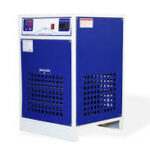
Air Cooled Chillers
Air-cooled chillers are refrigeration systems that use air-driven heat dissipation for cooling the refrigerant. Unlike water-cooled chillers, they have lower installation costs and reduced maintenance.
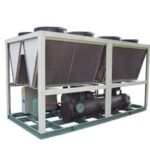
Water Cooled Chillers
Water-cooled chillers remove heat from the refrigerant using water circulation, providing stable cooling for large-scale industrial and commercial facilities their efficiency is enhanced
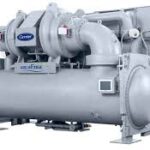
Screw Chillers
Screw chillers operate using screw compressors, making them suitable for heavy-duty cooling applications. They are widely used in air conditioning and process cooling. Designed for efficiency and long-term use.
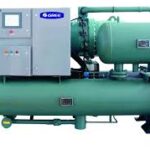
Variable Speed Chillers
Variable speed chillers adjust compressor operation using VFDs for maximum efficiency. This reduces unnecessary power consumption and extends equipment life. They are commonly used in HVAC and industrial systems.
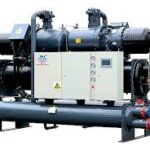
Oil Chiller
Oil chillers cool lubricating oil to ensure efficient machine performance. They regulate temperature to prevent overheating and viscosity changes. This enhances reliability and operational stability.
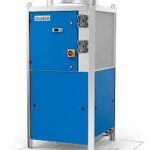
Hydraulic Oil Chiller
Hydraulic oil chillers provide efficient cooling for hydraulic fluids in machinery. They maintain oil temperature within the required range. This results in reduced maintenance and better performance.
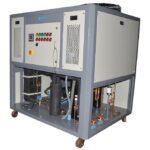
Online Chiller
Online chillers are intelligent cooling systems with online monitoring features. They offer continuous temperature control in industrial processes. Remote accessibility boosts efficiency and convenience.

Glycol Chiller
Glycol chillers use a glycol-based refrigerant to maintain stable cooling. They support temperature-sensitive applications like wineries and breweries. Precise cooling is crucial for production quality.
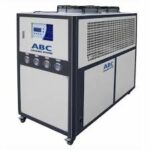
Spindle Chiller
Spindle chillers are designed to cool high-speed rotating spindles in machinery. They help maintain temperature stability. This protects components and enhances machining accuracy.
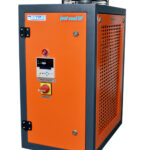
Refrigerated Air Dryer
Refrigerated air dryers cool and dehumidify compressed air by condensing moisture into liquid form. They prevent damage caused by excess water. Dry air improves system efficiency and reliability.