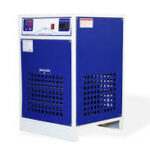
Air Cooled Chillers
Air-cooled chillers work by utilizing airflow to cool the refrigerant or coolant, efficiently dissipating heat. Unlike water-cooled chillers, they eliminate
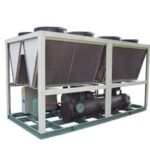
Water Cooled Chillers
Water Cooled Chillers are refrigeration systems that use water as a cooling medium to transfer heat away from the refrigerant. They are widely used in large-scale industrial
Screw Chillers
Screw chillers provide high-capacity cooling using screw compressors for efficient operation. They are widely used in industrial and commercial setups. These chillers offer durability and energy savings.
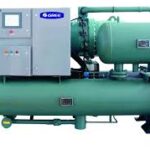
Variable Speed Chillers
Variable speed chillers dynamically adjust compressor speed to match cooling demand. This leads to significant energy savings and enhanced system longevity. They are widely used in HVAC and process cooling.
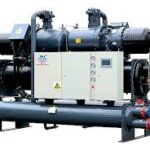
Oil Chiller
Oil chillers use refrigeration systems to maintain optimal oil temperature. They are essential for industrial processes that rely on lubricating oil. Stable temperature control improves system longevity.
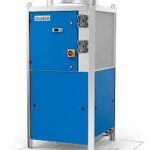
Hydraulic Oil Chiller
Hydraulic oil chillers are refrigeration systems that regulate oil temperature in hydraulic equipment. They enhance system performance and prevent heat-related damage. This leads to better efficiency and durability.
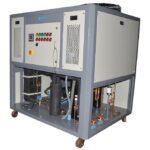
Online Chiller
Online chillers are refrigeration units with remote access capabilities. They provide consistent cooling for industrial needs. Users can monitor and optimize performance via the internet.

Glycol Chiller
Glycol chillers circulate a glycol-water mix to cool equipment and processes. They are crucial for applications requiring precise temperature control. Common uses include food, beverage, and pharmaceutical industries.
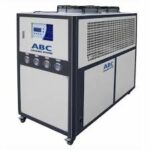
Spindle Chiller
Spindle chillers manage heat dissipation in high-speed spindles, preventing damage. They maintain temperature consistency in CNC machines. This results in improved machining accuracy and reliability.
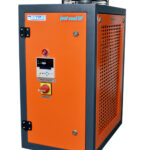
Refrigerated Air Dryer
Refrigerated air dryers provide clean, dry air by lowering air temperature and condensing moisture. They are essential for preventing water-related issues in compressed air systems. This enhances equipment durability.