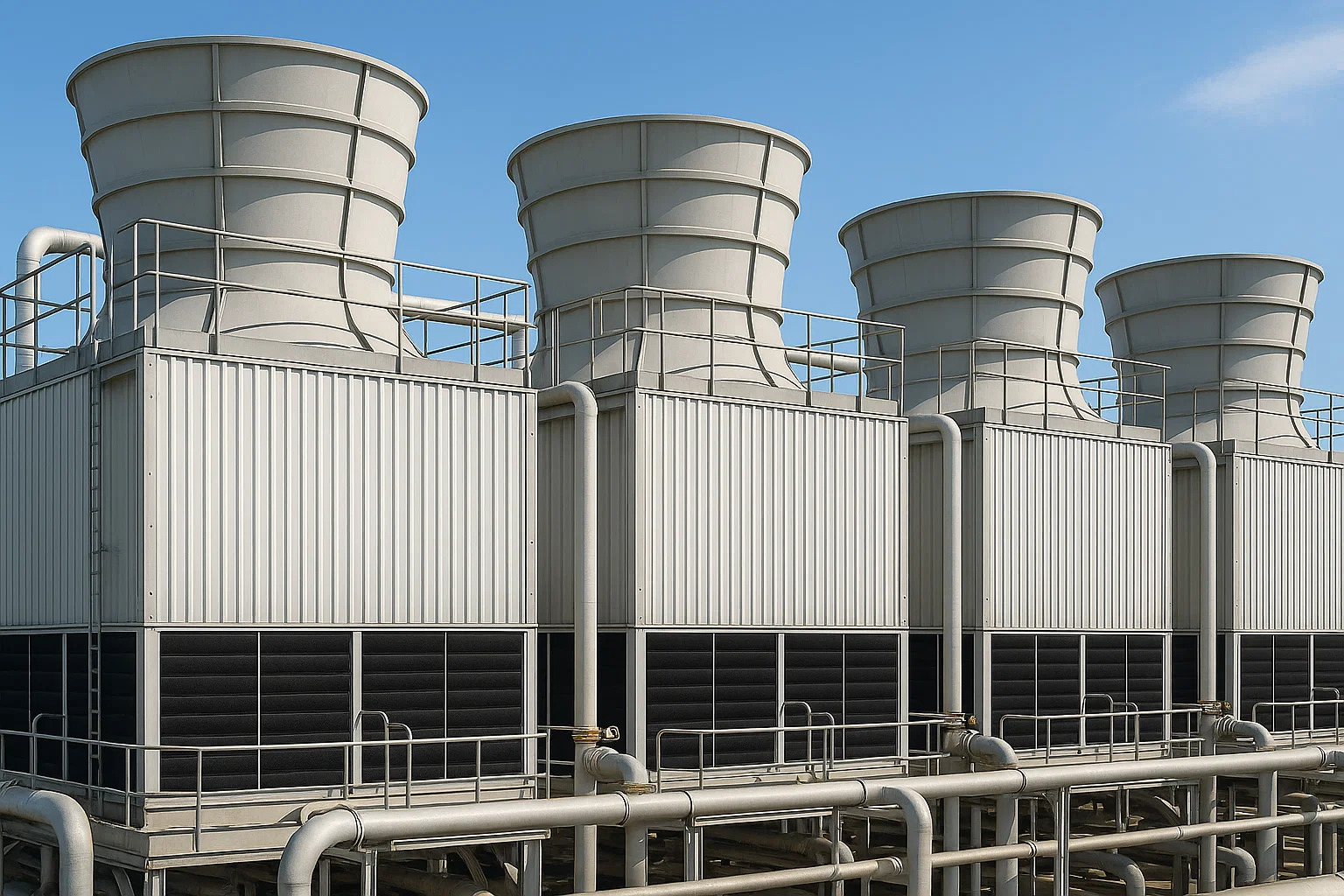
Built to Last: Selecting the Best Cooling Tower for Chemical Plants
Chemical and petrochemical plants operate in some of the most corrosive and challenging environments in the industry. The constant presence of aggressive chemicals, high temperatures, and continuous operation demands that cooling infrastructure be robust, reliable, and fundamentally corrosion-resistant. For these demanding conditions, the Fiberglass Reinforced Plastic (FRP) Cooling Tower stands out as the superior choice.
The Corrosion Challenge in Chemical Processing
In a chemical plant, the circulating water in the cooling tower system often picks up volatile organic compounds (VOCs) or other harsh chemical agents, leading to extreme corrosion and rapid deterioration of metal components. Traditional galvanized steel or even concrete towers require intensive maintenance and often face a shortened lifespan due to rust and chemical attack. This is where material science dictates the best solution.
Why FRP Towers are the Best Fit
FRP (Fiberglass Reinforced Plastic) is the material of choice for chemical plant cooling towers due to its intrinsic properties:
- Superior Corrosion Resistance: FRP is inherently non-reactive and highly resistant to acids, alkalis, salts, and chemical fumes. This eliminates the risk of rust and structural degradation, ensuring the tower maintains its structural integrity for decades.
- Low Maintenance: Since FRP does not rust, the need for frequent painting, coating, and costly metal component replacement is dramatically reduced. This translates directly to lower Total Cost of Ownership (TCO) and less operational downtime.
- UV and Weather Resilience: The material is built to withstand continuous exposure to UV rays and harsh outdoor elements without becoming brittle or failing.
Design Considerations for Efficiency
Beyond material, the design must also maximize efficiency and reliability. Induced Draft Counter-Flow Towers are often preferred in large-scale chemical operations:
- Counter-Flow Efficiency: In this design, air flows upward, opposite the falling water, maintaining the highest possible average temperature difference ($\Delta T$) for maximum thermal efficiency.
- Induced Draft: Placing the fan at the top of the tower ensures the air velocity is high upon exit, which minimizes the chance of exhaust air being recirculated back into the air intakes, a critical issue when dealing with potentially contaminated air.
By selecting an FRP cooling tower with an optimized counter-flow design, chemical plants invest in a high-performance heat rejection solution that guarantees durability and keeps sensitive processes running smoothly and reliably for the long term.