
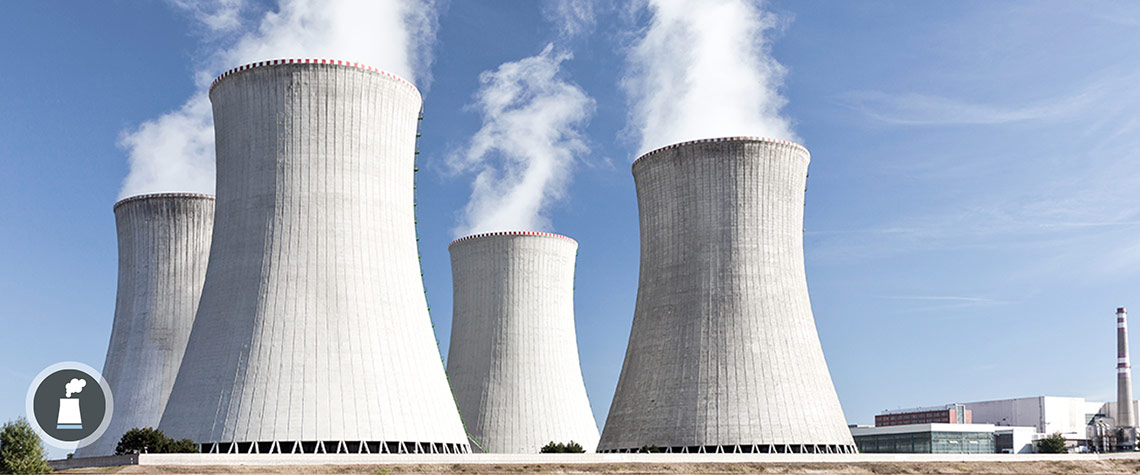
Natural draft cooling towers are among the most iconic structures in industrial landscapes—recognized by their hyperboloid shape and colossal size. Unlike mechanical draft towers, these cooling systems rely on natural airflow to move air through the tower, making them energy-efficient, low-maintenance, and ideal for power plants and heavy-duty operations.
With growing concerns about energy conservation and operational sustainability, the natural draft cooling tower has regained attention as an eco-efficient cooling solution.
How Natural Draft Cooling Towers Work
Instead of using fans or mechanical components, natural draft cooling towers utilize the buoyancy of warm air. Here’s how the process flows:
- Hot water from the process is sprayed over the fill media inside the tower.
- Ambient air enters from the bottom, rises due to the chimney effect, and exits through the top.
- During the upward motion, water droplets lose heat by evaporation and convection.
- Cooled water collects at the basin and is recirculated back into the system.
This passive method reduces energy consumption significantly, making it ideal for continuous, large-scale industrial applications.
Sustainability & Efficiency Benefits
Natural draft towers are considered green cooling solutions due to:
- Minimal electricity usage (no fan motors)
- Low maintenance (fewer moving parts)
- Reduced carbon footprint
- Efficient water usage with optimized drift eliminators
They align well with modern goals for net-zero energy plants and sustainable industrial design.
Structural & Material Considerations
These towers must withstand wind loads, seismic activity, and thermal stresses, especially due to their size. Common materials include:
- Reinforced concrete (for shell durability)
- Fiber-reinforced polymer (FRP) components (for internal fill)
- Corrosion-resistant nozzles and piping
- Weather-proof coatings to protect the internal lining
Additionally, the internal fill is designed to maximize surface area and heat transfer with minimal airflow resistance.
Applications of Natural Draft Cooling Towers
These towers are best suited for:
- Coal and gas thermal power plants
- Nuclear power facilities
- Large-scale petrochemical complexes
- District cooling plants in megacities
- Steel manufacturing and mining operations
They are especially preferred where:
- Continuous, uninterrupted cooling is needed
- Power availability is limited
- Low maintenance and long lifecycle are prioritized
Advantages Over Mechanical Draft Cooling Towers
| Feature | Natural Draft Tower | Mechanical Draft Tower |
|---|---|---|
| Air Movement | Passive (natural) | Fan-driven |
| Energy Consumption | Very Low | Moderate to High |
| Maintenance | Minimal | Regular (fans, motors) |
| Noise | Low | Moderate to High |
| Ideal for | Large, open environments | Compact or variable-load sites |
| Lifespan | 30–50+ years | 15–25 years |
Limitations to Consider
Even with their benefits, natural draft cooling towers have limitations:
- Require significant land space and structural height
- High initial capital cost due to construction scale
- Slow reaction time to temperature fluctuations compared to mechanical towers
- Not ideal for compact urban settings or mobile facilities
Natural draft cooling towers represent the perfect blend of engineering simplicity and energy efficiency. By leveraging the laws of thermodynamics and natural air movement, these systems provide cost-effective, silent, and sustainable cooling for the world’s largest industrial plants.
While they may not be suitable for every application, in the right environment, natural draft towers outperform most alternatives in lifespan, reliability, and environmental impact. As industries continue to evolve toward energy-conscious solutions, natural draft cooling towers will remain a cornerstone of future-ready infrastructure.