
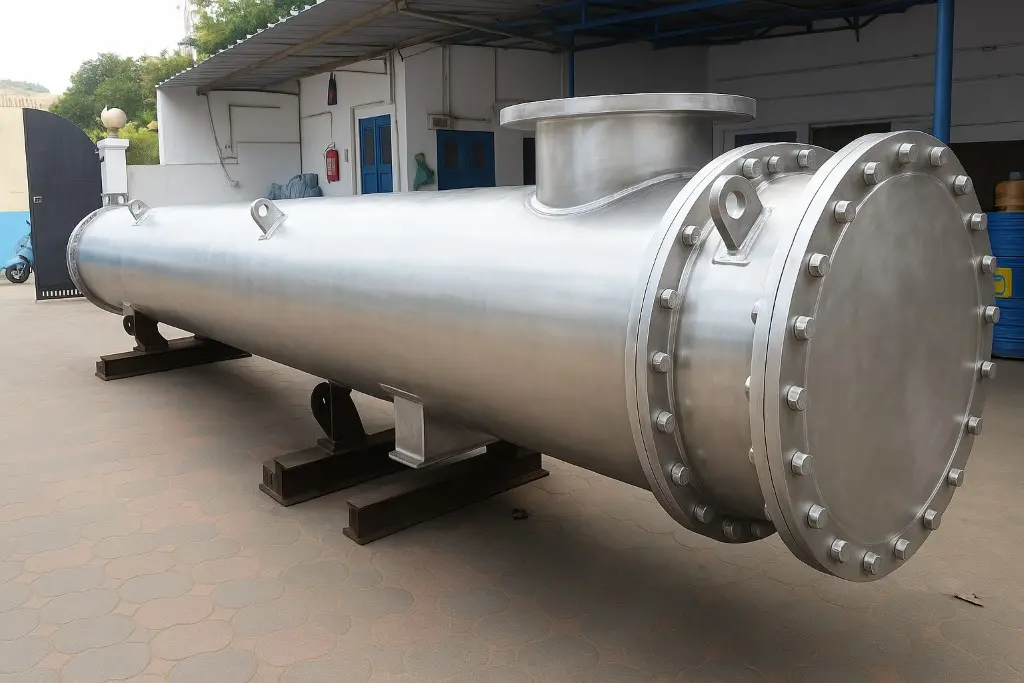
Selecting the appropriate shell and tube intercooler is a critical decision that directly impacts the efficiency and longevity of industrial compressed air systems. While many focus on basic parameters like pressure and temperature ratings, a deeper dive into the operational environment and fluid characteristics is essential for optimal performance. One often-overlooked factor is the potential for fouling and scaling. The choice between fixed tubesheet, U-tube, and floating head designs should be heavily influenced by the quality of the cooling medium (water, glycol, etc.). For instance, if your cooling water source has a high mineral content, a straight-tube design (like a fixed tubesheet or floating head) is far superior to a U-tube because the tubes can be mechanically cleaned. U-tube bundles, while compact and able to handle thermal expansion well, are nearly impossible to clean mechanically, making them suitable only for very clean cooling fluids. Prioritizing ease of maintenance based on your specific site conditions can prevent significant drops in heat transfer efficiency and avoid costly, premature equipment failure.
Another crucial, yet frequently underestimated, aspect is the material selection for both the shell and the tubes. Beyond standard carbon steel and stainless steel, specialized alloys play a vital role in demanding applications. For example, in marine environments or systems using brackish water, materials like copper-nickel (Cu-Ni) or even titanium offer superior corrosion resistance compared to standard 304/316 stainless steel, which can be susceptible to chloride stress cracking. Furthermore, the tube-to-tubesheet joint is a common point of failure. While a standard rolled joint is cost-effective, a strength-welded or seal-welded joint provides a much more robust and leak-proof seal, which is paramount in applications where cross-contamination between the compressed air and the coolant would be catastrophic. Investing in premium industrial heat exchanger materials and fabrication techniques upfront is a strategic move to ensure system reliability and safety.
Finally, optimizing for thermal performance involves more than just size. The strategic use of baffles within the shell is a key design element that dictates the performance of a shell and tube heat exchanger. Baffles serve two purposes: they support the tubes, preventing vibration and sagging, and more importantly, they direct the shell-side fluid (coolant) to flow across the tube bundle in a zigzag pattern. This cross-flow creates turbulence and increases the heat transfer coefficient, maximizing efficiency. The spacing and cut of these baffles (e.g., single segmental, double segmental) can be customized by the manufacturer to balance heat transfer effectiveness against the allowable pressure drop. A well-designed baffle system ensures you get the most cooling out of the smallest possible footprint, making it a critical specification to discuss with your heat exchanger manufacturer.