
The Invisible Thief: Why Fouling Undermines GPHE Performance
The exceptional efficiency of Gasketed Plate Heat Exchangers (GPHEs) hinges on their large heat transfer surface area and induced turbulence. However, over time, various substances in the process fluids can accumulate on these surfaces, a phenomenon known as fouling. This can manifest as mineral scaling from hard water, organic biofouling from microorganisms, corrosion products, or deposition of particulate matter. Fouling acts as an insulating layer, dramatically increasing thermal resistance and hindering heat transfer. The immediate consequence is a significant drop in heat transfer efficiency, leading to higher energy consumption as pumps and chillers work harder to compensate. Moreover, severe fouling can increase pressure drop across the unit, reduce fluid flow, and even promote localized corrosion, making regular GPHE cleaning and servicing not just an option, but a critical imperative for maintaining optimal performance and extending the overall heat exchanger lifespan. Effective cleaning and servicing start with a clear distinction between Clean‑In‑Place (CIP) strategies and manual, bench‑level maintenance. For routine fouling—organic films, biofouling, or mild scaling—CIP cycles using programmed alkaline and acid phases with controlled temperature, flow velocity and concentration will restore thermal performance while protecting gaskets and plate finishes. Call out terms like CIP Automation, Flow Velocity, and Acid/Alkaline Dosing in your post so readers understand that chemistry, contact time and shear (turbulence) matter as much as detergent choice. Log each CIP run and trend Differential Pressure and UA so you can switch from calendar‑based to condition‑based cleaning when fouling patterns become clear.
Strategic Cleaning: The Power of Clean-In-Place (CIP)
For many GPHE applications, Clean-In-Place (CIP) is the preferred method for routine cleaning, offering significant advantages in terms of reduced downtime and labor costs. This involves circulating specialized chemical cleaning solutions through the heat exchanger without disassembling the unit. The choice of CIP chemicals depends entirely on the type of fouling: acidic solutions for mineral scales, alkaline solutions for organic deposits and fats, and biocides for biofouling. Effective CIP strategies often involve specific temperature and flow rate parameters to maximize the chemical’s efficacy and ensure thorough cleaning of all plate channels. While CIP is highly effective for maintaining performance, careful consideration of gasket material compatibility with the cleaning agents is essential to prevent premature degradation, underscoring the need for a well-planned CIP cleaning process to restore heat exchanger performance and minimize operational interruptions. When deposits are hard, particulate or adhesive (mineral scale, polymerized oils, or weld spatter), planned shutdowns for disassembly let technicians perform mechanical cleaning—soft brushing, controlled scraping with non‑metallic tools, or low‑pressure water blasting—followed by visual inspection and borescope checks of gasket grooves and plate corrugations. Emphasize Gasket Handling (replacement rather than re‑use if compression set is visible), Gasket Groove Inspection, and correct Tightening Torque during reassembly; clip‑on vs. glued gasket types change service steps. Always protect gasket faces during cleaning and store spare gaskets flat, labeled and in a controlled environment to avoid UV or ozone damage.
When Deeper Intervention is Required: Disassembly and Mechanical Cleaning
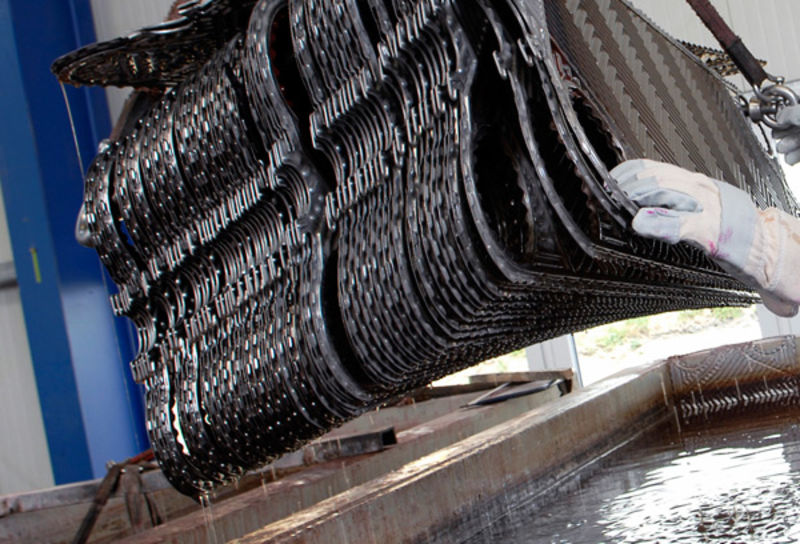
While CIP is excellent for routine maintenance, there are times when fouling is too severe or tenacious, necessitating a more intensive approach: offline cleaning via disassembly. This involves opening the heat exchanger, which allows for visual inspection of every plate and gasket. Each plate can then be individually cleaned using high-pressure water jets or specialized mechanical brushes to remove stubborn deposits that CIP couldn’t tackle. This is also the opportune moment for thorough gasket inspection and replacement. Worn, cracked, or hardened gaskets, which are crucial for maintaining a leak-free plate heat exchanger, are identified and replaced, ensuring the integrity of the unit. After cleaning and gasket servicing, the plates are carefully reassembled, ensuring correct alignment and proper plate pack compression. This comprehensive GPHE servicing procedure is vital for restoring units to “as-new” condition, particularly after prolonged operation in challenging environments, significantly extending their service life and reliability. After cleaning, passivation or neutralization routines (nitric passivation for stainless steels, neutralizing washes after acid CIP) can restore corrosion resistance and remove metallurgical residues that accelerate pitting. Match chemical choices to plate metallurgy and gasket material—EPDM, FKM (Viton) and PTFE‑encapsulated seals have very different chemical tolerances. Mention Chemical Compatibility, Passivation Procedures and Material Traceability to help procurement and maintenance teams avoid combinations that cause swelling, embrittlement or gasket migration.