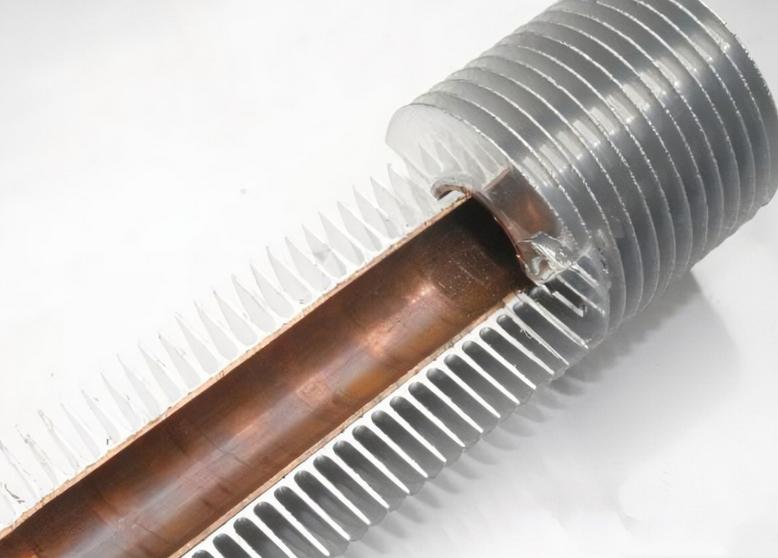
In heat exchangers and cooling systems, the combination of aluminum fins with copper or steel tubes has become a common engineering practice. This design leverages the high thermal conductivity of copper or steel tubes along with the lightweight, cost-effective, and corrosion-resistant properties of aluminum fins. By integrating these materials, industries can achieve effective heat transfer in compact equipment while keeping costs under control. However, like any engineering choice, this combination brings both advantages and trade-offs that should be carefully evaluated depending on the application.
The biggest advantage of using aluminum fins is their lightweight structure and excellent surface area expansion. Aluminum allows for dense fin arrangements, which maximize airflow contact and improve overall cooling efficiency. When paired with copper tubes, which offer superior thermal conductivity, the result is an exceptionally efficient heat exchanger suitable for HVAC systems, refrigeration units, and automotive radiators. On the other hand, combining aluminum fins with steel tubes provides higher strength, durability, and resistance to mechanical stress, making it a good fit for industrial and heavy-duty cooling applications where long service life is essential.
However, there are also drawbacks to this material pairing. The most common concern is galvanic corrosion, which can occur when dissimilar metals like aluminum and copper/steel come into contact in the presence of moisture. This can reduce the lifespan of the unit if not properly addressed with protective coatings, surface treatments, or design modifications. Additionally, while copper tubes improve heat transfer, they increase overall material cost, whereas steel tubes, though stronger, have lower thermal conductivity, slightly reducing efficiency. Therefore, the choice depends on whether the priority is maximum heat transfer, cost optimization, or long-term durability. With proper design and preventive measures, aluminum fins combined with copper or steel tubes remain one of the most widely used and balanced solutions in cooling technology.