In industrial cooling and refrigeration systems, condensers play a vital role in heat rejection, ensuring optimal thermal efficiency. Two of the most widely used designs are the Shell & Tube Condenser and the Plate Condenser. While both serve the same core purpose—condensing refrigerant vapor into liquid—their construction, performance characteristics, and application suitability differ significantly. Understanding these differences helps industries choose the right condenser type for maximum efficiency, reliability, and cost-effectiveness.
Shell & Tube Condensers: A Robust Industrial Solution
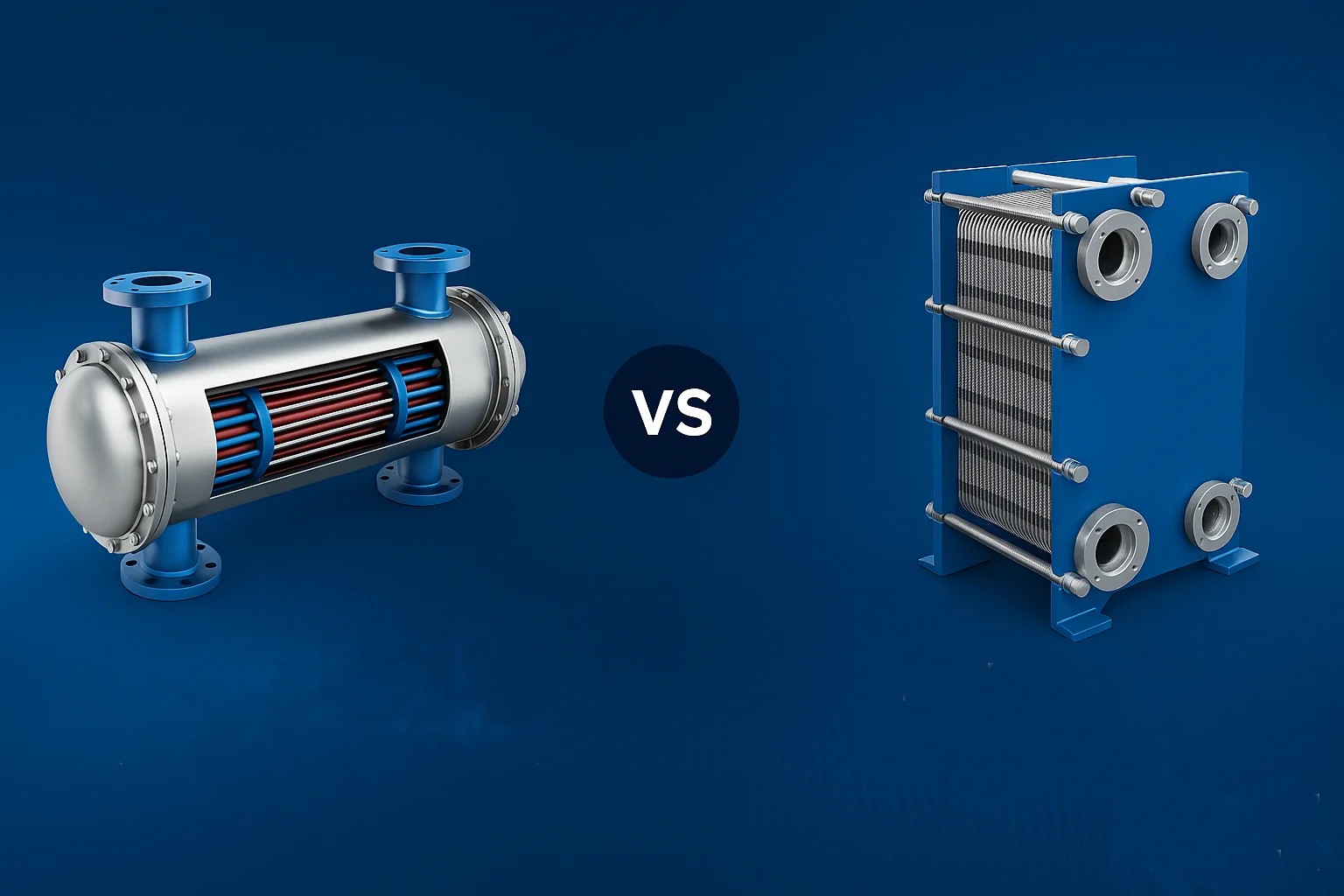
Shell & Tube Condensers are a preferred choice for heavy-duty applications due to their durable construction and high-pressure handling capacity. Consisting of a series of tubes enclosed within a cylindrical shell, these condensers allow one fluid to pass through the tubes while another flows around them inside the shell. This design offers excellent heat transfer efficiency, especially in large-scale industrial cooling, marine applications, and power plants. Moreover, Shell & Tube Condensers are easy to maintain, as tube bundles can be removed for cleaning or replacement, making them ideal for processes involving dirty or fouling fluids.
Plate Condensers: Compact and Highly Efficient
Plate Condensers, also known as Plate Heat Exchangers, use a series of corrugated metal plates to transfer heat between two fluids. Their compact size makes them highly space-efficient, while the large surface area of plates ensures excellent heat transfer rates. Plate Condensers are ideal for clean fluid applications, such as food processing, pharmaceuticals, and HVAC systems, where maintenance downtime needs to be minimal. However, they are less suitable for applications with high fouling potential, as cleaning requires complete disassembly.
Key Performance Differences
When comparing Shell & Tube Condensers to Plate Condensers, thermal efficiency, space requirements, and maintenance considerations are the most critical factors. Plate Condensers typically provide better heat transfer efficiency due to the turbulence created by their plate design, while Shell & Tube units excel in handling higher temperatures, pressures, and dirty fluids. In terms of installation, Plate Condensers require less space and are lighter in weight, making them ideal for retrofits or compact setups. On the other hand, Shell & Tube Condensers offer unmatched longevity and are more forgiving when handling large thermal loads and challenging operating conditions.
Choosing the Right Condenser for Your Application
The choice between a Shell & Tube and Plate Condenser depends on factors like operating environment, fluid cleanliness, maintenance accessibility, available space, and budget. For industrial processes with harsh conditions, high temperatures, and potential for fouling, Shell & Tube Condensers are the superior choice. For applications where space is at a premium and fluids are clean, Plate Condensers deliver excellent thermal performance in a smaller footprint. A thorough assessment of system needs will ensure that the chosen condenser type optimizes both performance and operational costs.