
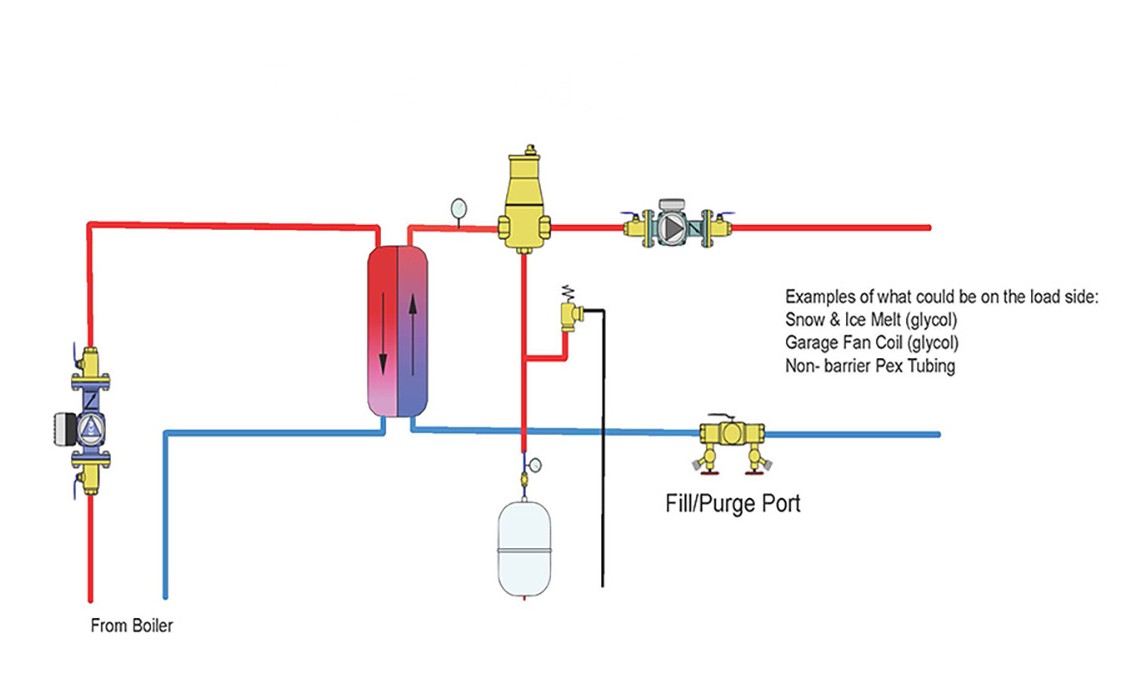
A brazed plate heat exchanger (BPHE) is widely used in HVAC, refrigeration, industrial cooling, and renewable energy systems due to its compact design and high heat transfer efficiency. However, to achieve stable performance and long service life, it requires a well-designed control system. Since BPHEs operate under varying pressures and temperatures, even small fluctuations can affect performance or damage the unit if not properly managed. The control system ensures that operating parameters such as flow rate, pressure, and temperature remain within safe and efficient limits, preventing risks such as overheating, cavitation, or plate deformation.
The control system typically manages critical aspects like temperature regulation, pressure control, and fluid distribution. Temperature sensors and electronic controllers help maintain precise heat transfer by adjusting fluid flow or switching valves to balance thermal load. Pressure relief mechanisms protect the exchanger from sudden spikes, while flow regulators ensure even distribution across the plates to avoid hotspots. In modern installations, advanced electronic control units (ECUs) and automation software are integrated, allowing the BPHE to function efficiently with minimal manual intervention. These digital systems can also be connected to building management systems (BMS) or industrial process networks for centralized monitoring and control.
In practical applications, the control system plays an important role in enhancing both efficiency and safety. For example, in refrigeration and air conditioning systems, it prevents refrigerant pressure surges while maintaining precise cooling capacity. In process industries, it ensures consistent temperature control for hydraulic oils, lubricants, or chemicals, protecting sensitive equipment from overheating. Renewable energy applications such as solar heating and geothermal systems also rely on automated BPHE controls to balance fluctuating input conditions and ensure uninterrupted heat transfer.
By continuously managing flow, temperature, and pressure, a control system not only improves the energy efficiency of brazed plate heat exchangers but also significantly reduces downtime and maintenance requirements. It extends equipment life by minimizing mechanical stress on the brazed joints and ensures smooth, reliable operation even in demanding conditions. As industries move toward smarter and more energy-conscious solutions, integrating advanced control systems with BPHEs has become a standard practice to achieve maximum efficiency, safety, and durability.