The Brains Behind the Brawn: Why GPHEs Demand Smart Control
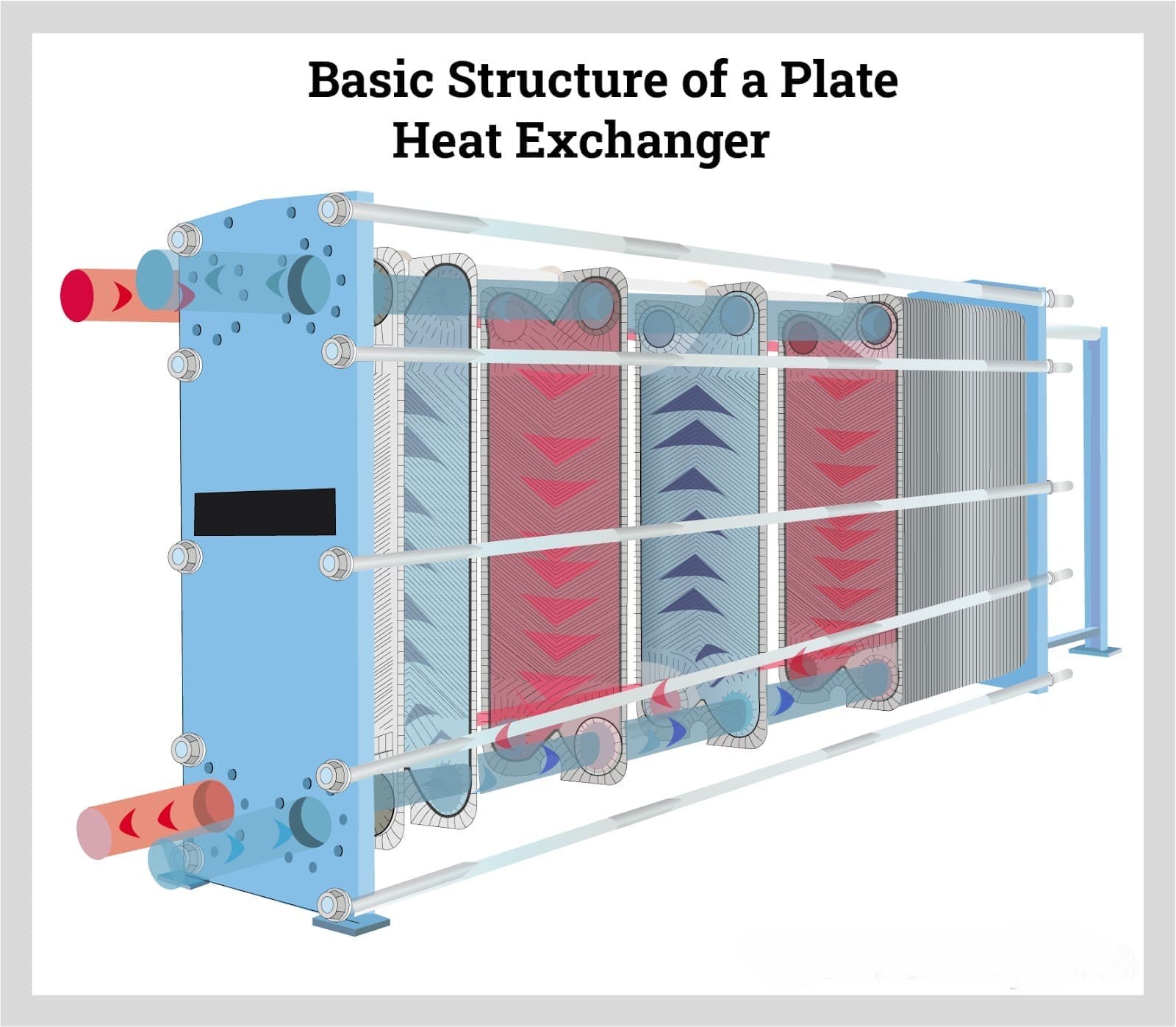
While the Gasketed Plate Heat Exchanger (GPHE) excels in efficient heat transfer, its optimal performance and longevity are inextricably linked to a well-designed GPHE control system. These systems are the “brains” that ensure the heat exchanger operates precisely according to process requirements, preventing costly deviations. Without effective control, temperature fluctuations can lead to off-spec products, energy waste, or even damage to the equipment itself, particularly during transient operations like start-up or changes in load. A robust heat exchanger control system actively manages critical parameters such as outlet temperatures, flow rates, and pressures, ensuring consistent and predictable heat transfer. This precise management is crucial for maintaining process stability, maximizing energy efficiency, and safeguarding the investment in the heat exchanger, ultimately contributing to reduced operational costs and enhanced system reliability. A good control system for a gasketed plate heat exchanger (GPHE) focuses on three primary objectives: maintain the required approach temperature, protect the plate pack and gaskets from harmful conditions, and minimize energy use while avoiding fouling or leaks. Achieve this by installing reliable Temperature Sensors (RTD or thermocouple) at inlets/outlets, Flow Meters on each circuit, and Differential Pressure Monitoring across the plate pack to detect clogging or fouling early. Add Leak Detection Sensors (conductivity probes or double‑wall leak alarms) where hygienic or hazardous fluids are handled so small breaches trigger automatic isolation and alerts before contamination or major downtime occurs.
Fundamental Control Loops: Orchestrating Temperature, Flow, and Pressure
At the heart of most GPHE control systems are fundamental feedback loops designed to maintain key process variables within tight tolerances. Temperature control is often the primary objective, achieved by modulating the flow rate of one of the fluids (usually the utility fluid) through the heat exchanger. This typically involves a temperature sensor at the outlet, feeding data to a PID controller, which then adjusts an actuated control valve on the utility stream. Similarly, flow control systems ensure stable throughput for critical processes, often employing flow meters and control valves to maintain a set flow rate, which can indirectly influence heat transfer. Pressure control is also vital, especially to prevent overpressure situations or to maintain a constant differential pressure across the heat exchanger, often using pressure transmitters and relief valves. These interconnected control loops work in concert, forming a dynamic network that responds to changes in demand and supply, upholding the integrity and performance of the heat transfer process. Implement cascaded and feedforward control loops rather than single‑loop fixes: a flow/PID cascade (setpoint to pump VFD or control valve) stabilizes transfer when inlet temperatures change, while ratio control works well when one circuit must track another (e.g., a heat recovery return). Use VFD Pump Speed Control and Modulating Control Valves for smooth capacity matching, and include Bypass And Mixing Valves for start/stop transients or freeze protection. Automate CIP routines (CIP Automation) with dedicated valves and sequencing so cleaning runs occur on schedule or triggered by fouling trends from ΔP logs, reducing manual error and downtime.
Advanced Control Strategies for Peak Performance and Integration
Beyond basic single-loop control, modern GPHE applications often benefit from more advanced control strategies and system integration. Cascade control, for instance, can enhance temperature stability by using a primary temperature controller to adjust the setpoint of a secondary flow controller, providing faster and more precise responses to disturbances. For complex processes with multiple interacting variables, model predictive control (MPC) or other advanced regulatory control (ARC) techniques can anticipate changes and optimize control actions across several heat exchangers simultaneously, leading to significant gains in process optimization and energy savings. Furthermore, integrating the GPHE control system into a broader Distributed Control System (DCS) or SCADA system allows for centralized monitoring, data logging, alarm management, and remote operation, providing operators with a comprehensive view and finer command over the entire plant’s thermal management infrastructure. This level of sophistication transforms the GPHE from a standalone unit into an integral, intelligently managed component of a larger, highly efficient industrial process. Integrate the GPHE into PLC/SCADA systems for centralized alarms, data logging and remote control; store trends for Thermal Performance Monitoring (UA trending) and Fouling Detection Algorithms that raise maintenance work orders when performance drops. Add Safety Interlocks and Alarm And Notification System rules for overpressure, high gasket compression indicators, or abnormal thermal cycling; consider Predictive Maintenance Analytics and IIoT/Remote Monitoring to correlate vibration, ΔP rise and temperature approach changes for early fault detection. Finally, design unit sequencing (Multi‑Unit Sequencing) and pump staging to share load efficiently and include clear procedures (tightening logs, LOTO) so control automation and operator practice together protect gasket life and sustain reliable heat transfer.