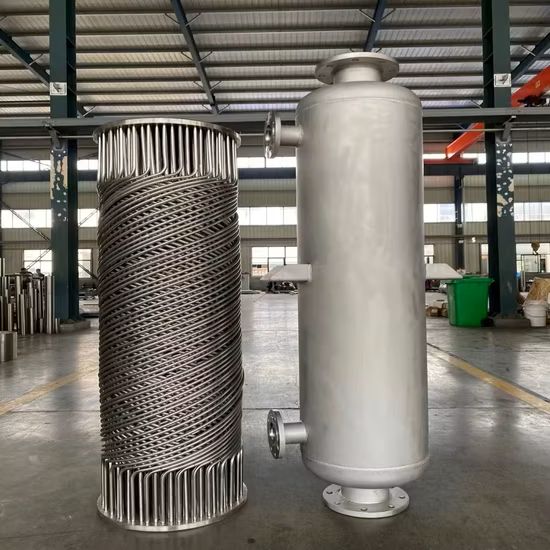
Corrosion Resistance in Removable Tube Heat Exchangers is a critical consideration for many industries aiming to optimize performance and longevity in harsh operating environments. Removable tube designs offer the unique advantage of facilitating easier maintenance and replacement of tubes, which is particularly vital when corrosion-related issues emerge. By employing advanced materials and surface treatments, these heat exchangers can effectively resist chemical and environmental degradation, ensuring that their efficiency is maintained over time. This not only reduces downtime but also minimizes repair costs while enhancing overall system reliability. Corrosion Resistance in Removable Tube Heat Exchangers represents a critical frontier in industrial engineering, where material science and advanced design converge to combat aggressive environmental challenges. Modern heat exchanger technologies are now leveraging innovative alloy compositions and surface treatments that significantly enhance long-term performance and durability.
The engineering behind removable tube heat exchangers focuses on leveraging corrosion-resistant alloys and specialized coatings to combat the effects of aggressive media. Techniques such as thermal spraying, anodizing, and other surface modification processes are commonly used to provide a protective barrier against rust and oxidation. Furthermore, regular maintenance and inspection schedules are integral to monitoring the condition of the tubes, ensuring that any signs of corrosion are addressed promptly before they escalate into more severe issues. High-ranking keywords like Corrosion Resistance, Removable Tube Heat Exchangers, and Heat Exchanger Maintenance are essential for attracting a targeted audience. These strategic material selections, including titanium, duplex stainless steel, and specialized nickel-based alloys, provide remarkable protection against chemical degradation, thermal stress, and complex industrial environments. The evolution of corrosion-resistant technologies has transformed how engineers approach design, maintenance, and operational longevity in challenging processing conditions.
Advancements in material science and engineering have led to the development of innovative solutions that further boost corrosion resistance in removable tube systems. These innovations enable heat exchangers to perform reliably even in environments with high chloride concentrations, acidic conditions, or extreme temperatures. Integrating smart monitoring systems and predictive maintenance strategies into the overall design has helped industries preemptively identify areas of concern, leading to enhanced process safety and operational efficiency. As a result, industries such as chemical processing, power generation, and petrochemical manufacturing continue to invest in state-of-the-art designs that promise enhanced durability and performance. The implementation of advanced protective strategies goes beyond traditional material selection, incorporating sophisticated coating technologies and electrochemical protection mechanisms. Specialized surface treatments like thermal spray coatings, plasma nitriding, and molecular bonding techniques create robust barriers against corrosive media, extending equipment lifecycle and reducing maintenance costs.
Ultimately, focusing on corrosion resistance through thoughtful design, material selection, and maintenance practices is a win-win for operations. Companies that prioritize these aspects not only extend the life span of their heat exchangers but also secure higher returns on investment through improved reliability and reduced interruption costs. Emphasizing high-ranking SEO keywords like Advanced Corrosion Protection, Heat Exchanger Efficiency, and Industrial Reliability will help your content reach professionals seeking effective and durable heat exchanger solutions. Industries such as petrochemical, marine, and pharmaceutical sectors are witnessing unprecedented improvements in heat exchanger reliability through these cutting-edge approaches. By integrating intelligent corrosion monitoring systems and predictive maintenance protocols, engineers can now anticipate and mitigate potential degradation before significant structural compromise occurs.