
Material Composition and Inherent Durability
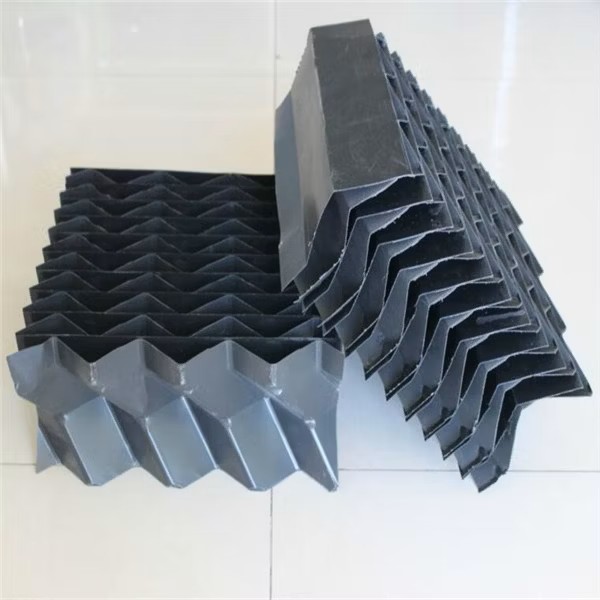
The fundamental difference lies in their construction: Polyvinyl Chloride (PVC) is a rigid thermoplastic, while Fiberglass Reinforced Plastic (FRP) is a composite material featuring a polymer matrix strengthened by glass fibers. This gives FRP a significant advantage in structural integrity and impact resistance. PVC panels can become brittle over time, especially in colder climates, making them susceptible to cracking during installation or from hail impact. FRP, conversely, offers superior tensile strength and durability, capable of withstanding harsh physical conditions and handling, which translates to a longer service life in demanding environments. Polyvinyl Chloride (PVC) is the most widely used material for drift eliminators in the cooling tower industry, primarily due to its excellent cost-effectiveness and versatility. PVC drift eliminators are typically manufactured through an extrusion process, which allows for complex, efficient profiles that effectively capture water droplets. This material offers great resistance to chemical corrosion from standard water treatment programs and is inherently resistant to biological growth. Because it is lightweight and can be easily solvent-welded or mechanically fastened, PVC drift eliminator installation is straightforward and less labor-intensive. For the majority of standard comfort cooling and industrial process applications with operating temperatures below 130°F (54°C), PVC provides a reliable and budget-friendly solution for achieving low drift rates.
FRP Drift Eliminators: Unmatched Durability for Demanding Environments
Fiberglass Reinforced Plastic (FRP) drift eliminators are the premium choice for applications where operational conditions exceed the limitations of PVC. The key advantage of FRP cooling tower components lies in their superior structural strength and rigidity, which comes from glass fibers embedded in a polyester or vinyl ester resin matrix. This composition allows FRP eliminators to handle significantly higher operating temperatures, often up to 180°F (82°C) or more, without sagging, warping, or becoming brittle. Furthermore, pultruded FRP offers exceptional UV resistance and can withstand harsher chemical environments and higher levels of total dissolved solids (TDS) than PVC, making it the ideal material for heavy-duty industrial cooling towers found in power plants, petrochemical facilities, and steel mills. While both materials offer excellent corrosion resistance to standard cooling tower water treatments, their performance diverges under extreme conditions. PVC has a lower maximum service temperature, typically around 140-160°F (60-71°C), and can soften or warp if exposed to temperatures near this limit, compromising efficiency. FRP maintains its structural integrity and dimensional stability at much higher temperatures, often exceeding 200°F (93°C). This makes FRP the unequivocal choice for applications involving high heat or highly aggressive chemical treatments where exceptional corrosion resistance is paramount.
Making the Right Material Selection: Application and Longevity
The choice between PVC and FRP often boils down to a balance between initial investment and long-term value. PVC drift eliminators are generally less expensive upfront and are a cost-effective, reliable solution for standard commercial and light industrial applications with moderate operating conditions. However, for heavy industrial settings, wastewater treatment plants, or facilities with high thermal loads, the higher initial cost of FRP is justified. Its exceptional longevity, reduced risk of failure, and minimal maintenance needs often result in a lower total cost of ownership over the lifespan of the cooling tower, making it the more economical choice in the long run. Choosing between PVC and FRP ultimately comes down to the specific demands of your cooling tower environment and your long-term operational goals. While PVC offers a lower upfront cost, FRP provides a longer service life and greater reliability in challenging conditions. The superior strength of pultruded FRP drift eliminators allows for wider support spans, potentially reducing the amount of structural support required and simplifying installation in large-scale towers. While a cellular PVC drift eliminator is perfect for most commercial HVAC systems, investing in FRP is a strategic decision for industrial sites to prevent premature failure, reduce replacement frequency, and ensure maximum operational uptime in high-temperature or aggressive chemical environments.