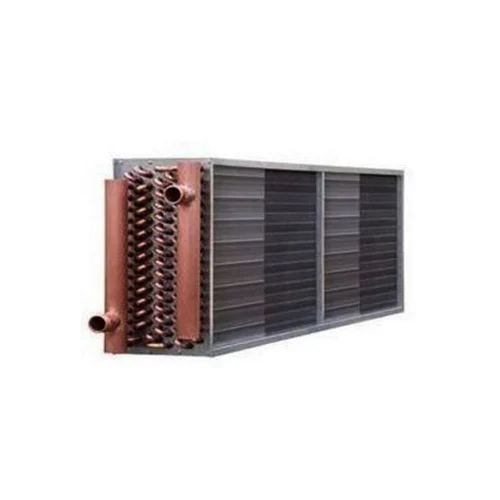
In today’s energy-conscious HVAC market, optimizing the efficiency of Direct Expansion (DX) coils is crucial for achieving superior system performance and reducing operational costs. DX coils are widely used in air handling units (AHUs), rooftop units, and split systems due to their compact design and direct refrigerant cooling process. However, to unlock their full potential, several design, installation, and operational factors must be fine-tuned. This article highlights the most critical efficiency elements that drive high-performance DX coil operation in modern HVAC systems.
Correct Coil Sizing and Face Velocity
The first step in maximizing DX coil efficiency is ensuring proper coil sizing. Undersized coils may fail to deliver adequate cooling, while oversized coils can lead to moisture carryover and inefficient dehumidification. Face velocity—the speed at which air travels across the coil—should typically range between 400–500 FPM (feet per minute). Exceeding this can reduce heat transfer efficiency and increase pressure drop.
Airflow Management and Coil Face Coverage
Air must flow evenly across the coil face to ensure uniform temperature and moisture removal. Uneven airflow leads to hotspots and underperformance. Proper duct design, coil face seals, and smooth transitions in the AHU help distribute air consistently across the entire coil surface. For variable air volume (VAV) systems, pairing the coil with variable-speed fans ensures adaptability and energy savings.
Coil Cleanliness and Maintenance
Even the most efficient DX coils lose performance when dust, debris, or biological growth accumulate on fin surfaces. Dirty coils restrict airflow and reduce heat transfer, leading to higher energy consumption and reduced cooling output. Regular coil cleaning—especially before peak cooling seasons—is essential to maintain rated performance. Using anti-microbial coatings or UV lights can also help control biological fouling in humid climates.
Coil Orientation and Condensate Drainage
The orientation of the DX coil—horizontal or vertical—must align with system design to ensure proper condensate drainage. Poor drainage leads to water accumulation, increased air resistance, and potential coil freezing. Well-sloped drain pans and effective trap designs are necessary to avoid coil inefficiencies caused by moisture retention.
Material Selection for Long-Term Performance
The choice of coil materials—such as copper tubes, aluminum fins, or epoxy-coated components—affects both performance and longevity. High-conductivity metals improve thermal exchange, while corrosion-resistant coatings are crucial in coastal or chemically aggressive environments. Hydrophilic fin coatings further enhance water shedding and reduce fouling.