
Hydraulic oil chillers are designed to maintain the optimum temperature of hydraulic oil used in machinery such as CNC machines, presses, injection molding systems, and power packs. While mechanical components like compressors and condensers handle the physical cooling, it’s the electrical components that manage, monitor, control, and protect the entire system.
Think of the electrical system as the brain and nervous system of the chiller. From initiating compressor operations to detecting fault conditions and ensuring safety cutoffs, every vital function is triggered, monitored, or controlled by electrical elements. The reliability, responsiveness, and efficiency of your oil chiller depend heavily on the quality, integration, and automation of these electrical components.
Key Electrical Components in a Hydraulic Oil Chiller
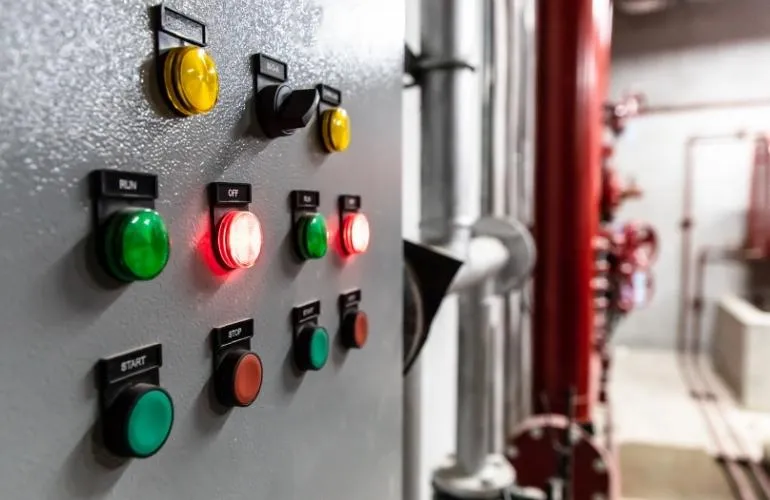
Control Panel
The central hub of the chiller’s electrical system, the control panel houses:
- Programmable Logic Controllers (PLC) or microcontrollers
- Circuit breakers and relays
- Timers and indicators
- Emergency shutoff buttons
It provides:
- User interface for operation (manual or digital touchscreen)
- Real-time data like temperature, pressure, alarms
- Automated control of all chiller components
Temperature Controller / Thermostat
- Monitors oil or refrigerant temperature and adjusts system parameters to maintain the setpoint.
- Sends signals to start or stop the compressor, fan, or water pump.
- Can be analog or digital (PID controllers offer better precision).
Compressor Starter (DOL, Star-Delta, VFD)
The compressor is a high-power device and requires proper electrical starting methods:
- DOL (Direct-On-Line) Starter: Used for small chillers, simple but causes high inrush current.
- Star-Delta Starter: Reduces starting current in medium-capacity compressors.
- VFD (Variable Frequency Drive): Most efficient; controls motor speed based on load, reduces energy use, and improves compressor life.
Overload Relays & Motor Protectors
Purpose:
- Protect motors (compressor, fan, pump) from overheating or drawing excess current
- Automatically cuts off power to prevent damage
Features:
- Manual or auto reset
- Adjustable current settings
- Sometimes include built-in phase loss or imbalance detection
Contactor Relays
These are switching devices that operate heavy motors and components remotely using low-voltage signals.
Where Used:
- Compressor switching
- Fan or blower motor control
- Oil pump actuation
Electrical Fans and Blower Motors
Essential in air-cooled chillers for rejecting heat through the condenser.
Specs:
- Operate at 230V (single-phase) or 415V (three-phase)
- Often controlled by relays or fan speed controllers
- Integrated with temperature feedback loops
Smart Feature:
- Variable fan speed control based on head pressure or oil temp (saves energy)
Advanced Additions in Modern Hydraulic Oil Chillers
IoT Integration & Smart Controls
- Wi-Fi or GSM modules allow remote monitoring
- SMS/email alerts in case of faults
- Predictive maintenance via real-time sensor data
SCADA and EMS Integration
- Enables centralized control of multiple chillers
- Tracks energy usage, performance, and efficiency trends
Power Supply Considerations
- Input Voltage: Must match industrial standards (230V/1Ph or 415V/3Ph)
- Phase Protection: Avoids incorrect rotation or motor burnout
- Surge Protection Devices (SPDs): Shield sensitive electronics from voltage spikes
- Isolation Transformer: Sometimes used in high-sensitivity environments
The electrical components in a hydraulic oil chiller are not just control tools—they are enablers of intelligent, reliable, and safe operation. From powering up motors to regulating temperature and alerting users of any fault, these components ensure your oil chiller works optimally without fail.
As chillers evolve into smart, IoT-enabled systems, the role of electrical integration becomes even more critical. Choosing a chiller with a well-designed electrical layout can lower energy consumption, increase uptime, enhance automation, and extend the lifespan of your machinery.
In short, behind every efficient cooling cycle is a precise, powerful electrical system running silently but significantly.