
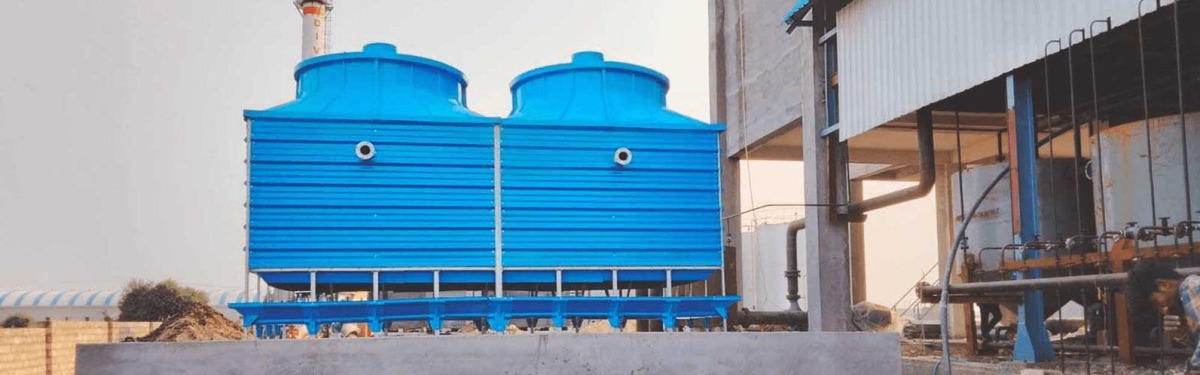
Energy efficiency in square type cooling towers is a crucial factor for industries and facilities aiming to reduce operational costs and environmental impact. Square cooling towers, also known as box-type or rectangular induced draft towers, are inherently designed for high efficiency. Their unique structure supports advanced air and water management, integrating modern technologies like variable frequency drives (VFDs), EC fans, and intelligent automation systems. As industries face increasing pressure to meet energy regulations and carbon reduction goals, understanding how square cooling towers deliver energy savings has never been more important.
Integration of Variable Frequency Drives (VFDs)
Modern square towers often support VFDs on their fan motors. VFDs allow operators to precisely adjust fan speeds according to real-time load requirements. During cooler weather or periods of partial system demand, the tower automatically reduces fan speed to save energy. This adaptability can lead to energy savings of 20–40% annually compared to fixed-speed fans, while also reducing mechanical wear and extending motor life.
High-Efficiency Fill Media Improves Thermal Performance
Energy efficiency in square type cooling towers is closely linked to the design and material of the fill media. Today’s towers use advanced PVC or polypropylene fills with engineered geometries that maximize surface area and improve water distribution. These fills provide efficient heat transfer while reducing airflow resistance, enabling fans to achieve the same cooling output with less power input.
Reduced Pumping Energy Through Compact Design
Square cooling towers typically have a more compact footprint and balanced internal layout compared to large round towers. This reduces the pressure drop in water circuits, requiring smaller pumps or allowing existing pumps to operate at reduced speeds. Lower pump head requirements mean significant reductions in overall system energy consumption.
Advanced EC Fans and Intelligent Controls
Some square towers integrate electronically commutated (EC) fans, which deliver higher efficiency at variable speeds compared to traditional AC motors. Coupled with smart controllers, these fans continuously adjust operation based on water temperature, ambient conditions, and real-time load data. Intelligent controls can further optimize the interplay between fan speed, pump flow, and tower operation, minimizing wasted energy.
Noise Reduction Enhances Efficiency
Square cooling towers often include fan silencers and enclosed housings that reduce noise and vibration. Lower vibration reduces mechanical stress on components, preventing premature failures and inefficiencies caused by misalignment or resonance. Furthermore, smoother, quieter fan operation results in less turbulence and drag, which translates into lower power draw.
Modular Design Enables Future Energy Upgrades
Square cooling towers are often built as modular systems, allowing operators to upgrade fill media, fan assemblies, drift eliminators, and control systems without major structural changes. This makes it easier and more cost-effective to retrofit older towers with the latest energy-saving technologies, extending their useful life while improving operational efficiency.
Energy efficiency in square type cooling towers is more than a design feature—it’s a powerful operational advantage. With optimized airflow paths, VFD and EC fan integration, advanced fill media, reduced pumping head, and intelligent control options, square cooling towers deliver substantial energy savings while providing reliable cooling performance. Their adaptability to future upgrades makes them a long-term solution for industries seeking to lower costs, minimize environmental impact, and build sustainable cooling infrastructure. Investing in square type cooling towers is a proven path to operational excellence, reduced carbon footprint, and lasting energy efficiency gains.