
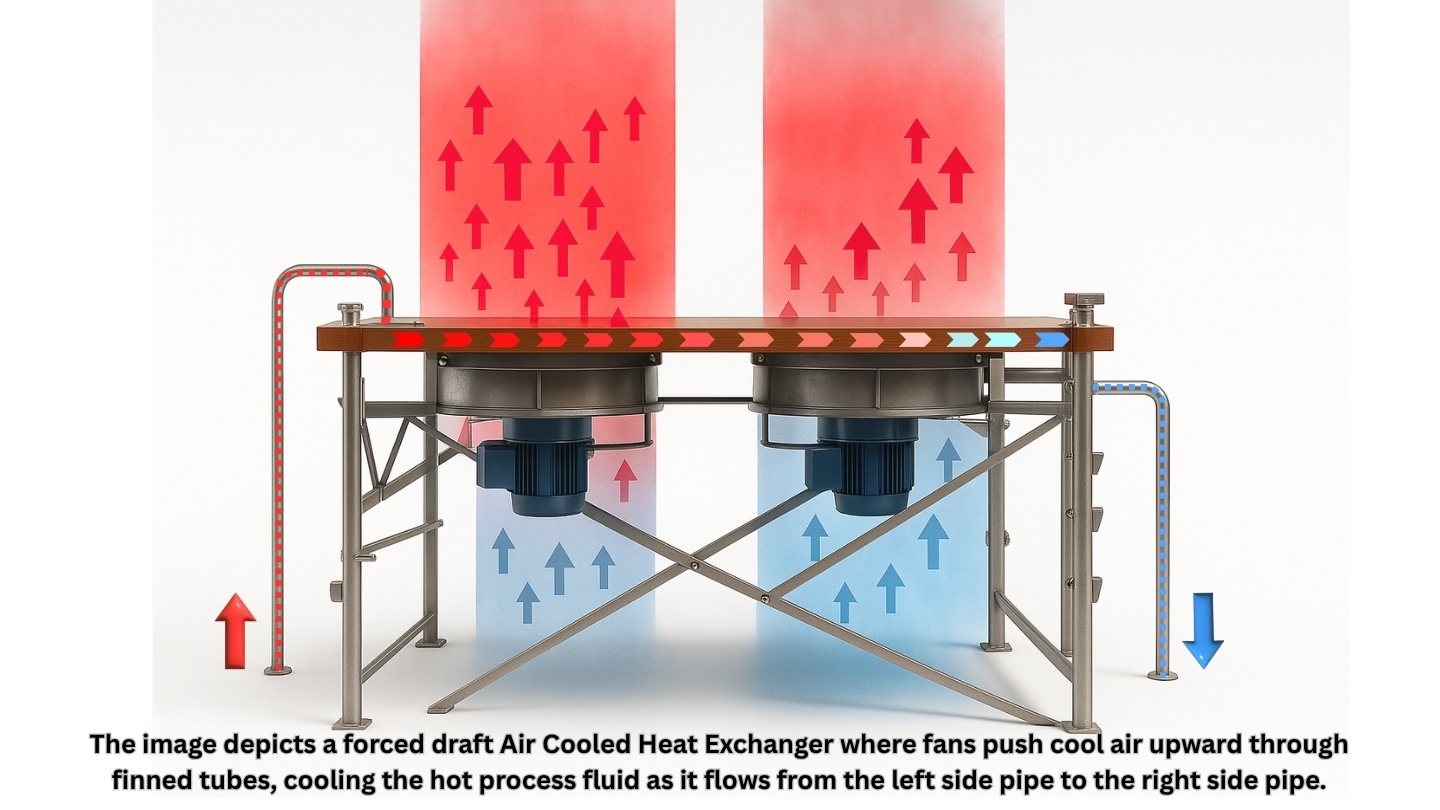
Operating Air Cooled Heat Exchangers (ACHEs) efficiently isn’t just about keeping temperatures in check—it’s about smart energy management that directly impacts your bottom line. One often-overlooked tip: installing variable frequency drives (VFDs) on fan motors can reduce energy consumption by up to 50% during low-load or cooler ambient conditions. Unlike fixed-speed fans that run at full capacity regardless of demand, VFD-controlled systems dynamically adjust airflow based on real-time process data—ensuring optimal heat rejection without wasting power. Some forward-thinking plants now pair this with AI-driven control algorithms that predict thermal load changes using weather forecasts and historical plant data, allowing for proactive fan modulation before inefficiencies occur. Operating air-cooled heat exchangers (ACHE) efficiently is essential for maximizing energy savings and ensuring long-term performance. One of the most effective energy-saving tips is to ensure that the finned tubes are always clean. Dirt and debris accumulation can significantly reduce the heat transfer efficiency of the exchanger. Regular maintenance and cleaning schedules should be implemented to keep the system operating at peak performance. Additionally, using high-pressure air cleaning or automated cleaning systems can reduce the manual labor and frequency of cleaning, thus saving both time and energy.
Another unique strategy is optimizing fin spacing and tube layout during initial design or retrofit phases. While tighter fin spacing increases surface area, it also raises air resistance and fan power requirements. A balanced design—using computational fluid dynamics (CFD) simulations—can tailor the exchanger geometry to match site-specific wind patterns and seasonal temperature swings, reducing parasitic losses. Additionally, applying hydrophobic or anti-fouling coatings to fins not only minimizes cleaning frequency but also maintains peak airflow efficiency over time. For facilities in high-dust environments, integrating automated air filters or cyclonic pre-separators upstream of the ACHE can prevent particulate buildup before it reaches the tubes—cutting maintenance costs and preserving energy efficiency. Another crucial aspect is the proper sizing of the air-cooled heat exchanger. Choosing an appropriately sized exchanger for your specific heat load ensures that it operates within its optimal range. An oversized exchanger may run inefficiently, consuming more energy than necessary, while an undersized one may struggle to meet the heat load demands, leading to increased energy consumption and potential system failures. Utilizing advanced thermodynamic modeling tools during the selection process can help in determining the precise size and configuration needed for maximum efficiency.
Don’t underestimate the impact of simple operational habits: scheduling routine inspections during off-peak hours, aligning cleaning cycles with seasonal ambient drops, and training operators to monitor pressure drop trends can uncover hidden inefficiencies early. Modern ACHEs equipped with IoT sensors can send alerts when airflow resistance exceeds thresholds or when fan vibration indicates misalignment—enabling predictive interventions before energy waste escalates. Pairing these insights with digital twin modeling allows engineers to simulate “what-if” scenarios for fan speed, fin density, or even orientation relative to prevailing winds—unlocking incremental gains that compound into significant annual savings. Additionally, optimizing the airflow through the heat exchanger can lead to significant energy savings. This can be achieved by adjusting the fan speeds to match the current heat load. Variable frequency drives (VFDs) can be installed on the fans to automatically adjust the airflow based on the thermal demand, ensuring that the system only uses the energy needed to cool the process fluid. Moreover, ensuring adequate insulation on the fluid lines leading to and from the heat exchanger can prevent heat loss or gain, further enhancing energy efficiency.