
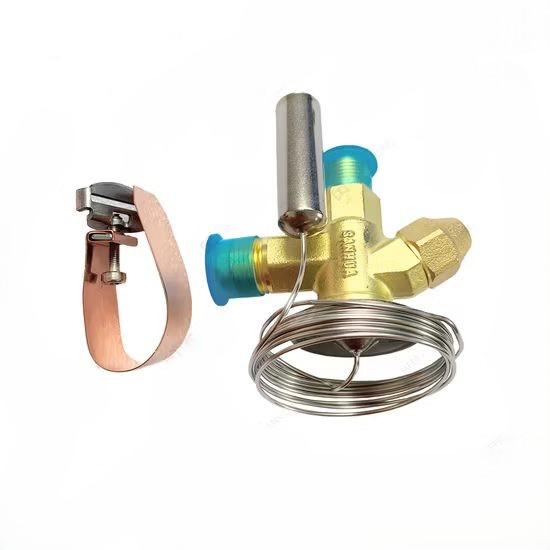
Expansion valves in oil chiller systems play a critical role in controlling the flow of refrigerant into the evaporator, where heat exchange with the oil occurs. They act as dynamic regulators that convert high-pressure refrigerant from the condenser into a low-pressure, low-temperature liquid-vapor mix. This drop in pressure is essential for the refrigerant to absorb heat from the circulating oil and maintain precise temperature control across industrial processes. Whether used in CNC machines, hydraulic power packs, or plastics industries, the choice and performance of the expansion valve directly affect the chiller’s responsiveness, energy efficiency, and long-term reliability.
Purpose of Expansion Valves in Oil Chillers
The primary function of an expansion valve is to:
- Regulate refrigerant flow into the evaporator based on load demand.
- Control superheat (the temperature difference between the evaporator outlet and the refrigerant’s saturation temperature).
- Maintain evaporator efficiency, preventing overfeeding (liquid floodback) or underfeeding (starving the evaporator).
- Stabilize oil temperature under varying industrial loads.
Because oil chillers often deal with fluctuating thermal demands and precision machinery, this control must be both accurate and adaptive.
Types of Expansion Valves in Oil Chillers
Thermostatic Expansion Valves (TXV)
- Working Principle: A sensing bulb attached to the evaporator outlet senses temperature. Based on that and evaporator pressure, the valve adjusts the flow.
- Common Uses: Fixed-load systems like basic hydraulic chillers.
- Pros: Reliable, simple, mechanical.
- Cons: Slower response time; not ideal for variable loads.
Electronic Expansion Valves (EEV)
- Working Principle: Controlled by a microprocessor using temperature and pressure sensors.
- Common Uses: Variable load or high-precision chillers.
- Pros: Precise, fast response, supports energy efficiency.
- Cons: Requires electronic controller and sensors.
Capillary Tubes (Obsolete for Oil Chillers)
- Working Principle: Fixed orifice provides constant restriction.
- Common Uses: Very small, constant-load chillers.
- Pros: Inexpensive, simple.
- Cons: Not suitable for varying loads or modern systems.
Operation and Behavior
Expansion valves work in response to:
- Refrigerant superheat at the evaporator outlet.
- Evaporator pressure changes.
- Oil temperature variation, which changes thermal demand.
- Ambient temperature, indirectly influencing load balance.
They continuously adjust to ensure the evaporator has just enough refrigerant to absorb heat from oil efficiently without flooding the compressor.
Why Superheat Control Is Critical in Oil Chillers
- Too Little Superheat: Indicates liquid refrigerant is leaving the evaporator, risking compressor damage.
- Too Much Superheat: Evaporator is not fully utilized; poor cooling performance and increased compressor load.
- Correct Superheat (5–10°C typically): Ensures full evaporation and compressor protection.
Design Considerations for Oil Chiller Expansion Valves
Load Variability
Oil chillers are often attached to machines with rapid on/off cycles (e.g., CNC, injection molding), so valves must respond quickly.
Oil Viscosity and Contamination
Design must accommodate oils with different viscosities and potential contamination, which affects heat exchange efficiency.
Material Compatibility
Valve components must be chemically compatible with refrigerants and any potential trace oil vapor (like synthetic or mineral oils).
Pressure Drop Management
Well-designed valves minimize pressure losses and ensure stable flow regardless of ambient temperature or load.
Modern Innovations in Expansion Valves
- Smart EEVs with adaptive learning algorithms
- Wireless/Bluetooth valves for easy diagnostics
- Self-cleaning filters at valve inlets
- Integrated control systems with PLC and SCADA compatibility
- Fail-safe shutdown mode to prevent compressor damage in case of power loss
Expansion valves in oil chiller systems are the unsung heroes of thermal regulation. Whether mechanical or electronic, they serve as intelligent gateways that ensure refrigerant enters the evaporator under the right conditions for maximum heat absorption. A well-chosen and properly maintained expansion valve improves system efficiency, stabilizes oil temperatures, and protects key components like the compressor and evaporator. With industrial demands becoming more dynamic and precision-oriented, the move toward smarter, sensor-driven expansion valves is a key step in building reliable, energy-efficient oil cooling systems for the future.