
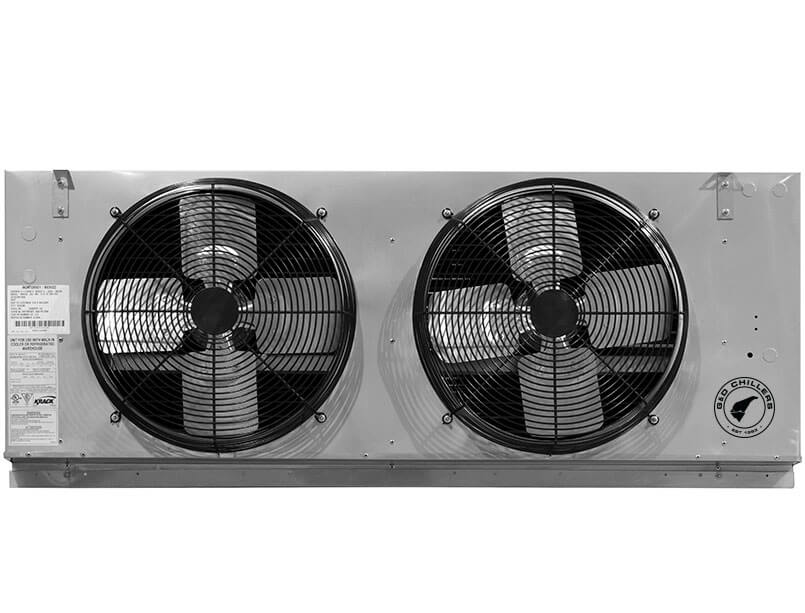
In glycol chiller systems, we often discuss compressors, glycol-water mixtures, condensers, or controls. However, one essential component remains underappreciated — the fan.
Fans are the heartbeat of air-cooled glycol chillers, managing airflow, facilitating heat dissipation, and directly influencing overall efficiency. From cooling the refrigerant to maintaining ideal system pressure, fans are critical to the chiller’s performance, energy use, and reliability.
As industries demand low-noise, high-efficiency, and compact cooling solutions, understanding the design, types, and control of fans in glycol chillers becomes essential.
The Function of Fans in Glycol Chillers
At their core, fans in glycol chillers serve the purpose of heat rejection. During operation, the compressor compresses the refrigerant, which absorbs heat from the glycol. This heat must be removed from the system to maintain desired process temperatures.
Fans pull or push ambient air across the condenser coils, transferring heat from the refrigerant to the outside air.
Fan Functions:
- Ensures proper refrigerant condensation
- Helps maintain ideal pressure levels in the condenser
- Prevents compressor overheating
- Balances the thermal load under different ambient conditions
- Contributes to maintaining the set glycol temperature
Without a properly functioning fan system, the chiller would overheat, lose efficiency, and ultimately shut down due to high-pressure trips.
Types of Fans in Glycol Chillers
Depending on the chiller design, cooling capacity, and application, different types of fans are used:
Axial Fans
- The most common type used in outdoor air-cooled glycol chillers
- Designed to move large volumes of air at low pressure
- Lightweight, efficient, and cost-effective
- Typically used in top-mounted condenser configurations
Use Cases: Breweries, dairy chilling, HVAC rooftop chillers
Centrifugal Fans
- Used when higher static pressure is needed (e.g., ducted air systems)
- Moves air at medium to high pressures, usually in indoor chiller applications
- Enclosed in scroll-type housings for directional air control
- Quieter but bulkier than axial fans
Use Cases: Pharmaceutical cleanrooms, lab environments, process rooms with ducting
EC (Electronically Commutated) Fans
- A hybrid of AC power input with DC internal operation
- Integrated with onboard electronics for precise speed control
- More efficient and quieter than traditional motors
- Built-in feedback systems for fault detection and performance monitoring
Use Cases: Energy-efficient chillers, data centers, medical imaging cooling systems
Fan Control Systems in Glycol Chillers
To maximize efficiency, fans are rarely run at full speed all the time. Instead, smart control systems regulate fan operation based on demand, ambient temperature, or refrigerant pressure.
Fan Speed Control Options:
- On/Off Staging: Simple control where fans run in groups
- Thermostatic Control: Fans turn on when condenser temperature rises
- VFD Control: Variable frequency drives allow gradual fan speed changes
- EC Fan Control: Modulates speed based on analog/digital signals (0–10V, PWM)
Benefits of Smart Fan Control:
- Reduces power consumption during low-load conditions
- Maintains stable condenser pressure
- Lowers system noise during night or off-peak hours
- Increases fan lifespan due to less wear and tear
- Reduces short-cycling of compressors
Fan Placement and Configuration
Fan configuration affects air movement, cooling efficiency, and service access. Depending on the chiller design, fans may be arranged in:
Top Discharge (Vertical Flow)
- Air is drawn in from the sides and expelled upward
- Utilizes natural convection for efficient heat rejection
- Common in rooftop or outdoor installations
Side Discharge (Horizontal Flow)
- Air is pushed out or drawn in from side panels
- Useful in locations with height restrictions
- Requires good clearance to avoid recirculation
Multiple Fan Arrays
- Used in large industrial chillers
- Offers redundancy – if one fan fails, others continue operation
- Easier to replace or maintain without shutting down the chiller
Redundancy and Fail-Safe Design
In critical applications like cleanroom manufacturing, hospitals, or data centers, chiller downtime due to fan failure is unacceptable.
Redundancy Features:
- Multiple fans with individual protection circuits
- PLC-controlled fan failover logic
- Fan failure alarms via HMI or SCADA
- Hot-swappable fan design for uninterrupted maintenance
- Dual power input support in some advanced systems
Fans in glycol chillers may seem like a small piece of the puzzle, but they are vital to performance, efficiency, and reliability. From enabling proper refrigerant condensation to controlling energy consumption, they directly affect:
- Thermal performance
- Compressor lifespan
- Chiller noise profile
- Energy efficiency
- Operational uptime
As industries move toward smart cooling solutions, variable speed fans, EC technology, and IoT control integration will become the new standard.
When specifying, selecting, or maintaining a glycol chiller, remember:
The fan isn’t just cooling the refrigerant — it’s enabling your entire process to stay productive, efficient, and protected.