
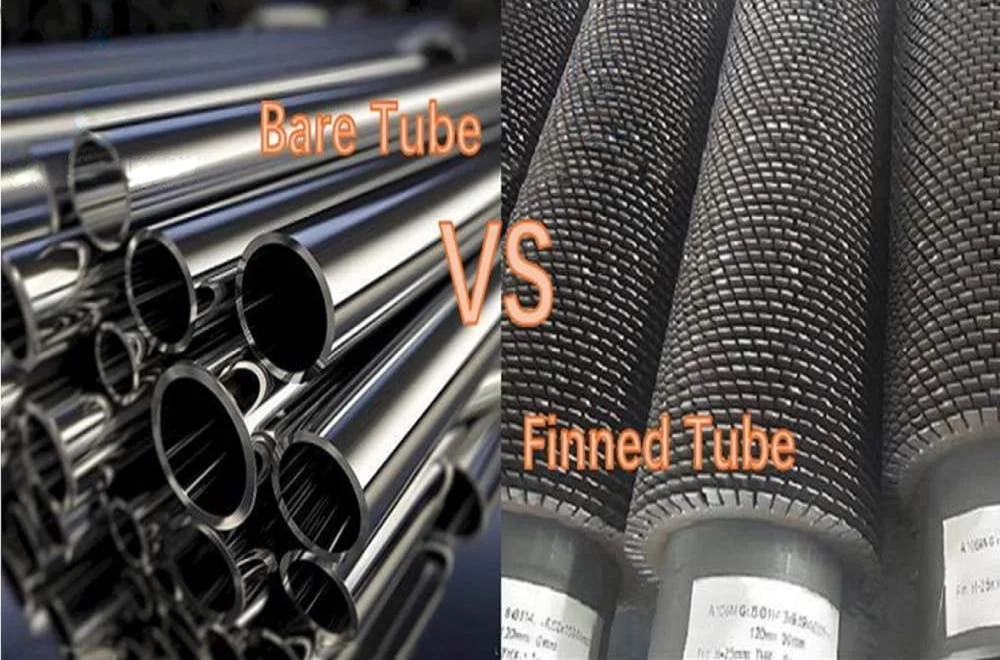
Finned tube coils and bare tubes are both widely used in heat transfer applications, but their performance varies significantly based on the system requirements. Finned tube coils are engineered to maximize surface area, making them far more efficient in applications where heat exchange is critical, such as HVAC systems, refrigeration units, and industrial air coolers. The addition of fins—typically made of aluminum or copper—enhances thermal conductivity by allowing more contact between the tube and surrounding air. This results in faster heat dissipation and improved energy efficiency. In contrast, bare tubes have limited surface area, which makes them less effective in air-based heat transfer but more suitable for liquid-to-liquid applications where fouling and maintenance are concerns. Their straightforward design ensures minimal fouling and straightforward cleaning procedures, which translates to longer service intervals and reduced downtime. Bear in mind, however, that achieving comparable heat transfer rates with bare tubes often requires a larger bundle or higher fluid velocities, which can increase pumping power requirements.
One of the key advantages of finned tube coils is their ability to achieve higher heat transfer rates with smaller footprints, making them ideal for compact systems. They perform exceptionally well in low-temperature differential environments, where maximizing airflow contact is crucial. However, they are more susceptible to dust buildup and corrosion, especially in non-uniform environments, which can reduce efficiency over time. Bare tubes, while thermally less efficient, offer easier cleaning and better resistance to fouling, making them preferable in chemical processing or steam-based systems. The choice between finned and bare tube heat exchangers ultimately hinges on balancing efficiency, maintenance, and operational environment. In contrast, bare tubes offer simplicity, lower material costs, and easier maintenance, making them a staple for many water-cooled exchangers and shell-and-tube heat exchanger setups. Bare tubes excel in high-pressure and high-temperature environments, as there are no fin attachments that might loosen or corrode over time.
From an economic standpoint, finned tube coils may have a higher initial cost due to added materials and manufacturing complexity, but they often lead to long-term savings through reduced energy consumption. Industries focused on sustainability and energy optimization—such as data center cooling, food processing, and renewable energy systems—are increasingly adopting finned technology. Advances in materials, including corrosion-resistant coatings and enhanced fin designs (e.g., spiral, helical, or serrated fins), are further closing the durability gap. As demand for high-efficiency thermal systems grows, finned tube coils are becoming the preferred solution in modern HVAC and industrial cooling applications. Choosing between finned tube coils and bare tubes hinges on factors like space constraints, fluid properties, operating temperature, and budgetary limits. For applications demanding high thermal performance in limited spaces—such as compact heat exchanger design for refrigeration or process cooling—finned coil assemblies are unmatched.
When evaluating heat exchanger performance in industrial and HVAC applications, finned tube coils often outshine bare tubes in terms of heat transfer efficiency and compact design. By adding extended surfaces (fins) to the tube perimeter, finned tube coils dramatically increase the effective surface area, boosting the overall heat transfer coefficient. This approach is particularly advantageous in air-cooled heat exchangers, where air-side thermal resistance can limit performance. Key benefits include improved energy efficiency, reduced footprint, and optimized thermal performance—all critical for industries seeking to lower operational costs and carbon emissions. Conversely, bare tube bundles continue to dominate large-scale industrial cooling and power plant condensers where robustness and ease of maintenance are paramount. Ultimately, a thorough thermal performance analysis and life-cycle cost assessment will guide the optimal selection for any heat exchange solution.