
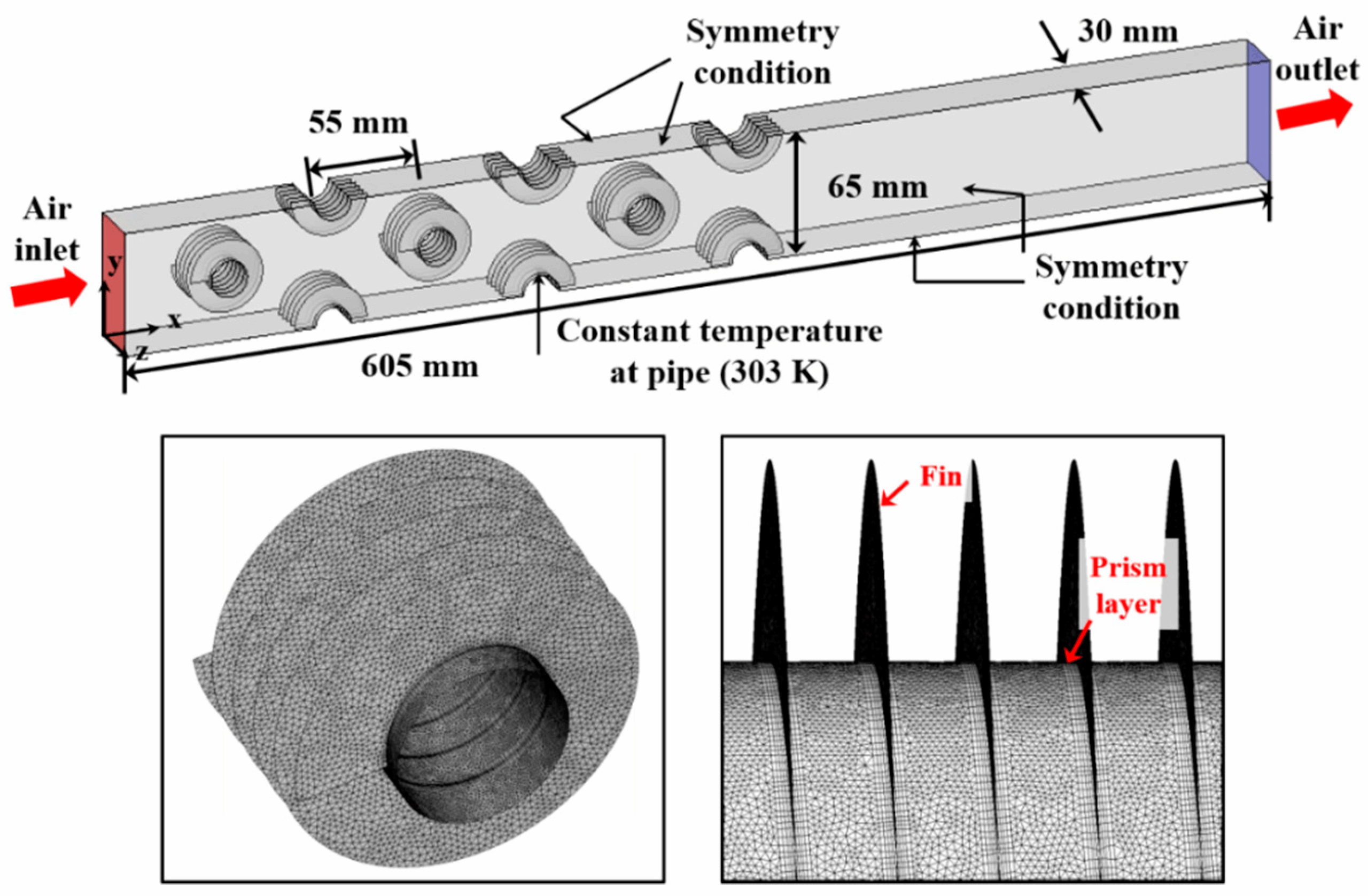
When it comes to optimizing heat sinks for thermal performance, fin spacing is a critical yet often overlooked factor. The distance between fins in a heat sink directly influences both heat dissipation and airflow dynamics. Closer fin spacing increases the surface area for heat transfer, which can enhance cooling in theory, but it also restricts airflow, leading to higher pressure drops and reduced convective cooling efficiency. On the other hand, wider fin spacing allows for better air circulation, reducing thermal resistance, but may not provide enough surface area for optimal heat dissipation. Striking the right balance is key to maximizing thermal management in applications like electronics cooling, HVAC systems, and industrial heat exchangers. Incorporating keywords like thermal performance optimization and heat sink design can help in understanding this delicate trade-off.
Interestingly, the impact of fin spacing isn’t just about airflow resistance; it also ties into the boundary layer development around each fin. When fins are too close, the boundary layers of adjacent fins can merge, creating a stagnant zone where hot air gets trapped, thus hindering effective cooling. A unique insight here is that fin spacing should be tailored to the specific Reynolds number of the airflow—a measure of whether the flow is laminar or turbulent. For turbulent flows, slightly wider spacing can prevent boundary layer interference, boosting heat transfer rates by up to 15-20% in some configurations. This nuanced approach to airflow dynamics and heat transfer efficiency can set your cooling system apart, especially in high-performance computing or automotive radiator design.
Another lesser-known aspect is the role of fin spacing in noise generation. Tighter spacing often leads to higher air velocity through narrow channels, which can create whistling or turbulence-induced noise—a critical concern in consumer electronics like laptops or gaming consoles where silent operation is prized. Wider spacing, while quieter, may require larger heat sinks to compensate for reduced surface area, impacting design compactness. By experimenting with hybrid fin designs—varying spacing across the heat sink—you can achieve a sweet spot between thermal conductivity, airflow resistance, and noise reduction. This innovative angle on cooling system design can resonate with engineers and tech enthusiasts alike.
Lastly, environmental factors like dust accumulation must be considered. Tightly spaced fins are more prone to clogging, which degrades thermal management solutions over time, especially in industrial settings. Wider spacing mitigates this but may compromise on heat dissipation techniques. A practical tip is to align fin spacing with maintenance cycles or opt for coatings that repel dust, ensuring long-term energy efficiency in cooling. By focusing on these unique aspects of fin spacing optimization, you can craft a compelling narrative around sustainable and efficient thermal engineering for your audience.