Enhanced Heat Transfer Efficiency
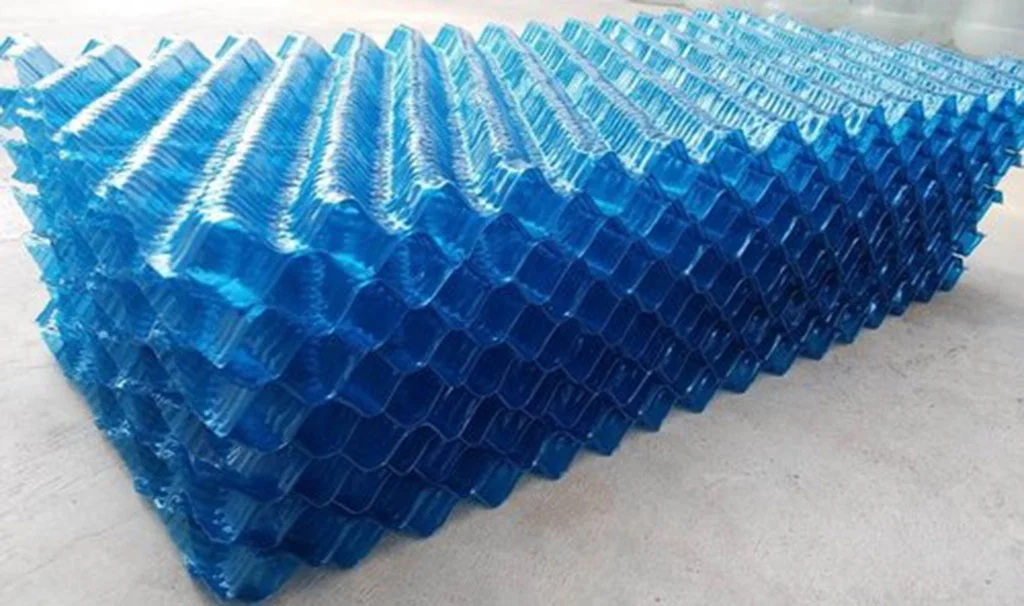
Honeycomb PVC fills, often referred to as high-efficiency cooling tower media, dramatically improve the rate of heat rejection compared to older, less sophisticated fill designs. This efficiency stems from their unique geometry, which maximizes the surface area available for the water film to spread out thinly over the plastic matrix. This large surface area to volume ratio ensures excellent contact between the falling water and the rising air, facilitating superior evaporative cooling. When heat transfer is more effective per unit of air moved, the cooling tower fan requires less operational time or can run at a lower speed to achieve the target cold water temperature, directly translating to significant energy savings and reduced operating costs. Honeycomb PVC fills are transforming cooling tower performance by improving airflow distribution, boosting heat transfer, and cutting fan horsepower. Their structured, hexagonal geometry creates uniform contact between air and water, reducing recirculation zones and pressure drop. The result: lower motor loads and measurable reductions in kilowatt-hours without compromising cooling capacity. Unlike splash or film fills with irregular paths, honeycomb PVC delivers stable thermodynamic efficiency across varying load conditions, making it a smart retrofit for plants targeting energy savings and sustainability.
Reduced Pumping Head and Pressure Drop
A critical factor in a cooling tower’s overall energy footprint is the resistance the air encounters as it moves through the fill material—known as the pressure drop. Traditional film or splash fills often create significant airflow restriction. Honeycomb PVC fills are engineered with precise, optimized channels that minimize this resistance. This lower air pressure drop means the cooling tower fan motor expends less energy overcoming internal friction. Furthermore, the design promotes more uniform water distribution, which can sometimes allow for slightly lower water flow rates (depending on the specific application), further contributing to lower pumping power consumption. PVC’s hydrophilic surface characteristics promote thin, even water films that improve heat transfer and reduce hotspots, while the honeycomb channels discourage sludge accumulation by maintaining directional flow. UV-stabilized, chemically resistant PVC withstands typical water treatment regimes, preserving structural integrity and preventing warping that can increase pressure drop. Over a 10–15 year lifecycle, the combination of lower energy bills, fewer fan starts, and reduced maintenance yields a compelling total cost of ownership. This is particularly valuable in data centers, district cooling, and industrial process plants where uptime and predictable operating costs matter.
Durability and Maintenance Impact on Long-Term Savings
While the immediate reduction in energy consumption is due to aerodynamic and thermal advantages, the material science behind PVC cooling tower fills offers crucial long-term power benefits. PVC is highly resistant to chemical degradation, scaling, and fouling common in recycled water systems. Fouling (the accumulation of deposits) severely chokes airflow and reduces heat transfer efficiency over time, forcing fans and pumps to work harder to meet cooling loads. The smooth, inert surface of the honeycomb structure resists fouling accumulation better than many alternatives, ensuring the tower maintains its peak thermal performance and consistent low power usage throughout its extended service life, minimizing the need for energy-intensive chemical cleaning or replacement. By cutting electrical demand, honeycomb PVC fills help facilities meet ESG goals, lower Scope 2 emissions, and qualify for energy-efficiency incentives. Enhanced thermal performance improves approach temperatures, allowing chillers to operate at higher efficiency and reducing overall plant power draw. When paired with smart controls—like VFDs, wet-bulb tracking, and basin optimization—these fills become a cornerstone of integrated cooling strategies aligned with ASHRAE guidance and green building certifications, supporting lower carbon intensity without major mechanical overhauls.