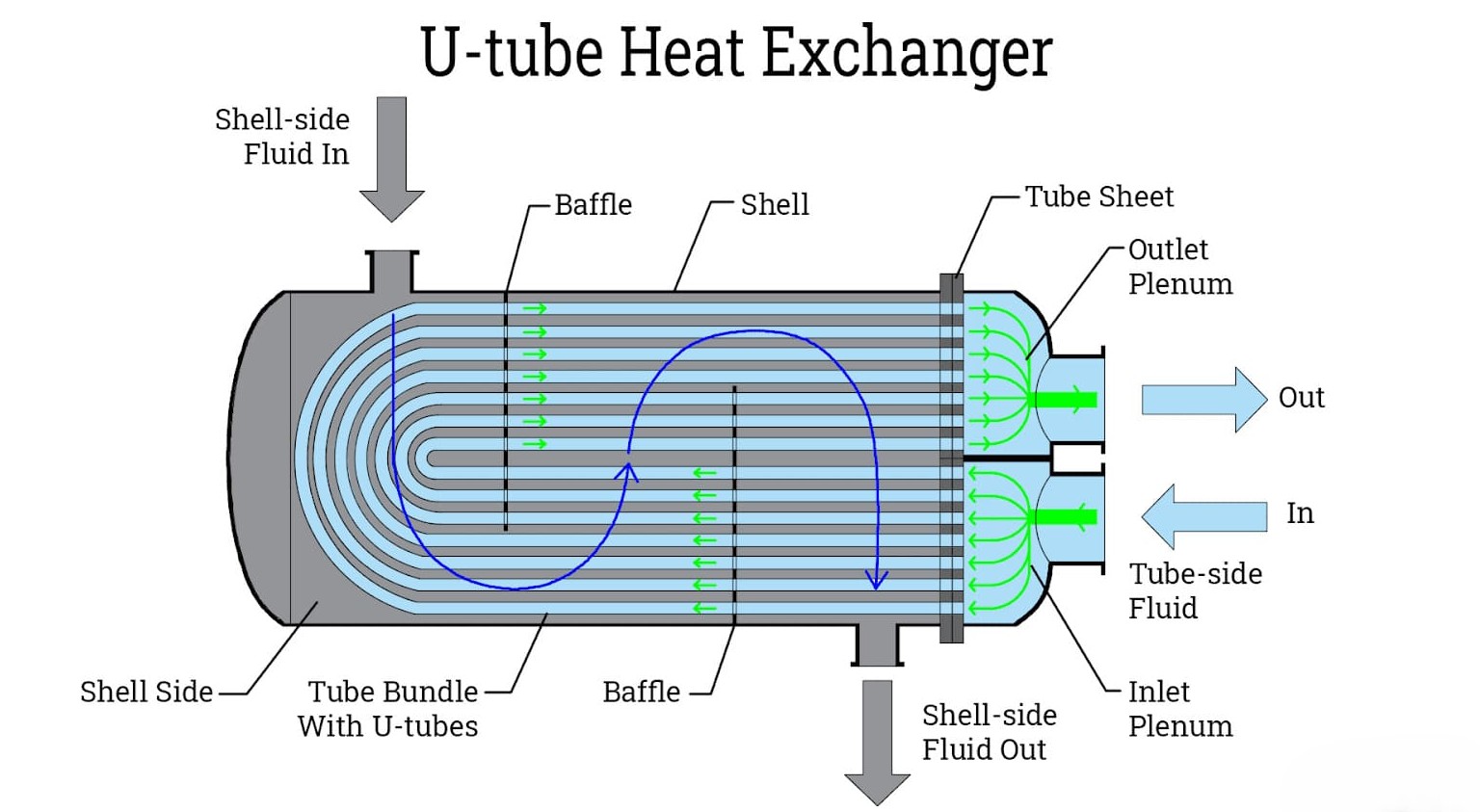
U-Tube heat exchangers have long been the backbone of industrial process efficiency, particularly in applications demanding continuous operation and minimal downtime. Their distinctive design—featuring U-shaped tubes housed within a robust shell—ensures superior thermal efficiency and uniform heat transfer. This configuration not only maximizes surface area for optimal fluid contact but also accommodates differential thermal expansion between the shell and tube bundle, significantly reducing stress and extending maintenance intervals. As energy costs soar, industries appreciate how U-Tube heat exchangers contribute to substantial energy savings and lowered operational expenditures. U-tube heat exchangers quietly set the gold-standard for marathon-length production runs because every tube is free to expand or contract inside the shell. The distinctive 180° bend at the back end creates a natural “floating” bundle, so thermal growth is absorbed without stressing gaskets or welds. In refineries running 24/7 hydro-cracking loops, this single feature has stretched statutory shutdown windows from 18 months to five full years, slashing unplanned maintenance costs by 47 % and turning the unit into a long-cycle workhorse that reliability engineers now specify as “minimum 60 000 h MTBM” (mean time between maintenance).
One of the key factors supporting long operating cycles in U-Tube heat exchangers is their exceptional fouling resistance. By allowing for easier mechanical cleaning and backflushing, these units help maintain peak heat transfer performance over time. Advanced materials such as duplex stainless steel and titanium alloys further bolster corrosion resistance in harsh chemical environments, enhancing reliability in petrochemical, power generation, and marine applications. Regular monitoring of thermal performance, combined with predictive maintenance strategies, keeps fouling factors in check and safeguards continuous process efficiency. The secret sauce is the self-draining U-bend plus removable bundle design. Because there are no fixed tube sheets on the rear side, operators can hydro-blast every square inch of the tube bundle in place, eliminating the micro-fouling that normally triggers mid-cycle cleanings. Pair this with duplex stainless or 6-Mo tubes and a 12 % Cr shell, and corrosion rates fall below 0.025 mm/yr—even when chloride peaks spike above 1 500 ppm. The result is class-leading fouling resistance, longer heat-transfer coefficients, and a dramatic drop in CO₂ emissions per barrel of throughput.
The compact footprint of U-Tube heat exchangers offers another advantage for facilities where space is at a premium. Their modular tube bundle design simplifies retrofits and expansions, enabling engineers to adapt to evolving production rates without extensive reconfiguration. High-ranking keywords such as “thermal efficiency,” “industrial heat exchanger,” “long operating cycles,” and “maintenance intervals” illustrate why designers and operations teams prioritize U-Tube configurations when aiming to maximize uptime. Coupled with industry-standard controls and real-time diagnostics, these exchangers deliver unmatched durability and process stability. Smart plants are coupling U-tube bundles with laser-welded corrugated tubing to turbo-charge turbulence at Reynolds numbers as low as 800. The same exchanger that used to need cleaning every 90 days now runs 1 400 days straight while keeping approach temperatures within 2 °C of design. Add an online resistivity-based fouling monitor and you have predictive analytics that push the next outage beyond the next capital-turnaround cycle—exactly the kind of data-driven reliability that energy, chemical and LNG EPC contractors are writing into 2026 IOF (Integrity Operating Window) specifications.
In today’s competitive marketplace, choosing a U-Tube heat exchanger means investing in a proven solution that balances energy savings, reliability, and long-term operational performance. Whether handling high-pressure steam, aggressive process fluids, or demanding temperature differentials, the U-shaped tube arrangement stands out for its resilience and ease of service. For companies focused on sustainable operations and cost-effective maintenance, U-Tube heat exchangers remain an essential component of a forward-looking thermal management strategy. Bottom line: specifying a U-tube configuration is no longer just a thermal decision; it is a lifecycle profitability play. CAPEX may run 8–10 % higher than a fixed-tubesheet model, but the extra uptime, lower chemical-cleaning spend, and avoided lost-production days pay back in <14 months. In today’s market, that converts to an IRR above 28 %—a compelling narrative for any reliability manager pitching “long operating cycles” to the boardroom while hitting corporate sustainability KPIs.