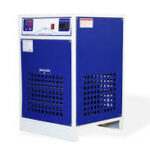
Air Cooled Chillers
Air-cooled chillers are standalone cooling systems that remove heat from the refrigerant using airflow and condenser coils. Unlike water-cooled chillers, which rely on water-based heat rejection
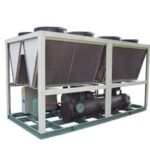
Water Cooled Chillers
Water-cooled chillers require a continuous water flow to cool the refrigerant, providing reliable cooling for large-scale commercial and industrial environments.
Screw Chillers
Screw chillers use twin-screw compressors to deliver consistent cooling. They are ideal for air conditioning and industrial applications. Their energy-efficient design makes them a preferred choice.
Variable Speed Chillers
Variable speed chillers adjust compressor speed with VFDs, reducing energy consumption. They provide precise cooling based on real-time demand. This makes them efficient and cost-effective solutions.
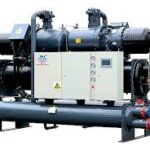
Oil Chiller
Oil chillers are vital for temperature regulation in industrial lubrication systems. They prevent oil degradation and ensure smooth operation. These systems are essential for high-performance machinery.
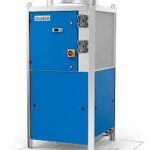
Hydraulic Oil Chiller
Hydraulic oil chillers provide temperature control for hydraulic oils in heavy machinery. They prevent heat buildup that could lead to failures. Proper cooling improves machine longevity and efficiency.
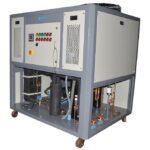
Online Chiller
Online chillers offer remote control and monitoring for industrial cooling. They are designed to ensure continuous and efficient operation. Internet integration enhances system management.
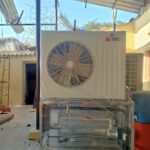
Glycol Chiller
Glycol chillers offer precise temperature control using a glycol mixture. They are widely used in food processing, brewing, and medical applications. Reliable cooling ensures smooth operations.
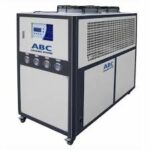
Spindle Chiller
Spindle chillers prevent spindle overheating in CNC machines and industrial tools. They ensure smooth rotation at high speeds. Efficient cooling enhances cutting accuracy and equipment lifespan.
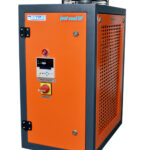
Refrigerated Air Dryer
Refrigerated air dryers provide consistent air drying for compressed air systems. By cooling and removing moisture, they prevent corrosion. This leads to better system durability and performance.