Installing an aftercooler is one of the fastest ways to cut pressure drop and boost compressed air energy efficiency—if you get the details right. A well-selected, correctly installed air compressor aftercooler reduces moisture load, protects downstream filters and air dryers, and lets you lower compressor discharge pressure without sacrificing flow. That translates into real savings: as a rule of thumb, every 2 psi reduction in system pressure can save about 1% in compressor energy. The goal is maximum moisture removal with minimum pressure loss across the heat exchanger, so think “low ΔP, high heat transfer” from day one.
Start with selection and sizing. Choose an aftercooler (shell-and-tube or plate-fin) rated for your peak SCFM with a specified pressure loss under 1–2 psi at operating flow and viscosity. Oversize the cooler core and the connection diameter to keep air velocity down; target approach temperatures of 10–15 °F to ambient for strong moisture knock-out. Pair the cooler with an efficient moisture separator and automatic condensate drain to protect ISO 8573-1 air quality targets and lighten the load on refrigerated or desiccant dryers. Specify full-port valves and instrument ports so you can measure inlet/outlet PSI and temperature and verify performance under real plant conditions.
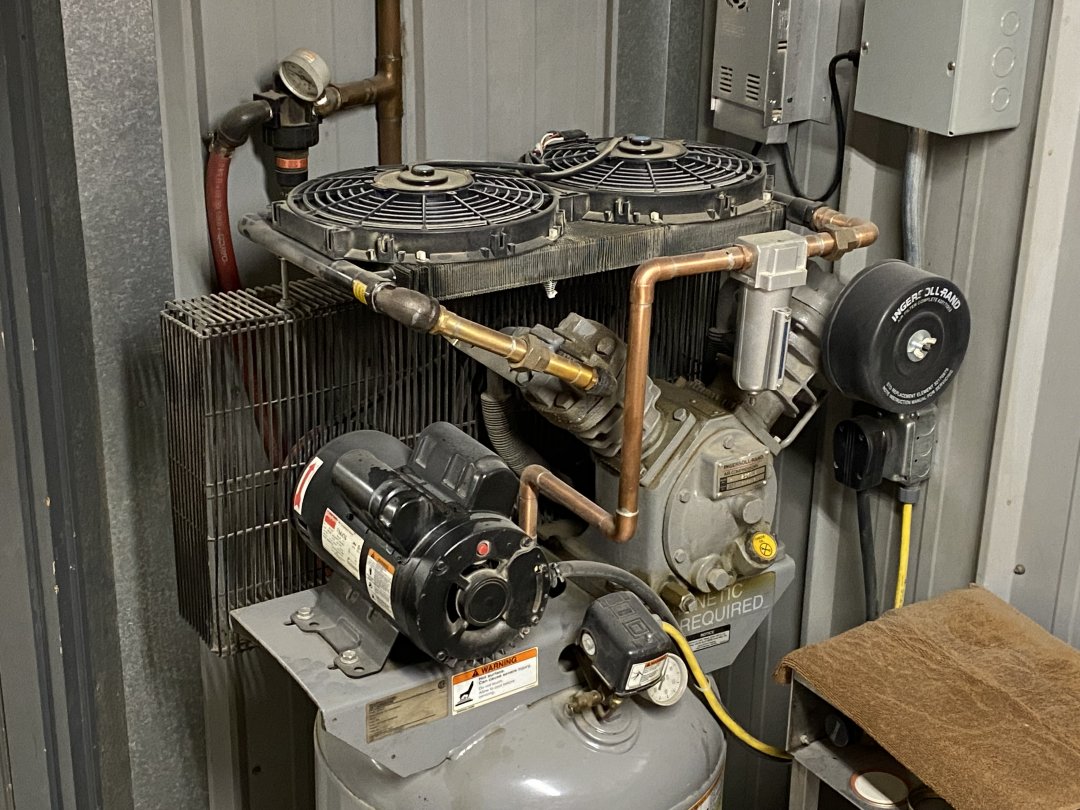
Installation details are where most pressure drop penalties sneak in. Feed the aftercooler with straight pipe runs (5–10 diameters) before and after, use long-radius elbows, and avoid restrictive fittings, quick couplers, and undersized unions. Keep a gentle slope (1–2%) toward drain points, and place the moisture separator immediately downstream of the aftercooler. Ensure abundant ambient airflow—shroud the fan to prevent recirculation, and consider VFD fans to match load and reduce noise. Isolate vibration, support the piping to prevent sagging, and use a ring-main (closed-loop) header with larger trunk lines to lower velocity and pressure loss across the plant.
Commissioning and maintenance lock in the gains. Record baseline inlet/outlet pressure, temperature, and relative humidity; then log dew point after the dryer to confirm moisture removal improved. Install permanent differential pressure gauges across the aftercooler and separator; rising ΔP signals fouling or drain issues. Clean fins and strainers on a set schedule, derate for altitude and high ambient temperatures, and re-check performance seasonally. With a small investment in measurement—compressed air flow meter, IIoT monitoring, and a quick compressed air audit—you can trim pressure, reduce compressor power, and extend equipment life while keeping CFM delivery rock-solid.