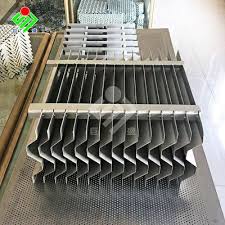
In cooling towers, scrubbers, chemical process plants, and offshore platforms, mist eliminators are critical for controlling liquid carryover. In corrosive environments, the choice of material is as important as the design itself. Selecting the wrong material can lead to rapid deterioration, equipment failure, and costly downtime.
This guide explains the best materials for mist eliminators operating under high corrosion conditions—helping you improve efficiency, durability, and compliance.
Understanding Corrosive Environment
Corrosive environments can arise from:
- Chemical vapors (acids, alkalis, solvents)
- Saline air in coastal or offshore applications
- High humidity with reactive compounds
- Industrial exhaust gases containing sulfur, chlorine, or ammonia
Mist eliminators in these settings require corrosion-resistant materials to ensure long service life and consistent drift control.
Common Materials for Mist Eliminators in Corrosive Conditions
FRP (Fiberglass Reinforced Plastic)
- Advantages: High corrosion resistance, lightweight, UV stable, and long service life.
- Applications: Cooling towers, marine environments, chemical scrubbers.
- Limitations: Limited temperature tolerance compared to metals.
PVC (Polyvinyl Chloride)
- Advantages: Affordable, excellent resistance to many acids and alkalis, easy to mold.
- Applications: Cooling towers, HVAC drift eliminators, low-temperature scrubbers.
- Limitations: Not suitable for high-temperature applications (>60°C).
Stainless Steel (SS 304, SS 316, SS 316L)
- Advantages: High mechanical strength, good corrosion resistance (316/316L better in marine environments).
- Applications: Offshore platforms, gas scrubbers, distillation columns.
- Limitations: Can suffer from pitting corrosion in highly saline or acidic conditions.
Duplex Stainless Steel
- Advantages: Better chloride resistance than 316 stainless, high strength, excellent for marine and chemical industries.
- Applications: Offshore oil and gas facilities, chemical process plants.
- Limitations: Higher cost.
Titanium
- Advantages: Exceptional corrosion resistance, even in seawater and aggressive chemicals.
- Applications: High-value chemical plants, desalination units, offshore cooling systems.
- Limitations: Very expensive, requires specialized fabrication.
Alloy Materials (Hastelloy, Monel, Inconel)
- Advantages: Superior resistance to acids, chlorides, and oxidizing environments.
- Applications: Harsh chemical reactors, acid gas removal units.
- Limitations: Premium cost, often reserved for critical process equipment.
Selection Criteria for Corrosion-Resistant Mist Eliminators
When choosing the right mist eliminator material:
- Identify the primary corrosive agent (chlorides, acids, alkalis)
- Evaluate operating temperature and pressure
- Consider the lifespan vs. replacement cost
- Assess mechanical strength requirements
- Account for environmental compliance regulations
Recommendations by Application
| Application | Recommended Material | Reason |
|---|---|---|
| Cooling Towers in Coastal Areas | FRP or PVC | UV stable, saltwater resistant |
| Offshore Platforms | SS 316L, Duplex SS, Titanium | High chloride and salt resistance |
| Chemical Process Plants | FRP, Alloy Materials | Acid and alkali resistance |
| High-Temperature Gas Streams | Stainless Steel or Alloys | Heat + corrosion resistance |
| Desalination Plants | Titanium, Duplex SS | Exceptional seawater resistance |
For corrosive environments, the material choice can determine the lifespan and performance of your mist eliminator. FRP and PVC are cost-effective for many cooling tower and scrubber applications, while stainless steel, titanium, and high-grade alloys are essential for extreme chemical and marine conditions.
Selecting the right material ensures reliable mist elimination, reduced downtime, and compliance with environmental standards—saving both operational costs and equipment replacement expenses.