
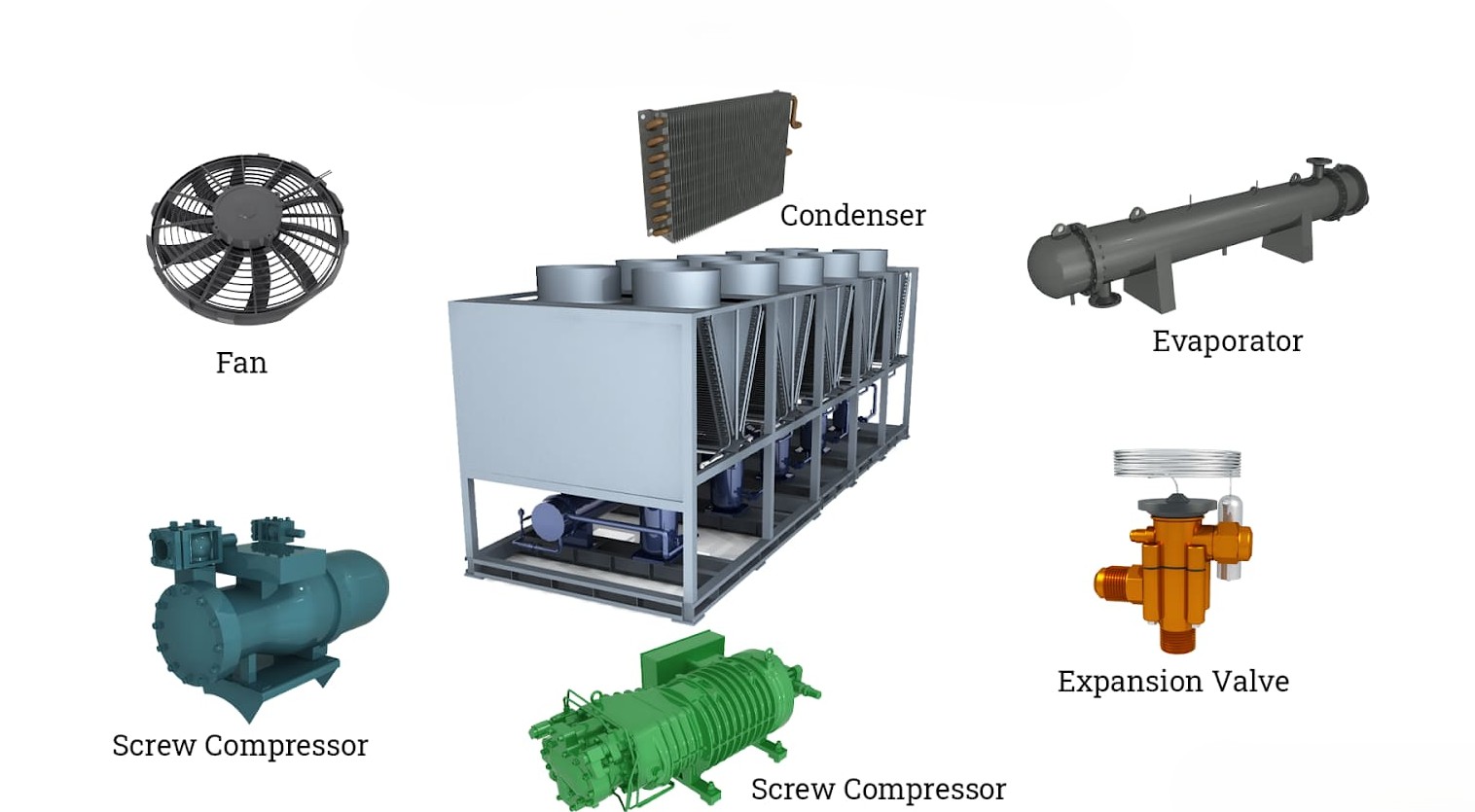
Screw chiller electrical components are vital to the operation, control, safety, and performance optimization of modern cooling systems. While the compressor, evaporator, and condenser manage the thermal cycle, it’s the electrical system that powers the components, regulates them, and communicates with facility-level automation systems.
Every function — from adjusting refrigerant flow, starting the compressor, balancing the load, to preventing failures — relies heavily on a well-integrated and intelligent electrical control architecture. This system ensures real-time adjustments, energy efficiency, and continuous protection.
Overview of Screw Chiller Electrical Components
Power Distribution Panel
- This is the first point of contact for incoming electrical supply, typically three-phase power.
- It includes:
- MCBs (Miniature Circuit Breakers) and MCCBs (Molded Case Circuit Breakers) to protect against short circuits and overloads.
- Surge protection devices (SPD) to guard the system against voltage spikes.
- Busbars, which are copper or aluminum strips used to distribute high current efficiently.
➡️ Why it matters: Ensures safe distribution of electricity and prevents equipment damage.
Compressor Motor Starter / Drive Unit
- Soft Starters gradually ramp up the motor speed to avoid mechanical and electrical shock during startup.
- Variable Frequency Drives (VFDs) dynamically adjust motor speed based on cooling demand.
- Advanced systems feature energy feedback mechanisms, which return unused energy back to the grid.
➡️ Why it matters: Reduces energy consumption, increases compressor life, and enhances flexibility under partial loads.
Control Panel (PLC or Microprocessor-based)
- Acts as the central processing unit of the screw chiller.
- Uses Programmable Logic Controllers (PLCs) or embedded controllers to:
- Monitor inputs from sensors.
- Control outputs to relays, actuators, and motors.
- Execute logic sequences, safety shutdowns, alarms, and start-stop cycles.
- Advanced units may have touchscreen HMIs and remote access capability via Modbus, BACnet, or Wi-Fi.
➡️ Why it matters: Enables automation, system intelligence, and user control with diagnostics and history logs.
Sensors and Transducers
- Collect real-time data from all critical components.
- Key types:
- RTDs or Thermocouples for accurate temperature measurement.
- Pressure Transducers to detect high/low pressure in refrigerant and water circuits.
- Current Transformers (CTs) for measuring electrical current draw.
➡️ Why it matters: Real-time input allows the controller to adjust and optimize performance while ensuring safety.
Contactors and Overload Relays
- Contactors are heavy-duty switches that power on major loads like compressor motors and condenser fans.
- Overload relays protect motors from burning out by detecting overheating or excessive current draw.
➡️ Why it matters: Safeguards major components from electrical damage and automates switching under controller commands.
Electronic Expansion Valve Controller
- Works in sync with pressure and temperature sensors to optimize refrigerant flow.
- Usually includes a stepper motor driver that adjusts the valve’s opening with micro-level precision.
➡️ Why it matters: Maintains perfect superheat, improves system capacity, and reduces power consumption.
Display Interfaces / Human-Machine Interface (HMI)
- Typically a touchscreen or LCD interface on the panel door.
- Displays real-time values: pressure, temperature, flow rate, motor RPM, power use, etc.
- Some systems offer graphical performance trends, alert logs, and user-friendly menus for parameter adjustments.
➡️ Why it matters: Allows technicians and facility managers to interact easily with the chiller and diagnose issues.
Alarm & Fault Detection Systems
- Includes LED indicators, buzzers, and system logs.
- Alarms for:
- High/low refrigerant pressure
- Compressor overload
- Phase loss or reverse phase
- Sensor errors
- Communication failures
➡️ Why it matters: Immediate fault alerts reduce downtime and protect equipment from severe damage.
Backup Power Supply (UPS or Battery Backup)
- Keeps the controller, alarms, and memory running during short power interruptions.
- Prevents sudden shutdowns that can damage the system or erase configuration.
➡️ Why it matters: Ensures continuity of logic operations, preserves settings, and enables controlled restarts.
Communication Modules (IoT/BMS)
- Protocols like Modbus RTU, BACnet, LonWorks, or Ethernet/IP are used to integrate with Building Management Systems.
- Newer chillers come with IoT-ready features for remote monitoring, fault alerts via SMS or email, and predictive maintenance.
➡️ Why it matters: Offers real-time control and analytics, reduces manual intervention, and improves uptime and service planning.
Routine Electrical Maintenance Practices
- Tighten terminal lugs to prevent arcing.
- Inspect and clean panels to avoid dust-related short circuits.
- IR (Insulation Resistance) testing of compressor motors yearly.
- Replace aging contactors and relays before they fail.
- Check VFD capacitor life regularly using diagnostics.
Screw chiller electrical components are not just auxiliary devices—they form the command center of the entire refrigeration cycle. Without reliable electrical hardware and intelligent controls, the system would be inefficient, vulnerable, and hard to manage.
By combining advanced sensors, smart controllers, variable-speed drives, and automated alarm systems, modern screw chillers deliver reliable, efficient, and adaptive cooling performance tailored to demanding industrial and commercial applications. Proper selection, integration, and maintenance of these electrical elements are key to maximizing performance and avoiding unplanned downtime.