
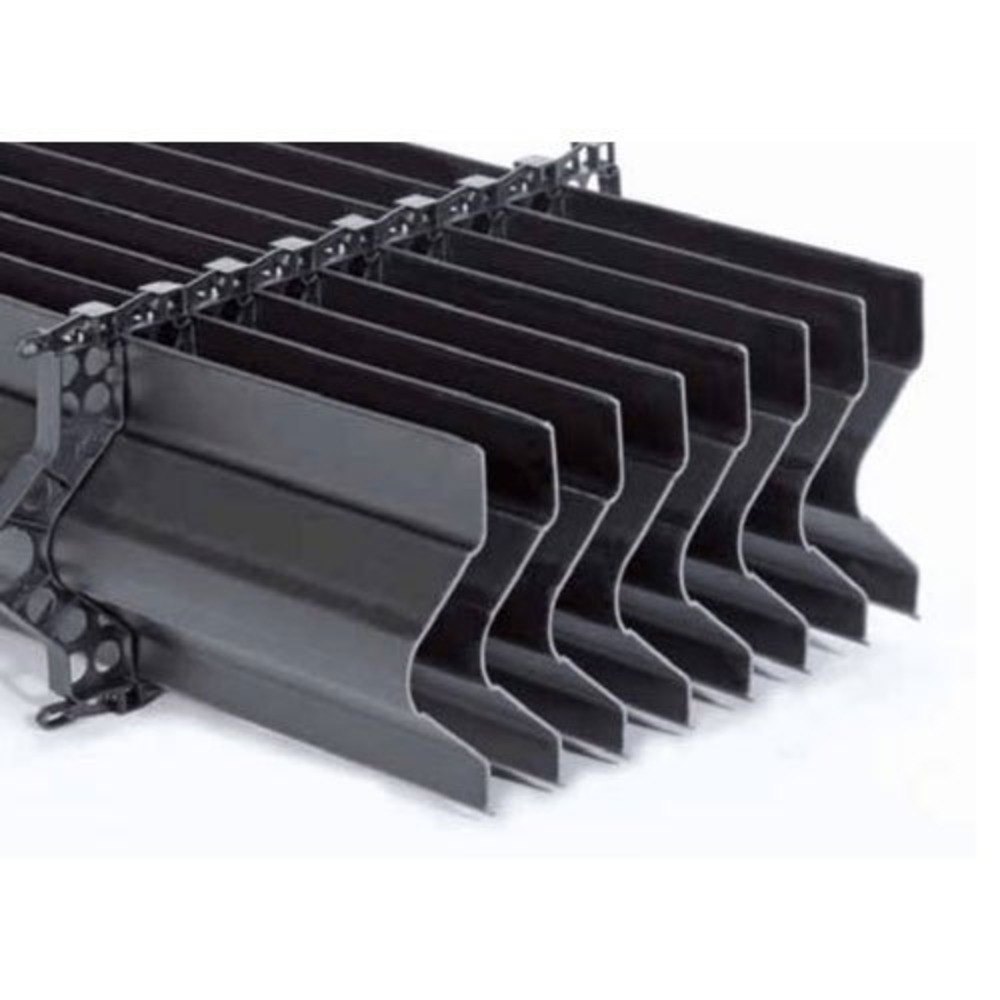
Cooling towers are indispensable in modern industrial and HVAC systems, managing excess heat generated during various processes. Among the many components that ensure their efficient and safe operation, drift eliminators play a subtle yet crucial role—particularly in square cooling towers, which are widely used for their structural efficiency and high cooling capacity.
Drift refers to small water droplets that escape the cooling tower along with exhaust air. If not controlled, these droplets can lead to significant water loss, chemical imbalance, and environmental contamination—even resulting in health hazards due to airborne bacteria like Legionella. That’s where square cooling tower drift eliminators come into play. These specialized devices are designed to capture and redirect water droplets, ensuring they return to the system rather than being released into the atmosphere.
What Makes Square Cooling Tower Drift Eliminators Unique?
Geometry-Specific Airflow Management
- Square towers have straight-line airflow with well-defined cross-sections, allowing drift eliminators to be precisely shaped and aligned.
- Drift eliminators are installed in flat or modular panels, covering large square areas to uniformly intercept the air stream.
Multi-Pass Blade Design
- These eliminators often use triple or quadruple-pass blade arrangements, forcing air to change direction multiple times.
- This causes entrained water droplets to lose momentum and impact internal surfaces, where they coalesce and drain back into the system.
- Multi-pass designs achieve drift removal efficiencies of up to 0.001% of circulating water flow, meeting CTI and ASHRAE standards.
Material Innovations
- Made from UV-stabilized PVC, PP (polypropylene), or FRP, tailored for square configurations.
- Some designs incorporate antimicrobial coatings or hydrophobic surfaces to resist biofouling and improve drainage.
Engineering Features of Square Drift Eliminators
Interlocking or Modular Panel Design
- Square cooling towers benefit from drift eliminators that are manufactured as modular panels.
- These panels can be easily installed, removed, or replaced without disturbing other components.
- Ideal for retrofitting or sectional maintenance.
High Strength-to-Weight Ratio
- Eliminators must cover large, often horizontal areas in square towers.
- Use of ribbed profiles and frame-supported structures helps maintain rigidity without increasing load on the tower.
Integrated Water Reclamation
- High-efficiency eliminators reclaim droplets that would otherwise escape, reducing make-up water costs and chemical losses.
- Especially beneficial in water-scarce regions or where water treatment costs are high.
Design & Selection Considerations
- Face Velocity: Drift eliminators are selected based on air velocity across the face area, typically between 2–4 m/s. Higher velocities require more complex multi-pass designs.
- Drift Loss Rate: The aim is usually to achieve <0.002% drift loss (based on circulating water flow), especially in urban or regulated environments.
- Tower Configuration: For counterflow or crossflow square towers, eliminator orientation and air channeling design must be matched accordingly.
- Drainage Orientation: Must ensure efficient water return without dripping into the discharge stream.
- Service Access: In square towers with multi-cell structures, ease of maintenance, inspection, and replacement of drift eliminators is crucial.
In the high-performance world of industrial cooling, square cooling tower drift eliminators are not merely optional components—they are mission-critical elements that influence water conservation, system integrity, and environmental impact. By effectively capturing airborne droplets, these eliminators help facilities comply with environmental regulations, minimize chemical and water loss, and mitigate health risks associated with microbial contamination.
Today’s drift eliminators are no longer basic plastic inserts; they are advanced engineered systems, often made of corrosion-resistant materials and shaped into multi-stage air deflection structures to ensure maximum droplet separation. For industries such as power generation, chemical processing, data centers, and pharmaceuticals—where uptime, safety, and precision matter most—high-efficiency drift eliminators are a smart investment, not an afterthought.