
Hydraulic systems are the backbone of many industrial operations—from CNC machinery and die casting to injection molding and power presses. Within these systems, hydraulic oil plays a dual role: it transfers power and also acts as a lubricant. As the system operates, energy is lost in the form of heat due to friction, pressure drops, and continuous mechanical movement, causing the oil temperature to rise.
If not regulated, this heat accumulation leads to:
- Loss of oil viscosity
- Seal deterioration
- Reduced pressure control
- Machine inefficiency or total failure
This is where the temperature control system of a hydraulic oil chiller becomes crucial. It actively monitors and regulates the oil temperature, ensuring that it stays within an ideal operational range (typically 30–50°C), thereby protecting both the oil and the equipment.
How Temperature Control Works in a Hydraulic Oil Chiller
The cooling system is engineered to automatically react to temperature changes in real-time. The control mechanism relies on interconnected electrical, electronic, and mechanical components working together to keep the oil temperature stable, regardless of external load or ambient heat.
Temperature Sensors (Thermistors, RTDs, or Thermocouples)
Purpose:
- Detect the oil temperature at critical points—usually the return line or reservoir.
- Convert heat levels into electrical signals that are interpreted by the control unit.
Types:
- RTD (Resistance Temperature Detectors) – Accurate and stable over time.
- Thermistors – Quick response but suitable for lower temperature ranges.
- Thermocouples – Ideal for wide-range applications and fast fluctuations.
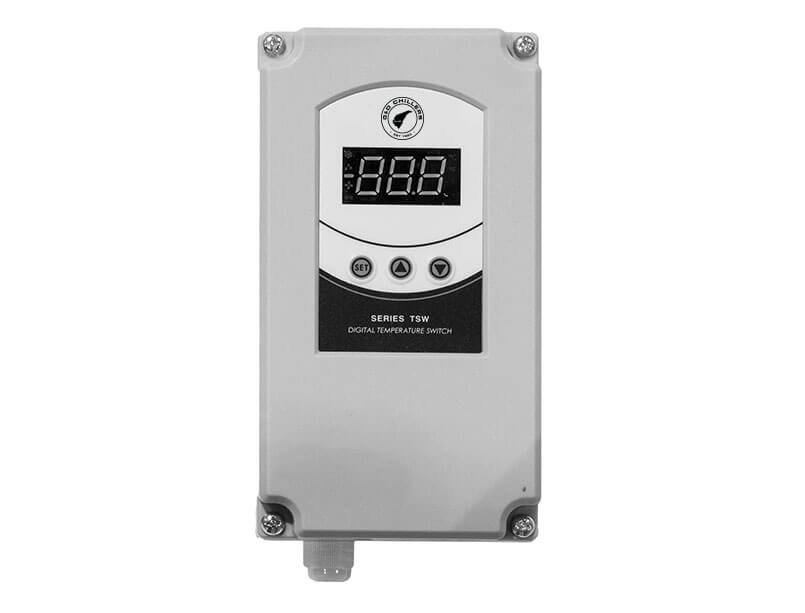
Digital Temperature Controller / PLC System
Function:
- Compares sensor input against the preset temperature setpoint.
- Activates or deactivates cooling components (like compressor or fan).
- May include PID control logic to reduce overshooting or sudden spikes.
Features:
- Multiple setpoints (start, stop, alarm, safety shutoff)
- Real-time LED or touchscreen display
- Fault history and alarm logging
- Communication with SCADA or cloud systems
Compressor and Refrigeration Cycle Control
Function:
- When oil temperature rises above the upper limit, the controller energizes the compressor.
- This starts the refrigeration cycle that cools down the circulating medium (water or glycol), which in turn cools the oil via a heat exchanger.
Energy Optimization:
- In high-performance chillers, variable-speed compressors (via VFDs) modulate based on exact temperature deviation.
- This improves energy efficiency and cooling precision.
Dynamic Factors Affecting Temperature Control
- Ambient temperature – higher ambient heat requires more cooling
- Machine load variation – sudden pressure or motion changes affect oil heating rate
- Oil contamination – dirty oil heats faster and transfers heat inefficiently
- Cooling media temperature – whether it’s air or water-cooled, inlet temp matters
Consequences of Poor Temperature Control
If a chiller’s temperature control system is inaccurate or delayed, you may face:
- Hydraulic pump cavitation
- Thermal cracking of oil
- Shortened equipment life
- Production downtime
- Reduced machine accuracy or repeatability
In any hydraulic system, maintaining a precise oil temperature is not just about cooling—it’s about enabling efficient, long-term, and damage-free operation. The temperature control mechanism in a hydraulic oil chiller combines electronic precision, automated logic, and mechanical response to achieve this.
From analog thermostats to cloud-linked PID controllers, today’s temperature control systems are more intelligent, proactive, and energy-efficient than ever before. Whether you’re managing a die casting plant or a CNC shop floor, a reliable temperature-controlled hydraulic oil chiller is your invisible yet invaluable asset.