For Transformer Oil Chillers, the SEO strategy revolves around grid reliability, preventing insulation breakdown, and extending the life of high-value electrical assets. This content is designed for substation managers, utility engineers, and industrial power distribution specialists.
⚡ Transformer Oil Chillers: Precision Cooling for High-Voltage Reliability
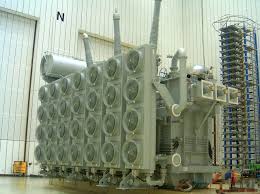
In high-voltage power distribution, heat is the primary catalyst for equipment failure. Transformer oil chillers (often referred to as Forced Oil Air/Water Cooling systems) provide the active thermal management necessary to dissipate heat from the dielectric oil. By maintaining stable operating temperatures, these systems protect the transformer’s internal insulation and prevent catastrophic outages.
Why Active Oil Cooling is Essential for Transformers
While many transformers rely on passive cooling, high-load industrial and utility-scale units require active chilling to handle “peak load” demands. A dedicated oil chiller provides:
- Insulation Preservation: For every $8^\circ\text{C}$ increase in operating temperature, the life of a transformer’s paper insulation is roughly halved.
- Increased Load Capacity: Active cooling allows transformers to operate at higher capacities during peak demand without overstepping thermal limits.
- Moisture and Varnish Control: Stable temperatures reduce the “breathing” effect of the transformer, limiting the intake of moisture and the oxidation of the oil.
- Fire Risk Mitigation: Preventing oil from reaching its “flash point” is a critical safety measure for indoor or densely populated substations.
Forced Cooling Methods: OFAF vs. OFWF
Depending on your substation environment, we offer two primary cooling architectures:
Engineering for Mission-Critical Infrastructure
Our transformer oil chillers are built to withstand the unique rigors of the power industry:
- Leak-Proof Construction: Double-wall heat exchangers are available to ensure no water/glycol ever contaminates the dielectric oil.
- Corrosion Resistance: C5-M rated coatings for coastal or highly corrosive industrial environments.
- Smart Grid Integration: Modbus or DNP3 communication protocols for real-time monitoring of oil temperature and flow rates.
- Low Noise Options: Specialized fan blades and acoustic enclosures for transformers located in residential areas.
Calculating Cooling Capacity ($kW$)
Transformer losses are typically calculated based on “No-Load” and “Load” losses. The chiller must be sized to remove the total kilowatt loss ($P_{loss}$) while maintaining a safe top-oil temperature.
$$P_{total} = P_{no\text{-}load} + P_{load} \times \left(\frac{I_{actual}}{I_{rated}}\right)^2$$
Expert Tip: In many cases, adding a redundant (N+1) pump and fan system is recommended to ensure the transformer remains online even if one cooling component requires maintenance.
Why Trust Our Transformer Cooling Solutions?
We specialize in “life-extension” technology for power infrastructure. Our chillers are designed for 30+ year service lives, featuring stainless steel piping, redundant control circuits, and vibration-dampened mounts. Whether you are retrofitting a legacy unit or specifying cooling for a new installation, we ensure your grid stays stable.