Understanding Cooling Towers: A
Guide to Types and Functions
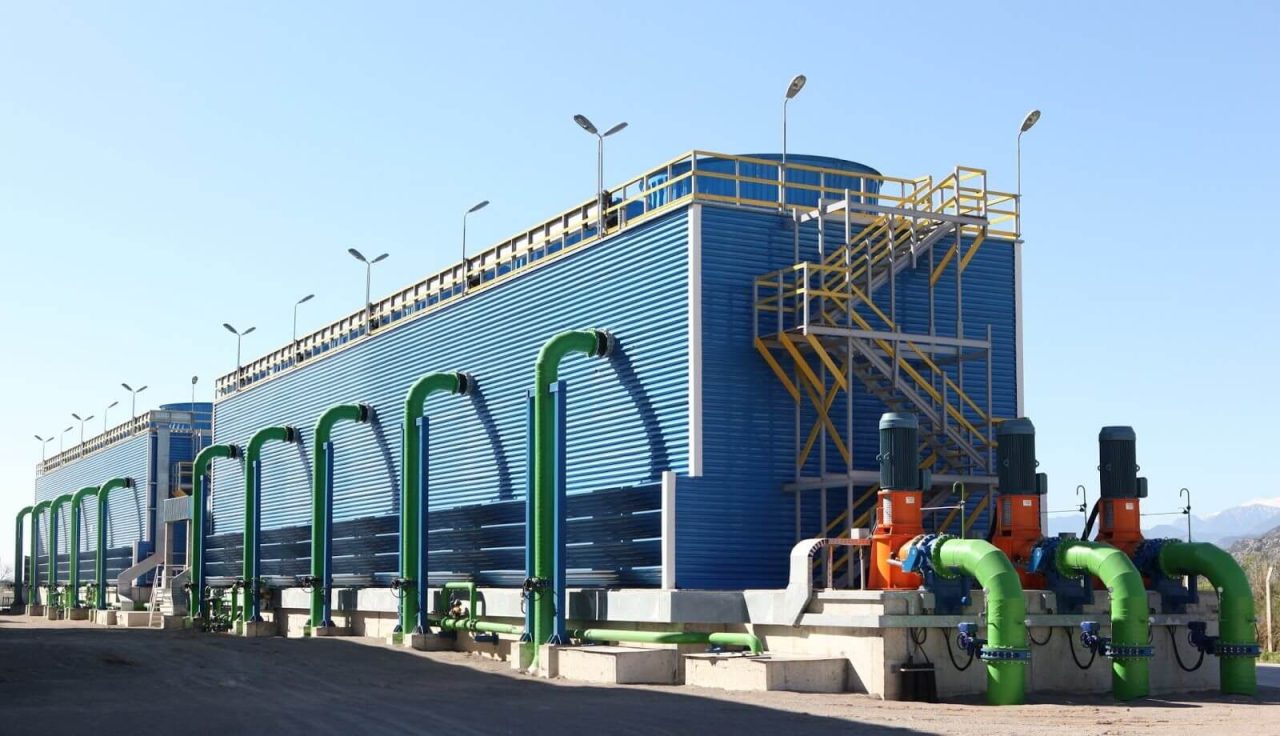
Cooling towers are the unsung heroes of industrial and HVAC systems, responsible for removing heat from processes and buildings to ensure efficiency and safety. If you are looking to optimize your facility’s thermal management, understanding the different types of cooling towers is the first step.
How Cooling Towers Work
At its core, a cooling tower is a specialized heat exchanger. It brings water and air into contact to lower the temperature of the water. During this process, a small amount of water evaporates, which significantly reduces the temperature of the water circulating through the tower.
Shutterstock
Explore
Main Types of Cooling Towers
Cooling towers are generally categorized by their heat transfer method and their draft (airflow) mechanism.
1. Classification by Heat Transfer Method
- Open Circuit (Wet) Cooling Towers: These are the most common type. The process water is exposed directly to the atmosphere. The water is sprayed over a “fill” media to increase the surface area, allowing for maximum evaporation and cooling.
- Closed Circuit (Fluid) Cooling Towers: In these systems, the process fluid flows through a coil bundle and never comes into direct contact with the outside air. A separate clean water loop is sprayed over the coils to facilitate cooling. This is ideal for processes sensitive to contamination.
- Dry Cooling Towers: These use no water for evaporation. Instead, they rely on large fans to blow ambient air over finned tubes, similar to a car radiator.
2. Classification by Airflow Mechanism
- Natural Draft Cooling Towers: These massive, iconic hyperbolic structures rely on the “chimney effect.” The difference in density between the warm air inside and the cool air outside creates a natural upward flow without the need for fans.
- Mechanical Draft Cooling Towers: These use power-driven fans to force or draw air through the tower.
- Induced Draft: The fan is located at the top, pulling air up through the tower.
- Forced Draft: The fan is located at the base, pushing air into the tower.
3. Classification by Airflow Direction
- Crossflow: Air flows horizontally across the falling water. These towers are generally easier to maintain and have a lower profile.
- Counterflow: Air travels vertically upward, opposite to the downward flow of water. This is often more space-efficient and provides better heat transfer.
Choosing the Right Tower
Selecting the right cooling tower depends on several factors:
- Space constraints (Counterflow towers usually have a smaller footprint).
- Maintenance requirements (Crossflow towers offer easier access to internal components).
- Environmental conditions (Dry towers are essential in water-scarce regions).
- Energy efficiency (Mechanical draft towers allow for precise control).