
To rank for a technical topic like Vapor Compression Chillers, your content needs to bridge the gap between high-level engineering and practical business value.
Here is an SEO-optimized content structure designed to capture search traffic and establish authority.
The Ultimate Guide to Vapor Compression Chillers: Efficiency & Working Principles
In the world of industrial HVAC and process cooling, Vapor Compression Chillers are the undisputed workhorses. Whether you are managing a massive data center or a manufacturing plant, understanding how these systems move heat is key to optimizing your energy costs.
What is a Vapor Compression Chiller?
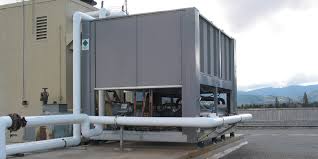
A Vapor Compression Chiller is a mechanical system that removes heat from a liquid via a refrigerant cycle. Unlike absorption chillers that use a heat source, these systems rely on a compressor (the “heart” of the unit) to drive the refrigeration cycle.
Shutterstock
How It Works: The 4-Step Cycle
To understand the efficiency of these units, you have to look at the thermodynamics involved:
- Evaporator: Low-pressure liquid refrigerant absorbs heat from the process water, turning into a gas.
- Compressor: This gas is compressed, significantly increasing its temperature and pressure.
- Condenser: The hot gas travels through coils where air or water removes the heat, turning the refrigerant back into a high-pressure liquid.
- Expansion Valve: The liquid passes through a valve that drops the pressure, cooling it down before it re-enters the evaporator to start again.
Key Types of Vapor Compression Chillers
Depending on your facility’s scale, the type of compressor used will dictate your ROI:
- Reciprocating Chillers: Best for smaller loads; utilizes pistons and cylinders.
- Scroll Chillers: Quiet and efficient for medium-sized commercial buildings.
- Screw Chillers: The “goldilocks” for many industries—highly reliable for constant, heavy-duty cooling.
- Centrifugal Chillers: The titans of the industry, used for massive cooling loads (like airports or universities).
Why Choose Vapor Compression Over Absorption?
- Higher COP (Coefficient of Performance): Generally more electrically efficient in standard environments.
- Compact Footprint: Often requires less physical space than absorption units.
- Faster Response: These systems can ramp up or down quickly to meet changing cooling demands.
Pro Tip: To maximize the lifespan of your chiller, ensure a regular maintenance schedule for the condenser coils. Even a thin layer of scale can increase energy consumption by 10-20%.
SEO Technical Data (Meta Tags)
- Focus Keyword: Vapor Compression Chillers
- Secondary Keywords: Refrigeration cycle, HVAC cooling, industrial chillers, compressor types, energy efficiency.
- Meta Description: Discover how Vapor Compression Chillers work, their primary components, and why they are the preferred choice for industrial and commercial cooling efficiency.