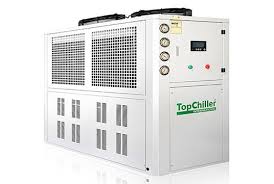

For a Chiller for Oil Cooling (often called an Oil Chiller), your content must bridge the gap between heavy-duty industrial hardware and the high-precision needs of machine tool longevity. These units are vital for CNC machining, hydraulic systems, and gearbox lubrication where maintaining oil viscosity is the difference between a productive day and a catastrophic mechanical failure.
Proposed Page Content
H1: Industrial Oil Chillers: Precision Cooling for High-Performance Machinery
Introduction
In high-speed machining and heavy hydraulic applications, heat is the enemy of precision. Excessive temperature thins your oil, leading to lost lubrication, premature component wear, and thermal expansion that ruins tolerances. Our industrial oil chillers are engineered to provide stable, precise temperature control for hydraulic oils, lubricating oils, and cutting fluids, ensuring your equipment operates at peak efficiency 24/7.
H2: Why Dedicated Oil Cooling is Essential
Standard water chillers cannot handle the high viscosity of industrial oils. Our specialized oil cooling systems are built to address the unique challenges of lubricants:
- Viscosity Management: Maintains optimal oil thickness to prevent metal-on-metal contact in spindles and gears.
- Thermal Expansion Control: Keeps machine tool components at a constant temperature to maintain micron-level accuracy.
- Extended Fluid Life: Prevents the thermal breakdown (oxidation) of expensive hydraulic and lubricating oils, significantly reducing your replacement costs.
- System Protection: Reduces the stress on seals, gaskets, and pumps caused by overheated, thinning fluids.
H2: Technical Features for Superior Oil Management
| Feature | Benefit for Oil Systems |
| Submerged Coils or Plate Heat Exchangers | Efficient heat transfer designed specifically for high-viscosity fluids. |
| High-Pressure Oil Pumps | Ensures consistent flow even as oil thickness changes with temperature. |
| Digital PID Controllers | Maintains oil temperature within $\pm 1^\circ\text{C}$ for precision machining. |
| Integrated Bypass Valves | Protects the system from pressure spikes during cold start-ups. |
H3: The Science of Heat Removal in Oil
The cooling requirement for oil is calculated based on its specific heat capacity. The energy removed is defined as:
$$\dot{Q} = \dot{m} \times C_p \times \Delta T$$
Where:
- $\dot{Q}$ = Cooling capacity required (kW).
- $\dot{m}$ = Mass flow rate of the oil.
- $C_p$ = Specific heat of the oil (typically $\approx 1.67 \text{ to } 2.1 \text{ kJ/kg}\cdot\text{K}$).
- $\Delta T$ = The required temperature drop.
Our systems are sized to ensure that even under maximum mechanical load, the heat generated by your equipment is perfectly offset by the chiller’s capacity.
H2: Primary Applications
- CNC Machine Tools: Spindle and motor cooling for high-speed milling and turning.
- Hydraulic Power Units: Cooling for plastic injection molding and heavy presses.
- Gearbox Lubrication: Maintaining oil integrity in large industrial gear drives.
- Laser & X-Ray Equipment: Precise cooling for specialized high-heat components.
Meta Description for this Page
“Protect your machinery with high-precision oil chillers. Maintain oil viscosity and prevent thermal expansion in CNC, hydraulic, and gear systems. Get a quote.”