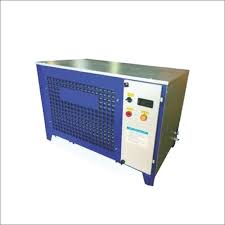
For a Chiller for Water Purity Applications, your content needs to focus on contamination prevention and material integrity. You are targeting high-precision sectors like laboratory research, semiconductor manufacturing, and medical imaging where the cooling fluid must remain chemically inert and ultra-clean.
Proposed Page Content
H1: High-Purity Water Chillers: Precision Cooling for Contamination-Sensitive Processes
Introduction
In applications involving deionized (DI) water, reverse osmosis (RO) systems, or pharmaceutical-grade fluids, standard copper chillers simply won’t suffice. Metal leaching and mineral buildup can compromise your entire process. Our high-purity water chillers are engineered with non-ferrous and medical-grade materials to ensure your fluid remains as pure at the outlet as it was at the inlet.
H2: Engineered for Deionized (DI) and Ultra-Pure Water
Standard industrial chillers use copper heat exchangers, which can corrode and contaminate pure water. Our systems are built specifically for low-conductivity environments:
- Non-Ferrous Fluid Paths: Every component in contact with the process fluid is made from 316 Stainless Steel, high-density polymers, or titanium.
- Corrosion-Free Heat Exchangers: Designed to handle the aggressive nature of high-purity water without leaching metal ions.
- Sealed Reservoir Systems: Prevents atmospheric CO₂ and particulates from entering the system, maintaining the water’s resistivity.
- Cleanroom-Ready Options: Available with specialized cabinetry and low-particulate finishes for laboratory and semiconductor environments.
H2: Technical Specifications & Material Integrity
| Feature | Benefit for Purity Applications |
| 316L Stainless Steel Pumps | Eliminates metallic contamination and rust. |
| Sub-Micron Filtration | Integrated filters to remove trace particulates. |
| High-Resistivity Monitoring | Optional sensors to track water purity in real-time. |
| PID Temperature Control | Stability of $\pm 0.1^\circ\text{C}$ for sensitive R&D. |
H3: The Importance of Fluid Resistivity
In water purity applications, the Electrical Resistivity ($\rho$) is a direct measure of cleanliness. As water purity increases, its ability to conduct electricity decreases. The relationship is defined as:
$$\rho = \frac{1}{\sigma}$$
Where $\sigma$ is the conductivity. For ultra-pure water (UPW), we aim for a resistivity of 18.2 M$\Omega\cdot$cm. Our chillers are designed to prevent “ion dumping,” ensuring your resistivity stays within your required thresholds during the cooling cycle.
H2: Applications for High-Purity Cooling
- Semiconductor Manufacturing: Precise cooling for etching and lithography tools.
- Laboratory & Medical Research: Thermal management for mass spectrometers and electron microscopes.
- Pharmaceutical Processing: Cooling for jacketed reactors and high-purity batching.
- Food & Beverage: Safe, non-toxic cooling for ingredient-level water.
Meta Description for this Page
“Maintain fluid integrity with our high-purity water chillers. Featuring 316 Stainless Steel fluid paths and non-ferrous components for DI/RO water. Request a quote.”