
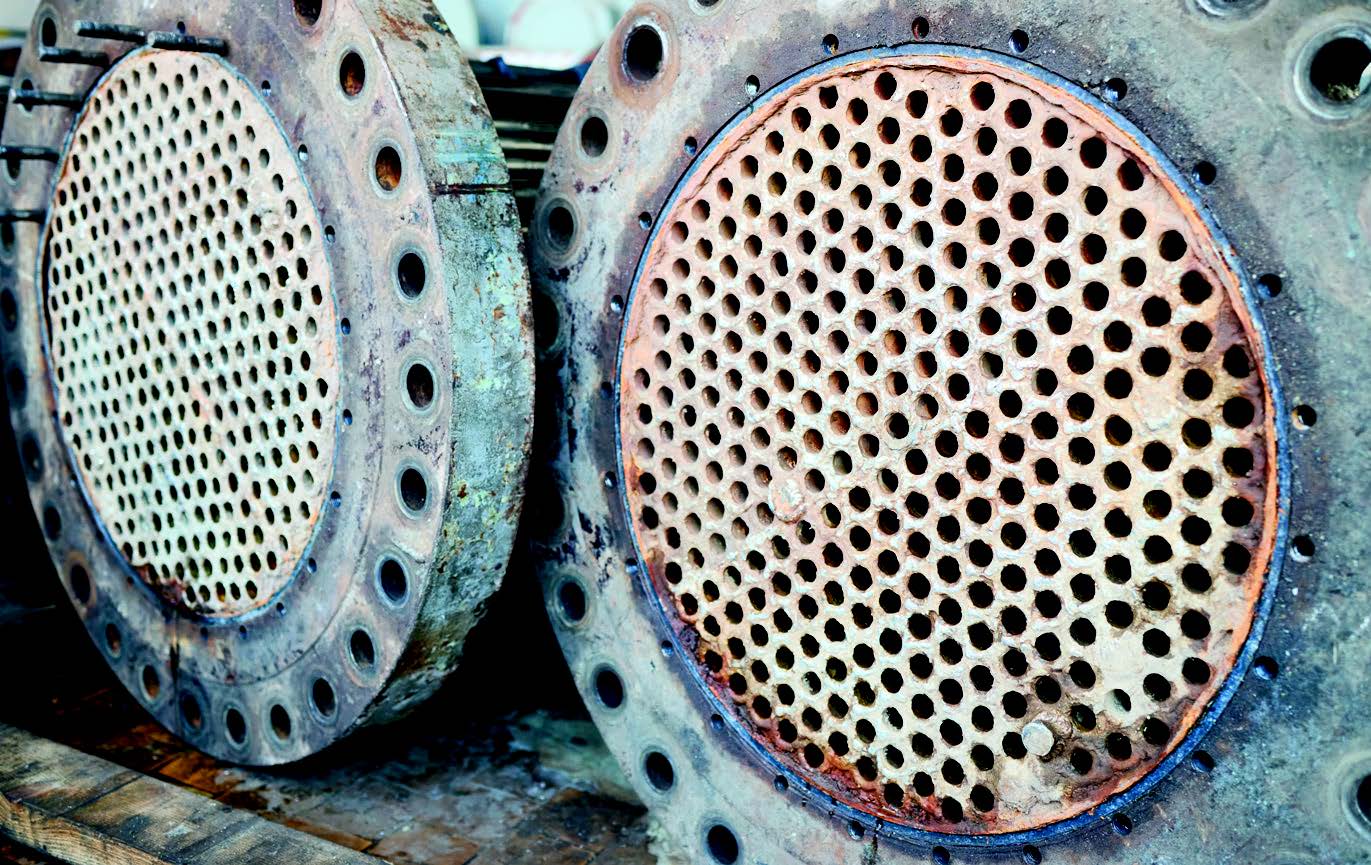
Fixed tube sheet heat exchangers are central to process industries, yet they often succumb to predictable failure mechanisms that undermine thermal efficiency and drive up maintenance costs. In many petrochemical and power‐generation plants, poor tube bundle inspection practices allow fouling build-up on the shell side, accelerating erosion and corrosion. Without a proactive heat exchanger maintenance program, differential expansion between tubes and the fixed tube sheet leads to joint leakage, creating costly downtime and safety hazards. Understanding these common failure points is the first step toward corrosion mitigation and thermal efficiency optimization. Fixed tube sheet heat exchangers are widely used in various industries due to their robust design and cost-effectiveness, but they are prone to several common failure points that can compromise efficiency and safety. One of the most frequent issues is tube-to-tubesheet joint failure, often caused by thermal stress, vibration, or corrosion.
One of the most frequent problems in fixed tube sheet exchangers is crevice corrosion at the tube‐to‐tube sheet interface. This localized attack, exacerbated by process fluids trapped in micro‐gaps, can penetrate rapidly if metallurgical compatibility is ignored during tube sheet design. Vibration-induced fatigue is another culprit: when baffle spans are too wide or anti-vibration rods are missing, flow-induced oscillations cause fretting wear on tubes near the sheet, compromising mechanical integrity. Simultaneously, fouling on both the tube side and shell side increases thermal resistance, forcing operators to pump harder and elevate energy consumption.
Thermal shock and rapid temperature swings impose additional stresses on fixed tube sheet exchangers. If expansion allowances are insufficient, tube sheet warping or tube thinning at hot spots can occur. Erosion from high‐velocity jets—especially near inlet nozzles—further thins tube walls, creating weak points prone to cracks. Combined, these failure modes not only shorten equipment life but also threaten process continuity and safety. This can lead to leaks, reducing heat transfer performance and increasing maintenance costs. Another critical failure point is differential thermal expansion between the tubes and the shell, which can result in tube buckling, joint fatigue, or even catastrophic failure if not properly addressed. Regular inspection and proper material selection are essential to mitigate these risks and ensure long-term reliability.
Effective mitigation hinges on an integrated approach: selecting corrosion-resistant alloys for tube sheets, specifying scalloped or drilled‐away sheet designs to balance expansion, and installing anti-vibration supports. Regular NDT heat exchanger testing—such as eddy current and ultrasonic inspection—identifies early signs of tube thinning and joint leaks. Coupled with robotic tube cleaning and a robust preventive maintenance schedule, these strategies ensure sustained thermal performance and extend the service life of fixed tube sheet exchangers. This can lead to leaks, reducing heat transfer performance and increasing maintenance costs. Another critical failure point is differential thermal expansion between the tubes and the shell, which can result in tube buckling, joint fatigue, or even catastrophic failure if not properly addressed. Regular inspection and proper material selection are essential to mitigate these risks and ensure long-term reliability.