
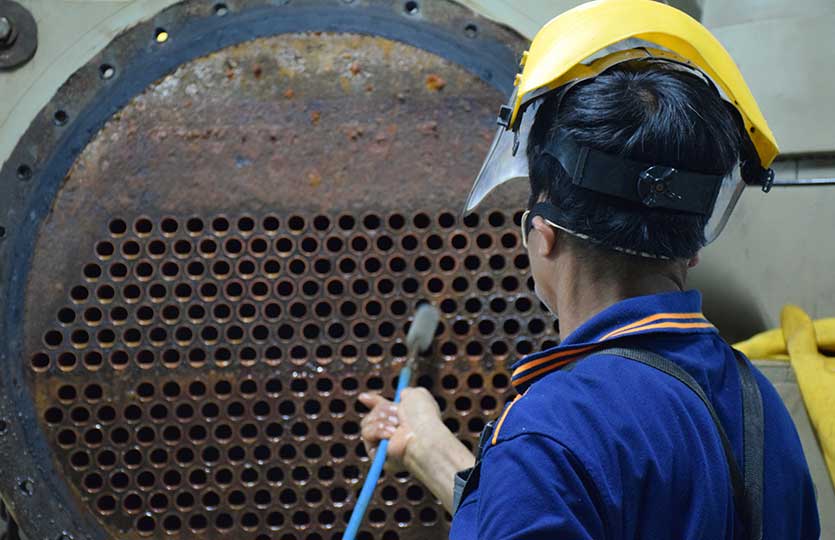
Importance of Regular Maintenance
Shell & tube condensers are critical components in industrial cooling, power generation, and refrigeration systems. Regular maintenance ensures that these condensers operate at peak efficiency, prevent costly breakdowns, and extend their lifespan. Since they handle continuous thermal loads and varying pressure conditions, timely upkeep is essential to avoid performance losses, corrosion, and tube blockages.
Cleaning the Tube Bundles
Over time, fouling, scale, and sediment deposits can accumulate inside the tubes, restricting heat transfer efficiency. Mechanical cleaning methods, such as brushing and rodding, help physically remove deposits, while chemical cleaning solutions can dissolve mineral scaling. For systems operating in seawater or hard-water environments, anti-fouling coatings and regular cleaning schedules are highly recommended.
Checking for Tube Leaks
Tube leaks can lead to cross-contamination between cooling water and refrigerants or process fluids. Routine pressure testing and hydrostatic tests are performed to detect leaks early. Replacing damaged tubes or plugging minor leaks can help prevent further system damage.
Inspecting Tube Sheets and Baffles
Tube sheets and baffles should be inspected for signs of corrosion, wear, or erosion. Damaged baffles can affect fluid flow patterns and reduce heat transfer performance. Re-coating or replacing worn components ensures structural integrity and maintains optimal flow distribution.
Monitoring Water Quality
Poor water quality is one of the primary causes of scaling, corrosion, and biofouling in shell & tube condensers. Using filtration systems, chemical dosing, and water treatment programs helps maintain proper pH, minimize biological growth, and reduce sediment accumulation.
Lubrication and Gasket Replacement
While tube bundles are the focus of most maintenance, it’s equally important to inspect and lubricate mechanical connections, bolts, and joints. Gaskets should be replaced if they show signs of wear, hardening, or leaks, as they play a crucial role in preventing fluid seepage.
Scheduling Preventive Maintenance
Establishing a preventive maintenance schedule — including inspections, cleaning, and performance testing — ensures the condenser operates reliably year-round. Logging performance data helps detect gradual efficiency drops, making it easier to address issues before they become severe.