
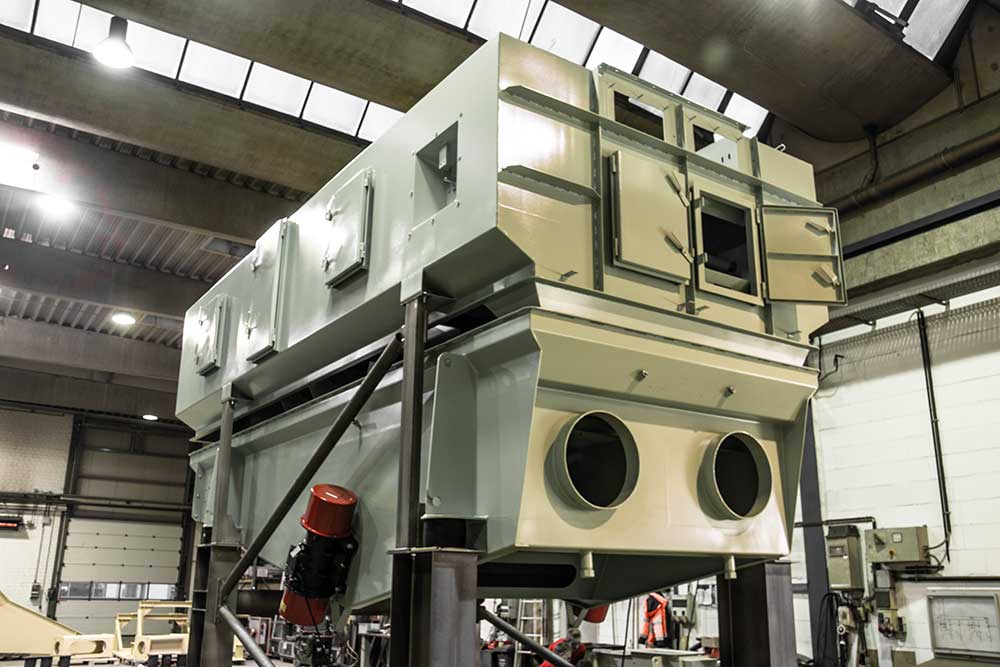
For small foundries, space and efficiency are paramount. As the industry evolves, the demand for compact yet highly effective equipment has surged. Compact sand coolers have emerged as a game-changer for small foundries, allowing them to cool molten sand efficiently without requiring extensive space. These coolers are specifically designed to meet the needs of smaller operations, providing an optimal balance between performance and space-saving design. In this blog post, we will explore some unique features of compact sand coolers and provide a list of high-ranking keywords to enhance your content. One of the most significant advantages of compact sand coolers is their space-efficient design. Unlike traditional coolers that require large footprints, compact coolers are engineered to fit into smaller areas without compromising on cooling capacity. This is particularly beneficial for small foundries where floor space is limited. Despite their smaller size, these coolers are designed to handle a substantial volume of sand, ensuring that the cooling process is neither slowed down nor compromised. The compact design does not mean a reduction in efficiency; in fact, many compact sand coolers come equipped with high-efficiency blades and advanced airflow systems that ensure rapid and uniform cooling of the sand.
Another unique feature of compact sand coolers is their energy efficiency. Small foundries often operate with tighter budgets, and energy costs can quickly add up. Compact sand coolers are designed to minimize energy consumption without sacrificing performance. Many models incorporate variable speed fans that adjust the airflow based on the current cooling requirements. When less cooling power is needed, the fan speed reduces, which in turn lowers energy usage. Some advanced compact coolers also utilize heat recovery systems. These systems capture and reuse the heat generated during the cooling process, which can be redirected to preheat incoming sand or used in other parts of the foundry. This not only reduces energy costs but also contributes to more sustainable operations. This constraint makes compact sand coolers an indispensable piece of equipment, acting as a critical bridge between the sand reclamation process and the final molding stage. Overheated sand in a smaller batch can lead to a disproportionately high scrap rate, causing defects like gas porosity, veining, and poor surface finish that can cripple a small business’s profitability. Therefore, the focus in this sector is not just on cooling, but on intelligent, space-efficient design that delivers precise temperature control without demanding a large physical or financial footprint, enabling small shops to produce castings with a quality that rivals their larger competitors.
In addition to space and energy efficiency, noise reduction is another critical aspect of compact sand coolers. Small foundries often operate in urban or densely populated areas where noise control is essential. Traditional coolers can be quite noisy, causing disturbances. Compact sand coolers are designed with sound-dampening technology, which significantly reduces operational noise. This feature makes them ideal for foundries located in proximity to residential areas or other noise-sensitive environments. The sound-dampening materials used in the construction of these coolers help to absorb and mitigate noise, ensuring a quieter working environment. Moreover, many compact sand coolers come with user-friendly interfaces and automated controls. These features make it easier for operators to manage the cooling process. Automated systems can monitor sand temperature and adjust cooling parameters in real-time, ensuring optimal performance with minimal manual intervention. Some models even offer remote monitoring capabilities, allowing operators to control and monitor the cooler from a smartphone or computer. This level of automation not only improves efficiency but also enhances safety by reducing the need for constant manual oversight.