
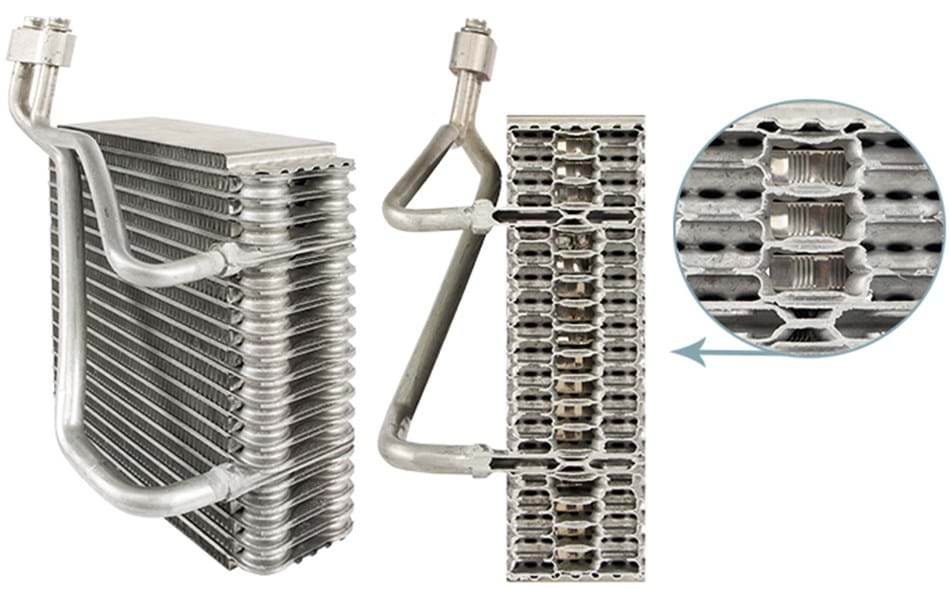
When comparing Fin Tube Evaporators with Plate Evaporators, it’s essential to understand their design differences and performance in refrigeration systems. Fin Tube Evaporators feature coiled tubes enhanced with aluminum or copper fins to maximize heat transfer surface area, making them ideal for residential and commercial air conditioning units where airflow is abundant. This design promotes efficient cooling in open environments but can accumulate dust and debris, requiring regular maintenance to prevent reduced efficiency. On the other hand, Plate Evaporators utilize stacked plates with internal channels for refrigerant flow, offering a compact footprint that’s perfect for industrial freezers and walk-in coolers. Their sealed construction minimizes frost buildup and enhances energy efficiency by up to 20% in high-humidity settings, though they demand precise installation to avoid leaks. Fin Tube Evaporators and Plate Evaporators each offer unique advantages in industrial heat transfer applications, and understanding these differences is crucial for selecting the best design for your operations. Fin Tube Evaporators, characterized by their extended surface area created by fins, boost heat transfer efficiency and are particularly effective in processes where robust thermal performance is required. Their design often results in enhanced energy efficiency and improved operational reliability, making them a preferred choice for applications with high thermal loads and continuous operation.
A key advantage of Fin Tube Evaporators vs Plate Evaporators lies in their application versatility and cost-effectiveness. Fin Tube Evaporators are generally more affordable upfront, with easier retrofitting in existing HVAC systems, and excel in scenarios needing high airflow rates, such as supermarkets or data centers. However, they may underperform in low-airflow confined spaces due to uneven defrosting cycles. Conversely, Plate Evaporators shine in commercial refrigeration with superior thermal conductivity, reducing operational costs by optimizing refrigerant distribution and minimizing pressure drops. Unique to plate designs is their adaptability to brazed-plate configurations, which can handle aggressive refrigerants like CO2 more effectively, making them a forward-thinking choice for eco-friendly evaporator systems amid rising sustainability regulations. In contrast, Plate Evaporators leverage a modular design with closely spaced plates, optimizing heat exchange through efficient liquid distribution and reduced fouling tendencies. This design offers superior performance in applications demanding precise control of process conditions and lower maintenance requirements. With a focus on cost efficiency and innovative engineering, Plate Evaporators have gained popularity in industries where process optimization and low pressure drops are imperative for improving cycle times and energy consumption.
In terms of longevity and innovation, Plate Evaporators often outlast their fin tube counterparts, with corrosion-resistant materials extending service life to 15-20 years under heavy use. This durability reduces downtime in food processing plants, where consistent temperatures are critical. Fin Tube Evaporators, while robust for moderate loads, benefit from recent advancements like microchannel fins that boost efficiency by 15% over traditional models. For businesses evaluating evaporator comparison for upgrades, factors like space constraints and energy rebates should guide the decision—plate options for compact, high-density setups, and fin tube for versatile, budget-conscious installations. Ultimately, selecting between these heat exchanger types depends on balancing initial investment with long-term refrigeration efficiency. When comparing these systems, factors such as environmental sustainability, corrosion resistance, and system efficiency become key decision criteria. Integrating modern technology trends with traditional engineering principles, both evaporator types are continuously evolving to meet increasing industrial demands. By considering attributes like maintenance ease, performance enhancement, and advanced material usage, businesses can tailor their evaporator selection to align with their specific process requirements and achieve optimal heat recovery while supporting green technology standards.