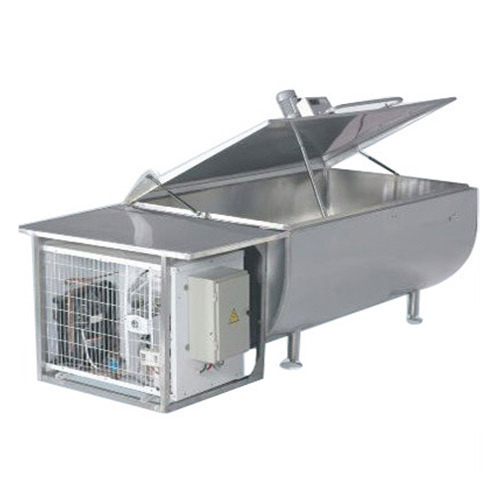
Here is a complete, SEO-optimized web page draft for “Dairy Chillers”. It uses a clear heading structure, direct target keywords, and clean visual formatting tailored for B2B plant managers, dairy engineers, and processing buyers.
Dairy Chillers: Precision Cooling Solutions for High-Quality Milk Processing
Temperature control is the single most critical factor in dairy production. From raw milk harvesting at the farm to pasteurization, culturing, and cold storage, a dedicated dairy chiller provides the rapid, continuous cooling needed to halt bacterial growth, protect milk quality, and comply with strict food safety standards.
Whether operating a commercial dairy farm, a milk processing facility, an artisan creamery, or a cheese manufacturing plant, modern industrial chilling systems ensure efficient heat removal and consistent batch temperatures.
Why Precise Temperature Control Matters in Dairy Processing
Freshly harvested milk leaves the cow at approximately 95°F to 100°F (35°C to 38°C)—an ideal environment for rapid microbial growth. To maintain Grade A standards, milk must be cooled down to 39°F (4°C) or lower within two hours of milking.
[ Raw Milk (~98°F / 37°C) ] ➔ [ Plate Heat Exchanger + Chilled Glycol ] ➔ [ Storage Tank (≤ 38°F / 3.3°C) ]Essential Benefits of Purpose-Built Dairy Chillers
- Microbial Growth Prevention: Rapid pulldown cooling minimizes bacterial colony counts (CFUs) and keeps somatic cell counts within strict legal limits.
- Flavor & Shelf-Life Protection: Precise cooling halts enzyme activity, preserving natural milk flavor, cream line consistency, and product shelf life.
- Pasteurization Efficiency: High-capacity chillers handle the heavy heat removal required immediately following high-temperature short-time (HTST) pasteurization loops.
- HACCP & Regulatory Compliance: Helps facilities meet FDA, USDA, 3-A Sanitary Standards, and local health regulations with verifiable temperature logs.
Key Applications Across the Dairy Production Line
| Dairy Process | Cooling Need | Recommended Chiller Setup |
| Raw Milk Cooling (On-Farm) | Instant cooling of raw milk as it flows through plate heat exchangers. | Instantaneous Glycol Chiller with Ice Bank Buffer |
| HTST Pasteurization | Rapidly lowers milk temperature from ~161°F (72°C) back down to ≤38°F (3.3°C). | Heavy-Duty Multi-Circuit Water/Glycol Chiller |
| Cheese & Yogurt Production | Controls fermentation temperatures and sets curd matrices during culturing. | Recirculating Food-Grade Glycol Chiller |
| Ice Cream Mix Aging | Maintains holding tanks at precise near-freezing temperatures before freezing. | Low-Temperature Propylene Glycol Unit |
| Cold Storage & Bottling | Regulates ambient temperatures in cold storage vaults and packaging lines. | Air-Cooled Central Chiller System |
Types of Chillers for Dairy Applications
Selecting the right cooling setup depends on daily milk volume, peak heat loads, available floor space, and ambient climate conditions.
1. Propylene Glycol Chillers (Recommended)
Pumping a food-safe propylene glycol and water blend allows system fluid to drop well below $32^\circ\text{F}$ ($0^\circ\text{C}$) without internal heat exchanger freeze-ups.
- Best for: High-volume plate heat exchangers, sub-zero holding, and fast pasteurization loops.
- Key advantage: Absolute safety for incidental food contact paired with zero risk of line freezing.
2. Air-Cooled Dairy Chillers
These systems discharge absorbed heat into the surrounding air using heavy-duty condenser fans.
- Best for: Outdoor or rooftop installations, facilities in water-scarce regions, or low-to-medium volume processing plants.
- Key advantage: Simple installation, lower upfront investment, and minimal maintenance costs.
3. Water-Cooled Dairy Chillers
Water-cooled units connect to an external cooling tower or heat recovery circuit to discharge heat.
- Best for: Large-scale commercial creameries with continuous heavy-tonnage heat loads.
- Key advantage: Exceptional energy efficiency during continuous 24/7 processing runs.
Essential Features for Dairy Plant Cooling Systems
When evaluating cooling equipment for a dairy facility, insist on these critical specifications:
- Sanitary Stainless Steel Construction: Food-grade 304 or 316 stainless steel evaporators, piping, and cabinets to endure frequent chemical washdowns.
- Multi-Compressor Redundancy: Multiple refrigeration circuits ensure that if one compressor undergoes maintenance, the system still operates at partial load to protect raw milk batches.
- Heat Recovery Systems: Option to capture waste condenser heat to preheat wash water, drastically reducing overall facility boiler fuel costs.
- Digital PLC Controls: Real-time monitoring, automated alarms, and system integration for continuous temperature tracking.
Frequently Asked Questions
What temperature should milk be chilled to for safe storage?
Raw milk must be chilled to 39°F (4°C) or lower within two hours of milking, and maintained at 36°F to 38°F (2.2°C to 3.3°C) during bulk storage and transport to prevent bacterial growth.
Can I use a standard HVAC chiller for my dairy process?
No. Standard comfort cooling chillers cannot handle the sudden, massive thermal spikes caused by batch pasteurization or raw milk harvesting. Dairy processes require heavy-duty industrial process chillers engineered for rapid temperature pulldowns.
What glycol ratio is recommended for dairy chillers?
A 30% to 40% food-grade propylene glycol mixture is standard. This provides freeze protection down to $0^\circ\text{F}$ to $10^\circ\text{F}$ ($-17^\circ\text{C}$ to $-12^\circ\text{C}$) while maintaining optimal fluid heat transfer.