
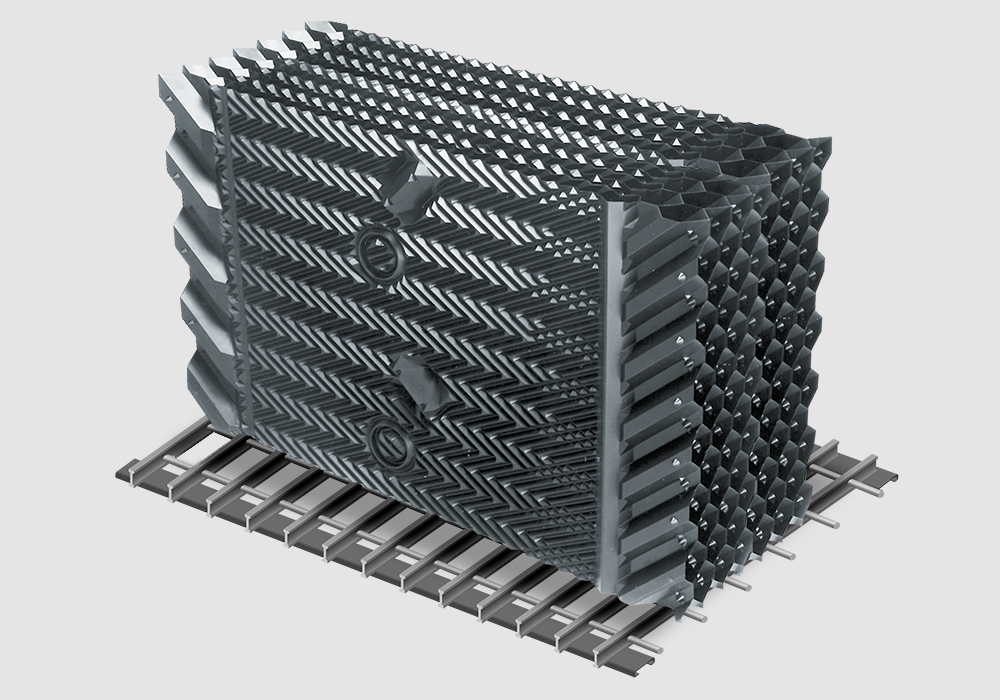
In the world of evaporative cooling systems, drift eliminators are one of the most underrated yet essential components. While the cooling tower’s primary job is to remove heat from water through evaporation, it’s equally important to control and minimize the unintended release of water droplets into the atmosphere. That’s exactly where drift eliminators come into play—acting as environmental guards, performance boosters, and cost savers.
Design and Structure of Drift Eliminators
There are various designs used across different tower configurations:
- Blade-type Eliminators: Simple, cost-effective, and ideal for low-drift requirements.
- Cellular Drift Eliminators: Made from multiple layers of PVC or PP sheets arranged in a cellular pattern, offering high removal efficiency.
- Honeycomb Drift Eliminators: Provide uniform air distribution and reduce static pressure drop.
Most drift eliminators are manufactured using durable, UV-stabilized plastics such as:
- PVC (Polyvinyl Chloride) – for general industrial use.
- PP (Polypropylene) – for high-temperature or chemically aggressive environments.
- FRP (Fiber Reinforced Plastic) – for high-performance and longer service life.
Benefits of Drift Eliminators in Cooling Towers
- Water Conservation
By capturing drift droplets, eliminators reduce make-up water requirements, cutting utility costs and conserving resources. - Chemical Savings
Water treatment chemicals lost in drift not only affect system performance but can also damage vegetation and corrode surrounding infrastructure. Drift eliminators retain treated water within the system. - Regulatory Compliance
Many regions have strict emissions standards for drift, especially in areas near public buildings, hospitals, or chemical facilities. Drift eliminators help meet environmental regulations and avoid legal penalties. - Protection of Adjacent Equipment
High-efficiency eliminators prevent corrosive mist from settling on nearby electrical equipment, rooftops, or vehicles. - Improved Health & Safety
Minimizing drift also reduces the spread of Legionella bacteria, as it limits the airborne transmission of contaminated water.
Installation & Maintenance Insights
Drift eliminators are typically located above the fill media but below the fan section. While they are mostly passive components, periodic inspection and cleaning are essential to maintain efficiency. Dirt, scale, and biological fouling can affect airflow and reduce capture performance.
For large-scale or high-temperature cooling towers, modular eliminator sections allow for easy replacement and maintenance, reducing system downtime and labor costs.
Applications Across Industries
Drift eliminators are critical in:
- HVAC systems for data centers and high-rise buildings
- Power plants with high water throughput
- Chemical and petrochemical facilities
- Food and beverage processing plants
- Hospitals and pharmaceutical manufacturing
Whether it’s a small commercial cooling tower or a massive industrial one, eliminating drift is essential for sustainability and operational safety.
Drift eliminators may seem like a minor detail in the larger design of an evaporative cooling tower, but their impact is anything but small. From conserving water and reducing chemical loss to improving air quality and regulatory compliance, they’re indispensable for high-performance, sustainable cooling tower operations.
Modern drift eliminators, crafted from advanced materials and designed for minimal airflow resistance, provide long-term benefits with minimal maintenance. Whether you’re designing a new system or upgrading an existing one, investing in high-quality drift eliminators ensures your cooling tower remains efficient, environmentally responsible, and compliant with the most demanding industry standards.