
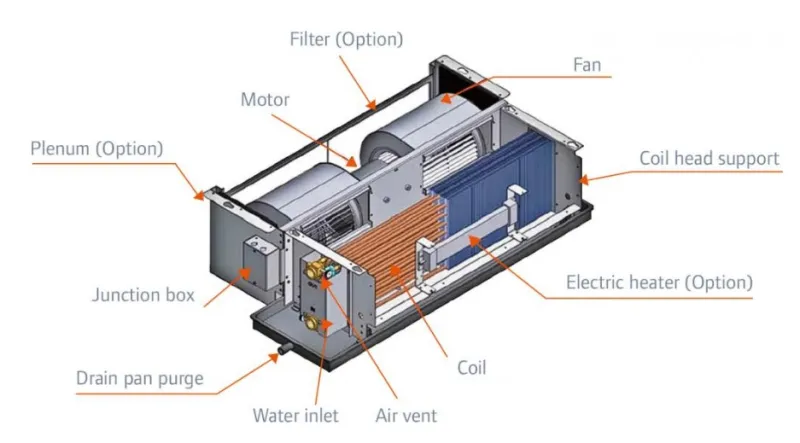
Modern Fan Coil Units (FCUs) are rapidly evolving beyond simple air handlers to become sophisticated components of a holistic HVAC energy management system. A key advancement lies in the integration of Variable Frequency Drives (VFDs), which are crucial for achieving genuine HVAC efficiency. Unlike older units that operated at a constant speed, VFD-equipped FCUs precisely modulate fan motor speed based on actual heating or cooling demand. This cubic relationship between speed and power consumption means even slight reductions in fan speed yield substantial energy savings, making VFD technology a paramount feature for sustainable building operation and reducing overall operational costs. Modern fan coil units (FCUs) have evolved significantly, integrating advanced energy-saving features that make them essential components in sustainable HVAC systems. One of the standout innovations is the use of inverter-driven compressors, which dynamically adjust fan and pump speeds based on real-time cooling or heating demands. This variable speed technology drastically reduces energy consumption—up to 40% compared to conventional fixed-speed units—by eliminating the frequent on-off cycling that wastes power. Additionally, smart thermostats and building management system (BMS) integration enable predictive control, ensuring optimal performance without human intervention.
Another area seeing significant innovation is intelligent control and system optimization. Contemporary FCUs often incorporate advanced BMS integration (Building Management System) capabilities, allowing for predictive control and granular zoning. Features such as EC motor technology (Electronically Commutated motors) are replacing traditional AC motors, offering superior energy efficiency due to reduced electrical losses and quieter operation, directly contributing to better IAQ (Indoor Air Quality) standards. Furthermore, sophisticated control algorithms enable smart scheduling and learning capabilities, ensuring that HVAC equipment runs only when necessary, minimizing wasted thermal energy. Another key advancement is EC (electronically commutated) motor technology, which replaces traditional induction motors with highly efficient, low-power alternatives. These motors deliver consistent airflow with minimal energy loss, often achieving energy savings of 30–50%. Furthermore, many modern FCUs now include heat recovery systems, capturing waste heat from exhaust air to pre-condition incoming fresh air, thereby reducing the load on primary heating systems. Combined with advanced insulation materials and noise-reducing designs, these units not only save energy but also enhance occupant comfort and indoor air quality.
For enhanced performance and reduced lifecycle environmental impact, newer FCUs are focusing on advanced heat exchange methodologies and smart defrost cycles (particularly in water-source heat pump FCU configurations). The use of low-GWP refrigerants (Global Warming Potential) aligns with stricter environmental regulations and corporate sustainability goals. When selecting new HVAC solutions, looking for FCUs that feature low-pressure drop coils and optimized airflow paths ensures maximum thermal comfort with minimal energy expenditure, positioning these units as critical assets in achieving net-zero building targets. For building owners and facility managers, the long-term benefits of energy-efficient FCUs go beyond reduced utility bills. They contribute to LEED certification, BREEAM compliance, and other green building standards, making them a strategic investment. With rising demand for carbon-neutral buildings, FCUs equipped with AI-powered load forecasting and remote monitoring via IoT platforms are becoming industry benchmarks. These smart features allow for proactive maintenance, extended equipment life, and continuous optimization of energy use.