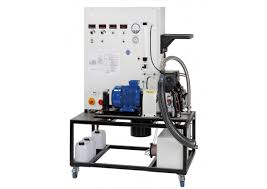
Engine Test Bench Chillers: The Secret to High-Precision Dynamometer Testing
In the world of automotive and aerospace engineering, a dynamometer (dyno) is only as accurate as its cooling system. An engine test bench chiller is a specialized thermal management unit designed to handle the extreme heat and rapid fluctuations of an engine under load.
Whether you are conducting durability cycles or fine-tuning a high-performance prototype, maintaining a consistent temperature is the only way to ensure your data is repeatable and your engine is safe.
Why Standard Cooling Isn’t Enough for Engine Testing
A standard industrial chiller is built for steady, predictable loads. An engine test bench, however, is a chaotic environment. Within seconds, an engine can go from idle to peak RPM, dumping a massive “thermal spike” into the cooling system.
Dedicated test bench chillers are engineered to handle:
- Thermal Shock: Managing instantaneous heat loads without the system tripping or temperatures drifting.
- Precision Control: Maintaining coolant and oil temperatures within a razor-thin window (often $\pm 0.1^{\circ}C$).
- Variable Flows: Adjusting to different flow rates required by various engine sizes and pump speeds.
Key Applications in the Modern Lab
1. Performance & Calibration
To accurately measure horsepower and torque, the engine must stay at its “design temperature.” Thermal drift can lead to inconsistent combustion and skewed data. A chiller removes this variable, ensuring that power gains are real, not just a result of a cooler engine pull.
2. Endurance & Durability Testing
Testing an engine for 500 hours straight requires a cooling system that never sleeps. Engine test bench chillers are rated for 24/7 continuous operation, ensuring that the only thing being tested is the engine itself—not the facility’s infrastructure.
3. Environmental Simulation (Cold Start)
Many chillers offer a wide temperature range, allowing engineers to simulate “Cold Start” conditions as low as -40°C. This is vital for testing fuel atomization, battery cranking power (for hybrids), and oil viscosity performance in extreme climates.
Must-Have Features for Test Bench Integration
When selecting a chiller for your dyno room, look for these professional-grade features:
- Dual-Circuit Cooling: The ability to cool both the engine jacket water and the engine oil simultaneously through separate heat exchangers.
- Rapid Temperature Ramping: Sophisticated PID controllers that can change setpoints quickly to follow a specific test profile.
- Remote Monitoring: Integration with CANbus, Modbus, or LabVIEW so you can log cooling data alongside your engine performance metrics.
- High-Pressure Pumps: To ensure coolant reaches the most restrictive passages of modern, downsized engines.
Benefits of a Dedicated Chiller Solution
| Feature | Impact on R&D |
| Stable Setpoints | Eliminates variables, ensuring Repeatable Data. |
| High Heat Rejection | Prevents overheating and Protects Expensive Prototypes. |
| Closed-Loop System | Reduces water consumption and prevents internal engine corrosion. |
| Compact Footprint | Saves valuable floor space in cramped testing cells. |
Conclusion
Precision in testing leads to excellence in the final product. By investing in a high-quality engine test bench chiller, you are investing in the integrity of your engineering data. Don’t let thermal instability undermine your R&D efforts—ensure every pull on the dyno is backed by world-class cooling.