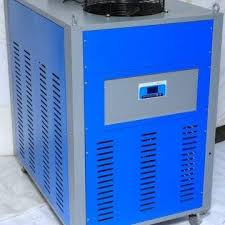
Here is a highly optimized, conversion-driven SEO content structure tailored for your Fiber Laser Chiller product or landing page. It targets high-intent search terms used by manufacturing professionals, CNC operators, and industrial procurement managers.
🎯 The Optimized Title Stack
Choose the title that best fits your exact page type:
- Option 1 (Product/Category Page): Industrial Fiber Laser Chiller Units | Dual-Circuit Cooling Systems
- Option 2 (High-Power Target): Fiber Laser Water Chiller for 1kW – 20kW Laser Cutting Machines
- Option 3 (Value/Benefit Driven): Energy-Efficient Fiber Laser Chillers | Precision Temperature Control
📝 SEO Meta Data
- Meta Title (Max 60 characters): Fiber Laser Chiller Units | High-Precision Laser Cooling
- Meta Description (Max 155 characters): Prevent overheating and secure beam stability with our dual-channel fiber laser chillers. Engineered for 1kW to 20kW laser cutters and welders.
🚀 On-Page SEO Content Structure
H1: High-Performance Fiber Laser Chillers for Industrial Machine Cooling
Maintain peak operating efficiency, protect your optics, and prevent costly production downtime with industrial-grade fiber laser water chillers. Engineered to handle the intensive thermal loads of modern manufacturing, our cooling systems deliver ultra-precise temperature stability (${\pm0.1^\circ\text{C}}$ to ${\pm1^\circ\text{C}}$) for continuous, high-power laser operations.
Whether you are running a 1,500-watt sheet metal cutter or a massive 20,000-watt automated laser welding line, active refrigeration is the backbone of your system’s longevity.
H2: Why Fiber Lasers Demand Dedicated Dual-Channel Cooling
Unlike standard CO₂ lasers, fiber laser systems utilize sensitive, high-density optical fiber pathways. These systems generate massive amounts of localized heat at two distinct critical points.
Our chillers utilize specialized dual-circuit cooling technology to isolate and stabilize both zones simultaneously:
- The Laser Source Circuit: Circulates constant, low-temperature water to cool the internal resonator, ensuring the laser maintains a stable output power and optimal wavelength.
- The Optics/Laser Head Circuit: Delivers slightly warmer fluid directly to the cutting or welding head. This precise temperature differential prevents atmospheric moisture condensation on your expensive lenses, mitigating the risk of microscopic optical cracking.
H2: Key Technical Specifications
| Feature | Specification Range | Industrial Benefit |
| Cooling Capacity | 1.2 kW to over 30 kW | Scales seamlessly from entry-level engravers to massive 20 kW industrial cutters. |
| Control Accuracy | Up to $\pm0.1^\circ\text{C}$ | Eliminates beam divergence and cutting jaggedness caused by thermal expansion. |
| Refrigerant Type | Eco-friendly R-410a / R-407c | Low GWP (Global Warming Potential) compliance for green manufacturing standards. |
| Circuit Layout | Isolated Dual-Pump System | Simultaneous, independent flow rates for both optics and laser source. |
H2: Essential Features for Smart Manufacturing
Industry 4.0 Ready: Look for a chiller unit that does more than pump water. Modern production demands smart communication protocols (like Modbus-RTU / RS-485) to tie your cooling diagnostic data directly to your main CNC machine controller.
- Intelligent Digital Controllers: Automatically adjust water temperatures based on ambient room conditions to actively prevent the “summer sweating” (condensation) effect inside your machine chassis.
- Built-in Safety Guardrails: Integrated physical alarms for low water flow, high-pressure faults, and critical temperature spikes to auto-shutdown the laser source before permanent thermal damage occurs.
- Rugged Component Lifespans: Heavy-duty stainless steel internal plumbing lines combined with magnetic-drive pumps prevent water contamination and pump cavitation, protecting delicate internal channels from erosion.
H2: Frequently Asked Questions (FAQ)
What temperature should a fiber laser chiller be set to?
Typically, the laser source circuit should be set between 20°C to 25°C, while the laser optics/head circuit is kept slightly warmer at 28°C to 30°C. Maintaining this difference prevents condensation from liquefying on internal optical components in hot or humid shop environments.
What happens if you run a fiber laser without a chiller?
Without constant thermal regulation, a fiber laser will quickly experience thermal lens degradation, power fluctuations, and increased beam divergence. Within minutes, the system will trigger an automatic thermal overload shutdown—or worse, cause catastrophic heat failure to the multi-thousand-dollar laser resonator.
How often should I change the water in my laser chiller?
For optimal system health, change the purified or distilled water every 3 to 6 months, depending on your workshop’s cleanliness. Regularly clean the air filters and flushing lines to prevent micro-debris accumulation that restricts vital coolant flow.