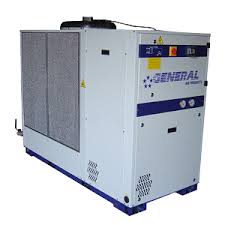
Generator Cooling Chillers: Essential Climate Control for Power Reliability
Power generators are the backbone of critical infrastructure, but they face a constant enemy: heat. As a generator runs, internal electrical and mechanical resistance produces significant thermal energy. Without an efficient Generator Cooling Chiller, you risk equipment derating, insulation failure, and costly unplanned downtime.
Whether you are managing a data center, a hospital, or an industrial plant, understanding how a dedicated chiller protects your power source is vital.
Why Your Generator Needs a Dedicated Chiller
While many small generators use simple air cooling, high-capacity industrial units require liquid cooling to maintain optimal operating temperatures. A cooling chiller provides:
- Consistent Thermal Regulation: Unlike ambient air cooling, which fluctuates with the weather, a chiller provides a stable, set-point temperature regardless of external conditions.
- Increased Lifespan: By preventing thermal expansion and contraction stress on engine components, you significantly extend the Mean Time Between Failures (MTBF).
- Efficiency Gains: Generators operate most efficiently within a specific temperature range. Overheating leads to increased fuel consumption and reduced power output.
How Generator Cooling Chillers Work
The process is a continuous loop designed to move heat away from the generator’s core components as quickly as possible.
- Heat Absorption: A coolant (usually water or a glycol mix) flows through the generator’s heat exchanger, absorbing the thermal energy produced during power generation.
- Transport: The heated fluid is pumped away from the generator toward the chiller unit.
- Refrigeration Cycle: Inside the chiller, a compressor and evaporator remove the heat from the coolant.
- Heat Rejection: The extracted heat is exhausted into the atmosphere (air-cooled chiller) or into a secondary water source (water-cooled chiller).
- Recirculation: The now-chilled fluid is pumped back to the generator to start the process again.
Key Features to Look For
When selecting a chiller for power generation applications, prioritize these industrial-grade features:
- N+1 Redundancy: For mission-critical sites, ensure your cooling system has backup pumps or circuits so a single component failure doesn’t shut down your power.
- Corrosion Resistance: If your generator is near the coast or in a chemical plant, look for epoxy-coated coils and stainless steel piping.
- Smart Monitoring: Integration with Building Management Systems (BMS) via Modbus or BACnet allows for real-time temperature tracking and remote alerts.
- Ambient Capability: Ensure the chiller is rated for your local climate, whether that means “High Ambient” kits for deserts or “Low Ambient” kits for freezing winters.
Air-Cooled vs. Water-Cooled Chillers
| Feature | Air-Cooled Chillers | Water-Cooled Chillers |
| Installation | Easier; requires only outdoor space. | Complex; requires a cooling tower. |
| Water Usage | None. | Significant (evaporative loss). |
| Efficiency | Good. | Excellent (highest COP). |
| Maintenance | Low (cleaning coils). | High (water treatment/tower care). |
Summary: Protecting Your Power Investment
A Generator Cooling Chiller is not just an accessory; it is a critical insurance policy for your electrical infrastructure. By maintaining precise temperature control, you ensure that when the grid goes down, your backup power stays up.