
Here is high-converting, SEO-friendly content tailored for a foundational guide or service page about HVAC Chiller Systems.
The Ultimate Guide to HVAC Chiller Systems: How They Work, Types, and Efficiency
When it comes to cooling large-scale commercial buildings, industrial facilities, or data centers, standard air conditioning units won’t cut it. You need massive cooling power, and that is where the HVAC chiller system comes in.
Chillers are the workhorses of large-scale climate control, responsible for managing temperature, humidity, and ventilation across expansive square footage. Understanding how these systems operate, their different configurations, and how to maximize their efficiency can save facilities thousands of dollars in annual energy costs.
What is an HVAC Chiller System?
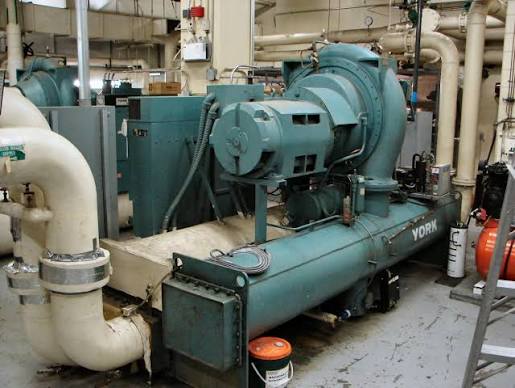
An HVAC chiller is a cooling system that removes heat from a liquid (usually water or a water-glycol mixture) via a vapor-compression or absorption refrigeration cycle.
Once the liquid is chilled, a network of pumps circulates it through pipes to Air Handling Units (AHUs) or fan coil units throughout the building. The cold liquid absorbs heat from the indoor air, cooling the space, before returning to the chiller to start the process all over again.
How Does a Chiller System Work? (The 4-Step Cycle)
Most commercial chillers rely on a vapor-compression cycle that uses a chemical refrigerant. The entire process hinges on four primary components:
- The Evaporator: Low-pressure, liquid refrigerant absorbs heat from the returning warm water, causing the refrigerant to boil and turn into a low-pressure gas.
- The Compressor: This is the heart of the chiller. It pulls the low-pressure gas and compresses it into a high-pressure, high-temperature gas.
- The Condenser: The hot refrigerant gas enters the condenser, where ambient air or condenser water absorbs its heat. This cools the refrigerant back down into a high-pressure liquid.
- The Expansion Valve: The liquid refrigerant passes through an expansion valve, which drops its pressure and temperature drastically before it re-enters the evaporator to repeat the cycle.
Main Types of HVAC Chillers
Chillers are primarily categorized by how they reject heat at the condenser stage: Air-Cooled vs. Water-Cooled.
1. Air-Cooled Chillers
Air-cooled chillers use mechanical fans to blow outdoor air across the condenser coils to reject heat.
- Best For: Small-to-medium buildings, areas with water scarcity, or facilities wanting low maintenance.
- Pros: Lower installation costs, no cooling tower required, simpler maintenance.
- Cons: Lower energy efficiency than water-cooled options; shorter lifespan due to outdoor element exposure.
2. Water-Cooled Chillers
Water-cooled chillers use water from an external cooling tower to absorb heat from the condenser.
- Best For: Large commercial high-rises, hospitals, industrial plants, and environments requiring maximum efficiency.
- Pros: Highly efficient, longer lifespan, quiet indoor operation.
- Cons: High upfront costs, requires continuous water supply, higher maintenance (cooling tower water treatment).
3. Absorption Chillers
Unlike the first two options, absorption chillers do not use a mechanical compressor. Instead, they use a heat source (like steam, waste heat, or natural gas) and a thermal chemical cycle (often lithium bromide and water) to produce chilled water. They are incredibly cost-effective if your facility has an abundant source of cheap, recycled waste heat.
Key Benefits of Using a Chiller System
- Unmatched Scale: Designed to handle massive cooling loads that standard split systems or VRF units cannot match.
- Zoned Temperature Control: Because chilled water is piped to individual air handlers, different zones or floors of a building can be cooled independently.
- Energy Efficiency at Scale: On a per-ton basis, large water-cooled chillers are among the most energy-efficient cooling solutions available.
Maximizing Chiller Efficiency and Maintenance
Because chillers often consume up to 40% of a commercial building’s total energy, keeping them running efficiently is critical.
- Keep Tubes Clean: Scale, algae, and sediment buildup in condenser tubes acts as insulation, forcing the compressor to work harder. Regular tube cleaning saves energy.
- Optimize Chilled Water Setpoints: Raising the chilled water supply temperature by even 1°F can improve chiller efficiency by roughly 1% to 2%.
- Implement Smart Automation: Pair your chiller with a modern Building Automation System (BAS) to optimize start/stop times and adjust cooling output based on real-time weather and occupancy data.