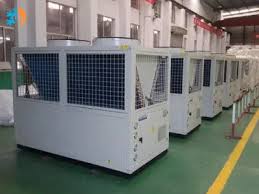
When an industrial chiller stops cooling effectively, the issue usually stems from one of four areas: heat transfer, refrigerant flow, water circulation, or electrical controls.
Here is a troubleshooting guide to help identify the culprit.
1. Heat Exchange & Airflow Issues
If the heat cannot escape the system, the chiller cannot provide cooling.
- Dirty Condenser Coils: For air-cooled chillers, dust and debris on the coils act as insulation. Clean them with compressed air or a soft brush.
- Poor Ventilation: Ensure there is at least 3–5 feet of clearance around the unit. Recirculated hot air kills efficiency.
- Scale Buildup: For water-cooled chillers, mineral deposits inside the shell-and-tube heat exchanger prevent cooling. This often requires a chemical descale.
2. Refrigerant & Thermodynamic Problems
- Low Refrigerant Charge: Check for bubbles in the sight glass or low-pressure readings on the gauges. This usually indicates a leak that needs to be repaired before recharging.
- Iced-up Evaporator: If the water flow is too low or the setpoint is too near freezing, the evaporator may develop ice, which blocks heat transfer.
- Expansion Valve (TXV) Failure: If the valve is stuck, it won’t meter refrigerant correctly into the evaporator, leading to “starving” the coil.
3. Fluid Circulation Issues
The chiller might be producing “cold,” but it isn’t reaching your process.
- Reduced Flow Rate: Check for clogged Y-strainers or closed valves in the piping loop.
- Pump Cavitation: If the pump is making a “gravel” sound, you may have air in the lines or a low reservoir level.
- Process Heat Load: Has the production demand increased? If the heat being generated by your machinery exceeds the chiller’s rated BTU/hr capacity, the temperature will slowly climb.
4. Electrical and Control Checks
- High-Pressure Trip: If the condenser gets too hot, the high-pressure switch will trip the compressor. You must manually reset this after fixing the airflow/water issue.
- Compressor Not Staging: Listen for the contactor clicking. if the compressor isn’t humming, it may have a blown fuse, a tripped internal protector, or a faulty capacitor.
- Incorrect Controller Settings: Verify the “Differential” or “Deadband” settings. If the differential is set too wide, the chiller won’t kick back on until the water is significantly warmer than the setpoint.
Quick Diagnostic Table
| Symptom | Likely Cause | Fix |
| High Pressure Alarm | Dirty condenser / Fan failure | Clean coils / Check fan motor |
| Low Pressure Alarm | Refrigerant leak / Low flow | Leak test / Check pump & strainers |
| Compressor Hot to Touch | Low refrigerant / High suction | Check gas levels |
| Water Temp Rising | Overload / Scale buildup | Verify BTU load / Descale system |
When an industrial chiller stops cooling effectively, the issue usually stems from one of four areas: heat transfer, refrigerant flow, water circulation, or electrical controls.
Here is a troubleshooting guide to help identify the culprit.
1. Heat Exchange & Airflow Issues
If the heat cannot escape the system, the chiller cannot provide cooling.
- Dirty Condenser Coils: For air-cooled chillers, dust and debris on the coils act as insulation. Clean them with compressed air or a soft brush.
- Poor Ventilation: Ensure there is at least 3–5 feet of clearance around the unit. Recirculated hot air kills efficiency.
- Scale Buildup: For water-cooled chillers, mineral deposits inside the shell-and-tube heat exchanger prevent cooling. This often requires a chemical descale.
2. Refrigerant & Thermodynamic Problems
- Low Refrigerant Charge: Check for bubbles in the sight glass or low-pressure readings on the gauges. This usually indicates a leak that needs to be repaired before recharging.
- Iced-up Evaporator: If the water flow is too low or the setpoint is too near freezing, the evaporator may develop ice, which blocks heat transfer.
- Expansion Valve (TXV) Failure: If the valve is stuck, it won’t meter refrigerant correctly into the evaporator, leading to “starving” the coil.
3. Fluid Circulation Issues
The chiller might be producing “cold,” but it isn’t reaching your process.
- Reduced Flow Rate: Check for clogged Y-strainers or closed valves in the piping loop.
- Pump Cavitation: If the pump is making a “gravel” sound, you may have air in the lines or a low reservoir level.
- Process Heat Load: Has the production demand increased? If the heat being generated by your machinery exceeds the chiller’s rated BTU/hr capacity, the temperature will slowly climb.
4. Electrical and Control Checks
- High-Pressure Trip: If the condenser gets too hot, the high-pressure switch will trip the compressor. You must manually reset this after fixing the airflow/water issue.
- Compressor Not Staging: Listen for the contactor clicking. if the compressor isn’t humming, it may have a blown fuse, a tripped internal protector, or a faulty capacitor.
- Incorrect Controller Settings: Verify the “Differential” or “Deadband” settings. If the differential is set too wide, the chiller won’t kick back on until the water is significantly warmer than the setpoint.
Quick Diagnostic Table
| Symptom | Likely Cause | Fix |
| High Pressure Alarm | Dirty condenser / Fan failure | Clean coils / Check fan motor |
| Low Pressure Alarm | Refrigerant leak / Low flow | Leak test / Check pump & strainers |
| Compressor Hot to Touch | Low refrigerant / High suction | Check gas levels |
| Water Temp Rising | Overload / Scale buildup | Verify BTU load / Descale system |