
Master the Flow: A Comprehensive Guide to Laboratory Chillers
In precision-driven environments, temperature isn’t just a number—it’s a critical variable. A laboratory chiller is the unsung hero of the modern lab, ensuring that sensitive experiments, high-end analytical equipment, and chemical reactions remain stable under pressure.
What is a Laboratory Chiller?
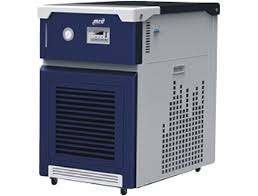
At its core, a laboratory chiller is a cooling system that removes heat from a liquid via a vapor-compression or absorption refrigeration cycle. This cooled liquid is then circulated through equipment to maintain a constant, regulated temperature.
Unlike standard refrigeration, lab chillers are engineered for high-precision control, often capable of maintaining temperatures within a fraction of a degree.
Core Types of Lab Chillers
Choosing the right chiller depends largely on your facility’s infrastructure and your specific cooling needs:
- Air-Cooled Chillers: These use ambient air to reject heat. They are easy to install and ideal for labs where water access is limited, though they can add heat to the room.
- Water-Cooled Chillers: These transfer heat to a separate water source (like a cooling tower). They are generally more energy-efficient and quieter but require a constant water supply.
- Recirculating Chillers: The most common lab variety, these provide a closed-loop system that prevents water waste and contamination.
Key Applications in the Lab
Why do labs invest in dedicated cooling? Here are the primary use cases:
- Rotary Evaporators: Efficiently condensing solvents during distillation.
- Laser Cooling: Preventing overheating in high-powered CO2 or YAG lasers to ensure beam stability.
- Electron Microscopy (SEM/TEM): Removing heat generated by the electromagnetic lenses.
- Mass Spectrometry: Maintaining the thermal stability required for accurate molecular analysis.
- Bioreactors: Controlling the exothermic heat produced during cell culture growth.
Essential Features to Consider
When sourcing a chiller, look beyond the price tag. Focus on these technical specifications:
| Feature | Importance |
|---|---|
| Cooling Capacity | Measured in Watts or BTU/hr; must exceed the heat load of your equipment. |
| Temperature Range | Does your application require cryogenic temperatures (−40°C) or standard cooling (+20°C)? |
| Stability/Accuracy | High-end models offer stability of ±0.1°C. |
| Pump Pressure | Ensures the coolant can reach the equipment, especially if the chiller is located far away. |
| Noise Level | Vital for maintaining a comfortable working environment in small labs. |
Export to Sheets
Maintenance Tips for Longevity
To keep your chiller running at peak performance, follow these “best practice” steps:
- Check Fluid Levels: Always use the manufacturer-recommended coolant (usually a mix of water and glycol) to prevent freezing or corrosion.
- Clean the Condenser: For air-cooled units, dust buildup on the coils can significantly reduce efficiency.
- Inspect Hoses: Look for kinks or signs of wear to prevent leaks that could damage expensive lab floors or equipment.
- Monitor Alarms: Modern chillers feature low-flow and high-temperature alarms; never ignore these early warning signs.
Why Precision Cooling Matters
In the world of science, reproducibility is everything. Fluctuations in temperature can lead to shifted peaks in chromatography, degraded samples in biology, or inconsistent results in chemical synthesis. Investing in a high-quality laboratory chiller isn’t just about protecting your hardware; it’s about protecting the integrity of your data.