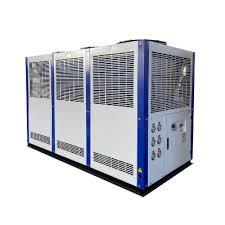
Precision & Laboratory Chillers: The Definitive Guide to Ultra-Stable Temperature Control
In high-stakes environments like research labs, medical facilities, and precision manufacturing, temperature fluctuations aren’t just an inconvenience—they can ruin months of work or damage sensitive equipment. Laboratory and precision chillers are engineered to provide the exacting, constant thermal management that standard HVAC systems simply cannot achieve.
Whether you are cooling a laser, a rotary evaporator, or an MRI machine, understanding the nuances of precision cooling is essential for operational success.
What Sets Precision Chillers Apart?
Unlike standard industrial chillers designed for high-capacity cooling, laboratory chillers focus on stability and accuracy. While a standard unit might allow for a temperature swing of $\pm 2$°C, a high-quality precision chiller can maintain temperatures within $\pm 0.1$°C of the set point.
Key Features Include:
- Microprocessor Control: Advanced PID (Proportional-Integral-Derivative) controllers for real-time temperature adjustments.
- Compact Footprint: Designed to fit into tight laboratory spaces or under benches.
- Low Noise Levels: Engineered with acoustic insulation to maintain a quiet research environment.
- Anti-Vibration Systems: Crucial for sensitive equipment like electron microscopes.
Critical Applications
Precision cooling is a “silent partner” in various scientific and technical fields:
| Application | Why Precision Matters |
| Analytical Instrumentation | Cools ICP-MS and GC-MS systems to ensure consistent molecular analysis. |
| Laser & Optoelectronics | Prevents wavelength shifts and thermal lens effects in high-power lasers. |
| Medical Imaging | Manages the massive heat loads of MRI and CT scanners to protect patient safety. |
| Semiconductor Testing | Maintains precise environments for wafer testing and thermal cycling. |
How to Select the Right Laboratory Chiller
Choosing the wrong chiller can lead to “short-cycling” or insufficient cooling. Consider these four factors:
- Cooling Capacity: Calculate your heat load in Watts or BTU/hr. Always select a chiller with roughly 20% more capacity than your equipment’s heat output to account for ambient temperature spikes.
- Temperature Range: Do you need cryogenic cooling ($-80$°C) or standard chilled water ($+5$°C to $+35$°C)?
- Pump Pressure & Flow Rate: Ensure the chiller can push fluid through the narrow channels of your laboratory equipment. Check the “pressure vs. flow” curve provided by the manufacturer.
- Fluid Compatibility: Ensure the internal components of the chiller are compatible with your cooling medium (e.g., deionized water, glycol, or specialized oils).
Maintenance for Peak Accuracy
To maintain the $\pm 0.1$°C stability your research requires, follow these protocols:
- Fluid Integrity: Check for algae growth or mineral buildup in the reservoir. Use inhibited glycols or distilled water as recommended by the manufacturer.
- Air Filter Cleaning: Lab environments can be dusty; a clogged condenser filter forces the compressor to work harder, reducing stability.
- Calibration: Annually calibrate the temperature sensors against a certified reference thermometer.
- Check the Hoses: Inspect for kinks or insulation wear that could introduce external heat gain into the system.
Conclusion: Protecting Your Innovation
A laboratory chiller is more than a piece of utility equipment; it is a safeguard for your data and your hardware. By investing in a high-precision system, you eliminate a major variable in your experiments, ensuring that your results are repeatable and your equipment remains in peak condition for years to come.