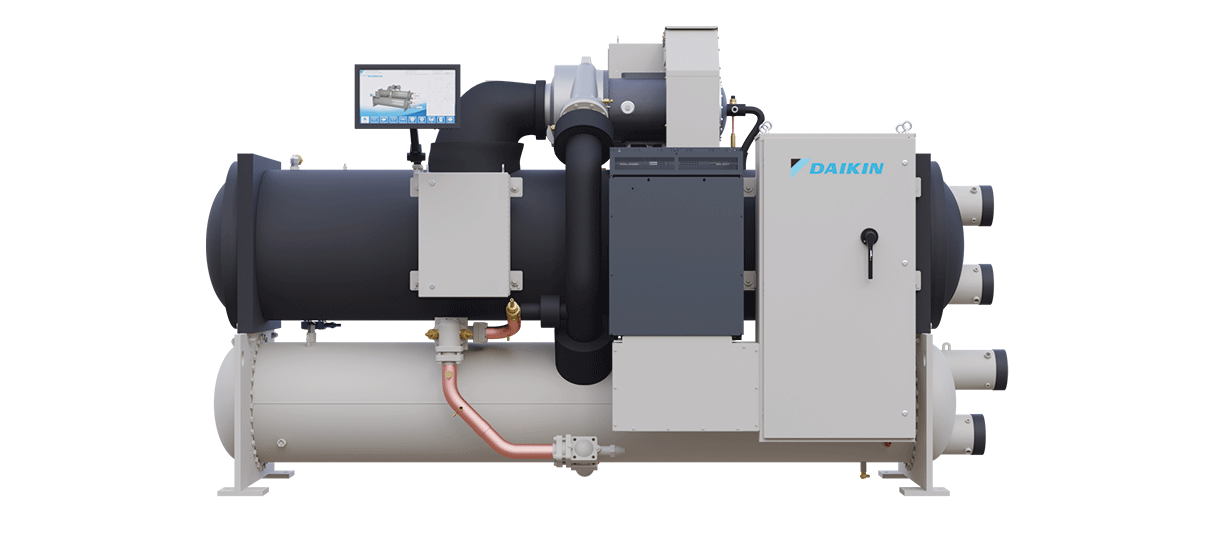
To rank for Magnetic Refrigeration Chillers, you need to position your content as a look into the “future of HVAC.” Since this technology is an emerging, high-efficiency alternative to traditional systems, your SEO strategy should focus on sustainability, innovation, and energy savings.
Here is a structured, SEO-friendly layout for this cutting-edge topic.
1. What is a Magnetic Refrigeration Chiller?
Magnetic refrigeration is a cooling technology based on the magnetocaloric effect (MCE). Unlike standard chillers that use compressors and chemical refrigerants, magnetic chillers use a solid magnetic material (typically gadolinium or specialized alloys) as the “refrigerant.”
This technology represents a paradigm shift in cooling, offering a green, high-efficiency alternative to vapor-compression systems.
2. The Science: The Magnetocaloric Effect
The cooling cycle in a magnetic chiller is driven by changing magnetic fields rather than changing pressure.
The efficiency of this cycle is often compared to the Carnot Cycle, as it can theoretically approach higher efficiencies than traditional systems. The thermal change ($\Delta T_{ad}$) in the material when exposed to a magnetic field is expressed as:
$$\Delta T_{ad}(T, H) = -\int_{H_0}^{H_1} \frac{T}{C_p(T, H)} \left( \frac{\partial M}{\partial T} \right)_H dH$$
How the Cycle Works:
- Magnetization: The magnetic material is exposed to a magnetic field, causing its atoms to align and its temperature to rise.
- Heat Rejection: Water or coolant carries this excess heat away to a cooling tower or heat exchanger.
- Demagnetization: The magnetic field is removed. The material’s atoms become disordered, causing its temperature to drop significantly.
- Heat Absorption: The cold material absorbs heat from the chilled water loop, providing the desired cooling effect.
3. Why Magnetic Chillers are the Future
Magnetic refrigeration offers several disruptive advantages over traditional HVAC systems:
- Up to 30% Higher Efficiency: Because the process is reversible, magnetic chillers can operate closer to the theoretical Carnot limit than vapor-compression cycles.
- Zero Global Warming Potential (GWP): These systems use solid materials and water-based coolants, completely eliminating the need for harmful HFC or HFO refrigerants.
- Low Maintenance: Without a high-pressure compressor, these units have fewer moving parts, leading to longer lifespans and reduced vibration.
- Quiet Operation: The absence of a noisy compressor makes them ideal for hospitals, libraries, and high-end residential applications.
4. Current & Emerging Applications
While still scaling into the mass market, magnetic chillers are currently making waves in:
| Sector | Application |
| Commercial HVAC | Ultra-high efficiency office building cooling. |
| Medical | Precise cooling for MRI machines and lab storage. |
| Food Industry | Sustainable commercial refrigeration and cold storage. |
| Data Centers | Reliable, low-vibration cooling for sensitive servers. |
5. SEO Strategy & Keywords
To capture “early adopter” and “green energy” search traffic:
- Primary Keyword: Magnetic Refrigeration Chillers
- Secondary Keywords: Magnetocaloric cooling, compressor-less chillers, green HVAC technology, solid-state refrigeration.
- Target Audience: Sustainability officers, LEED consultants, and innovative mechanical engineers.
- Internal Linking: Link to your “Sustainable Cooling Solutions” or “Future of HVAC” blog posts.