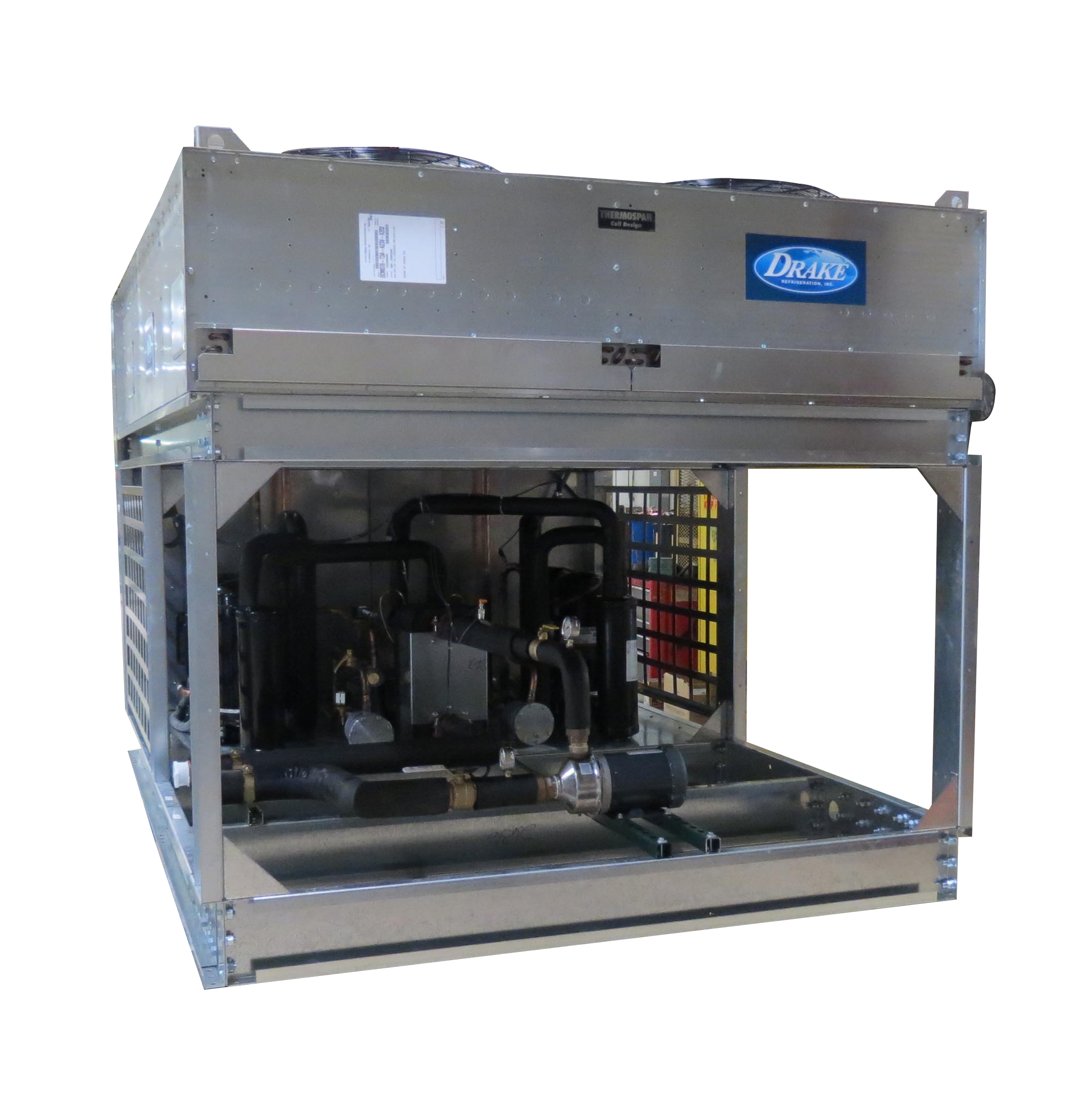
For Packaged Industrial Chillers, the SEO strategy shifts from “laboratory precision” to “rugged reliability, scale, and efficiency.” Your audience here is likely plant managers, HVAC engineers, and operations directors looking for “plug-and-play” cooling solutions.
🏗️ Packaged Industrial Chillers: High-Performance Cooling Solutions
In heavy-duty manufacturing, downtime is the enemy. Packaged industrial chillers provide a centralized, all-in-one solution designed to handle the rigorous thermal demands of modern industry. By integrating the compressor, evaporator, and pump into a single “package,” these units offer a streamlined installation and immediate operational cooling.
The Advantage of “Packaged” Systems
Why choose a packaged unit over a modular or split system?
- Rapid Deployment: Factory-assembled and pre-tested, meaning less on-site labor and faster startups.
- Space Efficiency: All components are housed in a single, compact footprint.
- Weather-Ready: Designed with durable housing for outdoor installation, saving valuable indoor floor space.
- Simplified Maintenance: Centralized components make routine inspections and fluid checks more efficient.
Air-Cooled vs. Water-Cooled Packaged Chillers
Choosing the right condenser type is the most critical decision for your facility’s energy footprint.
Critical Applications
Packaged chillers are the backbone of high-output production lines:
- Plastics & Extrusion: Rapidly cooling molds to decrease cycle times and increase yield.
- Food & Beverage: Precise temperature control for pasteurization, bottling, and fermentation.
- Metal Finishing: Dissipating heat from plating tanks and anodizing processes.
- Data Centers: Maintaining the massive cooling loads required for high-density server racks.
Key Performance Metric: Modern packaged units utilize Variable Frequency Drives (VFDs), which allow the chiller to adjust its output based on the actual load, potentially reducing energy costs by up to 30% annually.
Selecting the Right Tonnage
To determine the size of the packaged chiller you need, use the standard formula for heat load:
$$Q = \dot{m} \times C_p \times \Delta T$$
Where:
- $Q$ is the heat load (BTU/hr).
- $\dot{m}$ is the mass flow rate of the fluid.
- $C_p$ is the specific heat of the fluid.
- $\Delta T$ is the temperature difference between the inlet and outlet.
Why Choose Our Industrial Chillers?
Our systems are engineered for the “always-on” environment. Featuring scroll or screw compressors, intuitive PLC controls, and corrosion-resistant materials, our packaged units deliver consistent performance even in the harshest industrial climates.